
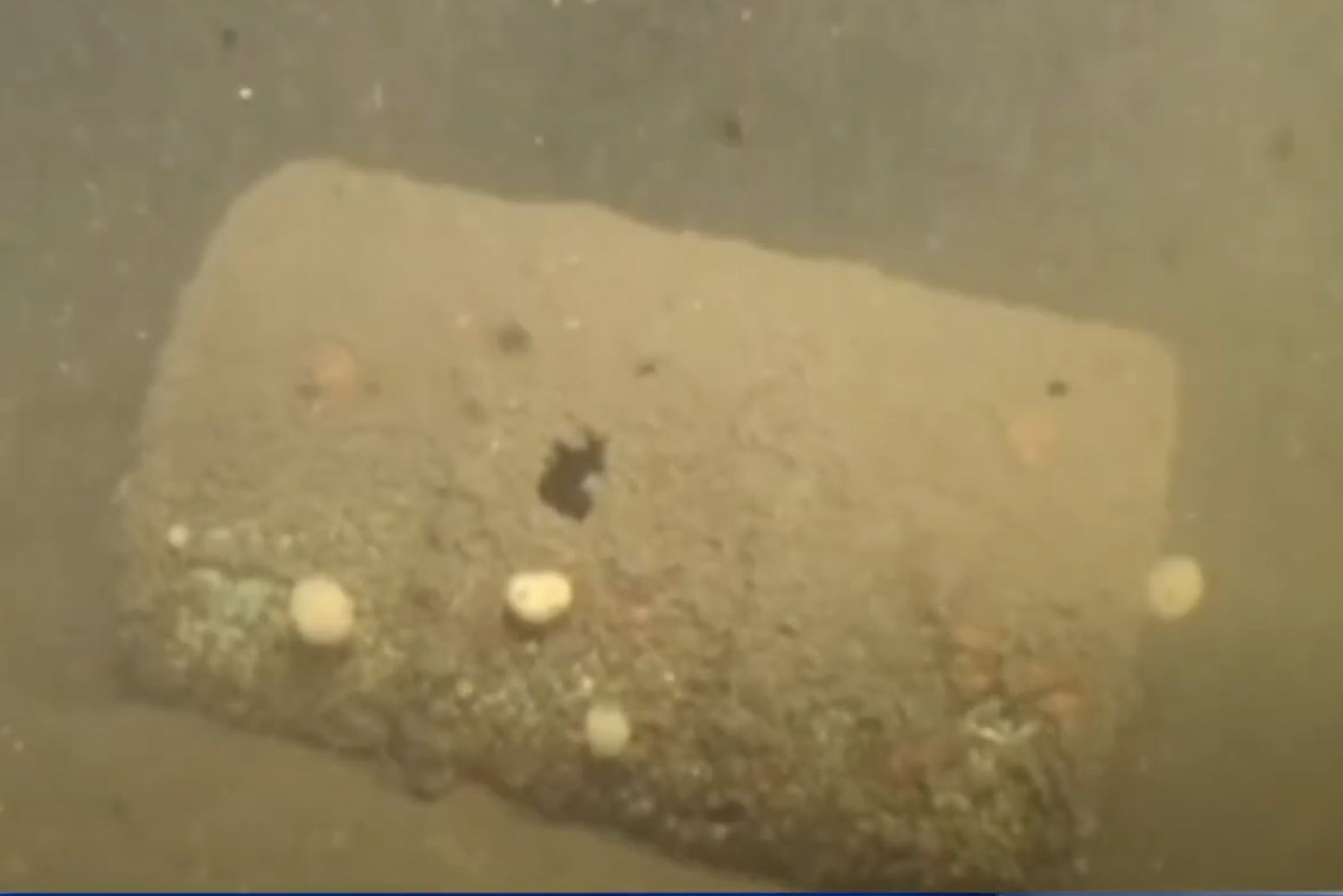
Twenty-eight metres below the ship’s keel, the French research vessel L’Atalante has just delivered the first hard evidence of one of the Cold War’s dirtiest secrets. Using the autonomous submersible UlyX, scientists have mapped and photographed more than 1,000 corroding steel drums resting on the abyssal plain 4,000 metres beneath the North-East Atlantic—part of the estimated 200,000 barrels of radioactive waste that European nations quietly rolled overboard between 1946 and 1990.
For now, the barrels sit half-buried in silt, wrapped in the bitumen or cement their makers hoped would keep the contents locked away forever. But time and salt water have done their work: high-resolution sonar shows cracked seams, collapsed lids and a halo of fine rust flakes that may already be ferrying long-lived isotopes into the water column. “We can’t say yet how many are leaking,” says mission leader Patrick Chardon (CNRS), “but the visual evidence is troubling.”
A sanctioned crime
Ocean dumping of nuclear waste was never clandestine—logbooks, manifests and even newsreels survive—but it was legal. Under the aegis of the International Atomic Energy Agency, Britain, France, Belgium, Switzerland and others conducted 34 discrete disposal campaigns, lowering drums that contained laboratory gloves, decontamination resins, reactor parts and, occasionally, irradiated fuel fragments. By 1975 the London Convention imposed a moratorium; by 1993 the practice was banned outright. The waste, however, was already beyond reach.
What the latest surveys reveal
The current NODSSUM expedition (Nuclear Ocean Dump Site Survey & Monitoring) is the first systematic attempt to quantify what remains. Between 15 June and 11 July 2025 the team crisscrossed a 6,000 km² swathe of seafloor 600 km west of Nantes, scanning with UlyX’s multibeam sonar and capturing 3-D photomosaics from 10 m above the barrels. Preliminary counts suggest the surveyed zone may hold as many as 80,000 drums—roughly 40 % of the Atlantic total—clustered in narrow lanes that mirror the drift of surface ships decades ago.
Radiochemical analysis of 38 water and sediment samples is still under way, but onboard gamma spectrometers have already detected elevated caesium-137 and plutonium-239 signatures within 50 m of some clusters—levels still below regulatory limits, yet above regional background . “The question is not whether radionuclides are escaping,” explains radiochemist Dr. Leila Benabdallah (ASNR), “it’s how far they will travel once they do.”
Life where none was expected
Early submersible footage shows the drums are far from barren. Pink deep-sea cucumbers, ghostly white sponges and rattail fish hover around the barrels, while bacterial mats streak the metal like rust-coloured snow. Biologists aboard retrieved 12 species of bivalve and polychaete worm for laboratory screening; tissues will be checked for bio-accumulated actinides and DNA damage markers over the coming months.
Next steps
A second cruise, scheduled for summer 2026, will place miniature landers next to selected drums to monitor corrosion rates and radionuclide flux year-round. Meanwhile, the International Seabed Authority has requested an emergency briefing; some member states are pushing for a binding resolution to declare the dump zones “special areas” requiring active remediation.
Retrieval is technically possible—oil companies routinely lift heavier objects from comparable depths—but would cost billions and risk breaching intact drums. “For now, we prioritise understanding over intervention,” says Ifremer director Olivier Lefort. “But every new image reminds us that the half-life of plutonium-239 is 24,100 years, and the clock is ticking.”
Timeline
- 1946 – First recorded oceanic dumping (USA)
- 1967 – France’s single largest campaign: 46,000 barrels in two weeks
- 1975 – London Convention moratorium
- 1982 – Last European dump (Belgium)
- 1993 – Global ban enters force
- June 2025 – NODSSUM locates first 1,000 barrels
Sources:
- CNRS press conference 27 June 2025;
- Le Monde 29 May 2025;
- NODSSUM cruise report (draft) July 2025;
- CNRS “Tracking Radioactive Barrels” briefing Feb 2024.