
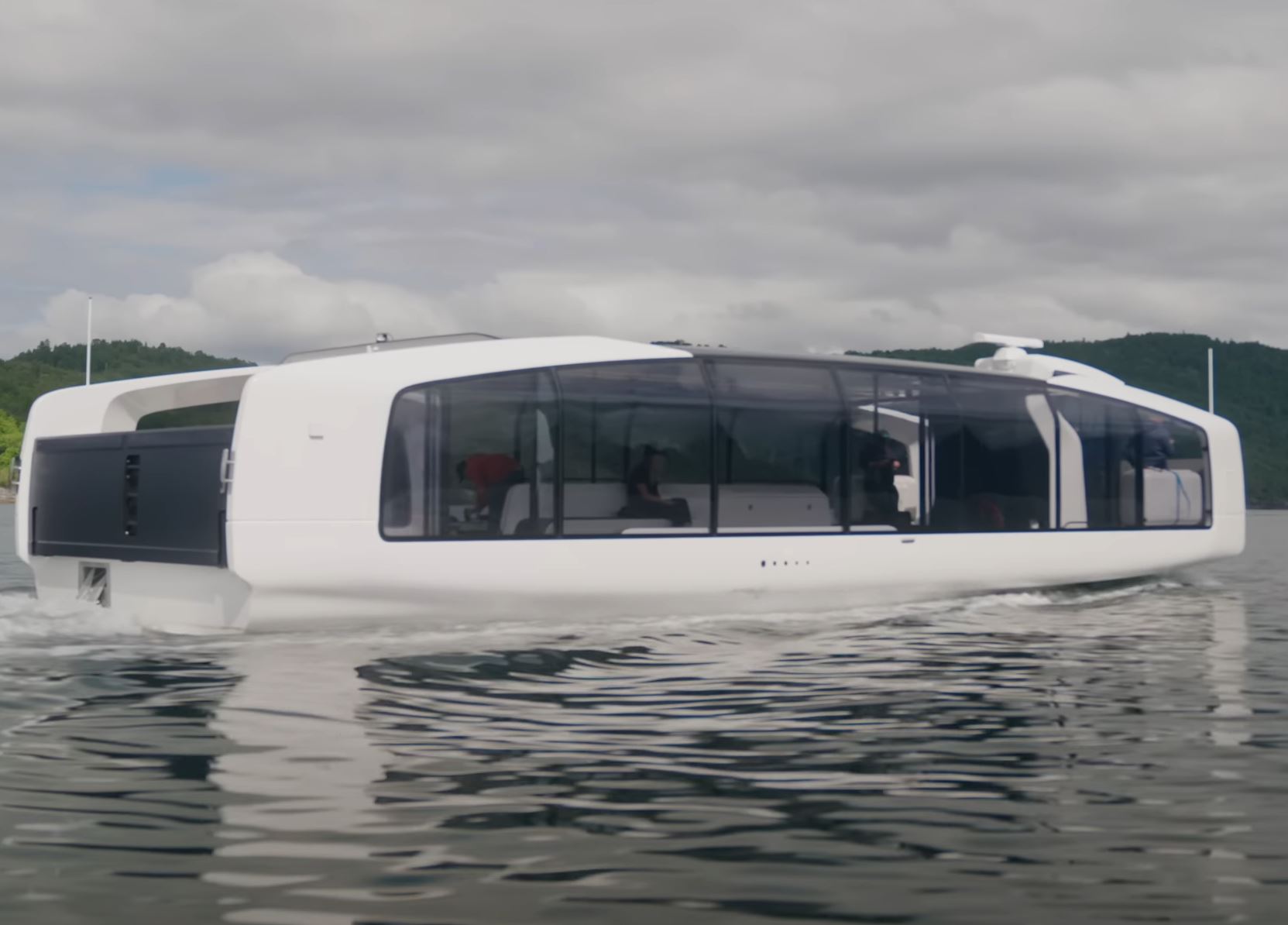
By 2028, the Kattegat will no longer echo with the deep thrum of diesel engines. Danish ferry operator Molslinjen is spending DKK 3.5 billion (≈ €470 million) to replace its conventional fast ferries with two record-breaking battery-electric catamarans—and possibly a third—creating what the company calls “the largest electrification project at sea anywhere on the planet”.
What the money buys
- Size & capacity: Each 129-metre Incat-Tasmania-built vessel will carry 1 483 passengers and 500 cars, raising total Kattegat capacity by more than 25 %.
- Performance: Four steerable thrusters driven by permanent-magnet motors deliver a service speed of 40 knots (≈ 74 km/h) —fast enough to keep the Odden–Aarhus crossing at roughly one hour.
- Energy: 45 000 kWh lithium-ion packs sit under the car deck. That is the same amount of energy needed to drive a mid-size electric car around the Earth 3½ times, according to Molslinjen’s back-of-the-envelope maths.
- Charging: At both Aarhus and Odden terminals, 55 000 kW shore-side megachargers will refill roughly 25 000 kWh in 30 minutes—about the time it takes to disembark cars and load the next departure.
Environmental payoff
The switch will cut 132 000 t of CO₂ every year, equivalent to taking 28 000 cars permanently off the road. It forms the backbone of Molslinjen’s promise to trim its own carbon footprint by 70 % by 2030 and reach net-zero by 2050.
Policy tail-wind
Denmark’s 2024 green-tax reform specifically cited Molslinjen’s fast-ferry routes as priority areas for electrification, unlocking state “green-funding” that made the multi-billion-kroner order bankable.
Timeline
Steel is already being cut in Tasmania. The first electric catamaran is scheduled to reach Denmark in late 2027, with the second soon after. If traffic grows as projected, a third sister-ship—already optioned—would follow, cementing the Kattegat as the global benchmark for high-speed, zero-emission sea transport.