
Swedish Police Grab Record 73.5 Million Kronor From Suspected Crooks in Eight Months
STOCKHOLM — When Sweden’s new “independent forfeiture” law quietly slipped onto the statute books last November, even seasoned detectives were unsure how much muscle it would add to their fight against organized crime. Eight months later, the numbers are in: nationwide, police have seized watches, cars, jewellery and crypto-wallets worth a staggering SEK 73.5 million (≈ €6.4 million) — without having to tie a single item to a specific offence.
For Stockholm District Police Commissioner Anders Rissel, the policy shift has been nothing short of revolutionary.
“Before November, we needed a bulletproof chain of evidence linking the Rolex or Range Rover to a particular drug deal,” he told The Nordic Business Journal from the force’s fortified evidence warehouse in Kungsholmen.
“Now we just have to convince a court that the object itself is ‘probably derived from criminal activity.’ The burden of proof has moved from us to the owner.”
What’s Being Taken
A walk through the warehouse feels like stumbling into a villain’s boutique:
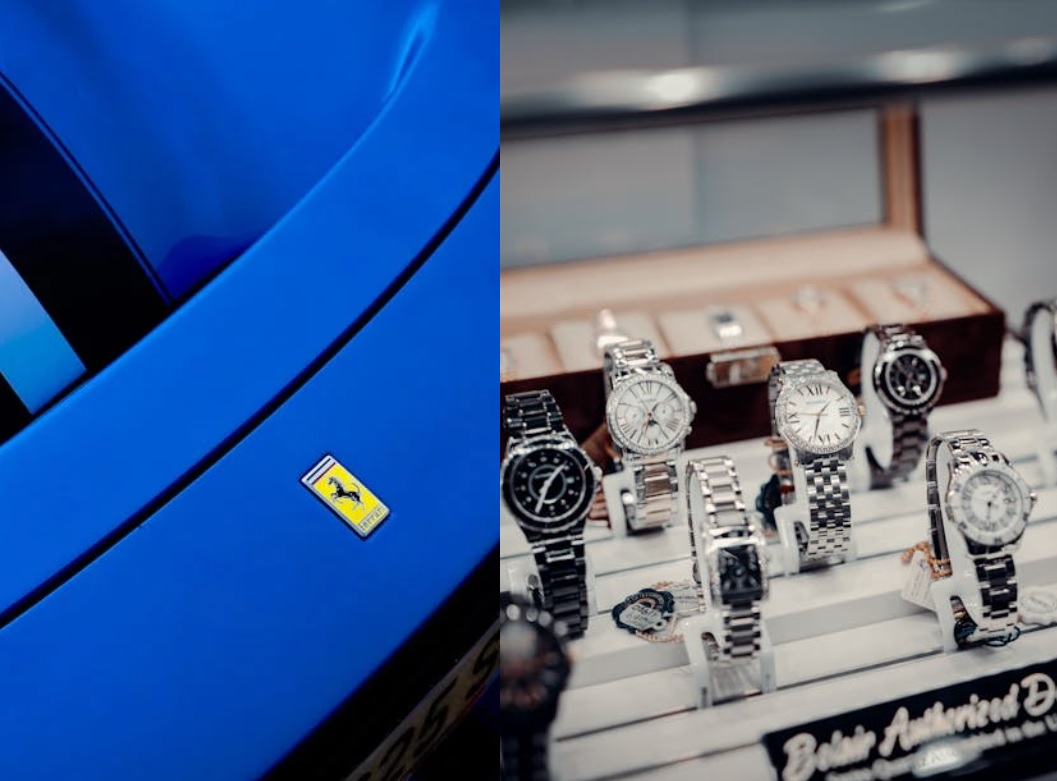
- 47 Patek Philippe, Audemars Piguet and Rolex timepieces, some still in velvet boxes, retail value SEK 18 million.
- 12 Lamborghinis, Ferraris and a single electric Porsche Taycan, collectively insured for SEK 28 million.
- 3.2 kg of gold chains and diamond-studded pendants, seized during a routine traffic stop on the E4 south of Södertälje.
- 14 high-end e-scooters and a surprising stash of limited-edition sneakers, the latter now catalogued as “wearable assets.”
The single largest haul came in March when a 24-year-old with no declared income arrived at Arlanda wearing a Richard Mille watch worth SEK 3.1 million. Customs alerted the National Operations Department (NOA); within 48 hours the watch was on a shelf labelled “Pending Forfeiture.”
The Legal Tectonic Shift
Sweden’s previous forfeiture rules dated back to 1982 and required prosecutors to prove that each asset was either the proceeds or an instrument of a specific crime. Cases could drag on for years; meanwhile, Ferraris sat in heated garages and court dockets overflowed.
The new law flips the script. Once police establish “reasonable suspicion,” the owner must demonstrate in civil court that the item was acquired legally. Failure to do so means the state keeps it. Civil-rights groups warned the law would “turn the presumption of innocence upside down,” but the centre-right government argued Sweden needed to match Denmark’s 2019 reforms, which netted Copenhagen police assets worth DKK 500 million in the first year.
Commissioner Rissel insists safeguards remain. “Every seizure must be approved by a prosecutor and, within two weeks, by a district court. Owners can appeal all the way to the Supreme Court,” he notes. “But the tempo has changed. We’re now moving at market speed, not court speed.”
Reactions From The Underworld
Defence lawyer Michaela Blom, who represents several high-profile gang figures, calls the law “a gift to prosecutors and a nightmare for my clients.”
“We’re seeing cases where a kid with a flashy Instagram profile loses his BMW because he can’t explain how he paid for it. The state doesn’t have to prove he’s a drug dealer — he has to prove he isn’t.”
Meanwhile, encrypted chat logs reviewed by The Swedish Television program the Dispatch show criminal networks are already adapting. One message from a channel called “Söderort Finance” reads:
“Buy nothing in your own name. Lease, rent, borrow. If you can’t hide it, don’t own it.”
Follow The Money — And The Watches
So where does the seized loot go? The National Police Board says proceeds are funnelled into the Crime Victim Fund, which compensates victims of violent offences and finances youth-prevention programmes. Early estimates suggest this year’s haul could double the fund’s annual budget.
Yet the future of the policy may hinge on a case heading to the Supreme Court this autumn. Prosecutors want to confiscate a Stockholm villa worth SEK 22 million from a 29-year-old flagged in the EncroChat leaks. The owner, who has no registered income since 2016, claims the property was a gift from a now-deceased relative. A ruling against him could open the door to seizing real estate on a scale Sweden has never seen.
Back In The Warehouse
As our tour ends, Commissioner Rissel gestures toward a wall of watch winders still ticking in perfect sync.
“Every time I walk past here, I’m reminded that crime used to pay. These days, it’s increasingly likely to cost.”
Quick Facts: Sweden’s New Forfeiture Regime
• Law in force: 1 November 2024
• Value seized to date: SEK 73.5 million
• Average court approval time: 11 days (down from 14 months)
• Most common excuse from owners: “It was a gift.”
• Biggest single item: 2023 Lamborghini Revuelto, SEK 4.2 million
© 2025 Stockholm Dispatch (SVT)