NATO is reshaping its military presence in Northern Europe with a web of regional headquarters designed to handle land, air, logistics, and special operations across the Nordic region. The plan is ambitious, but as one analyst points out, putting pins on the map is the easy part. Making it all work in wartime is another matter.
Building the Nordic puzzle
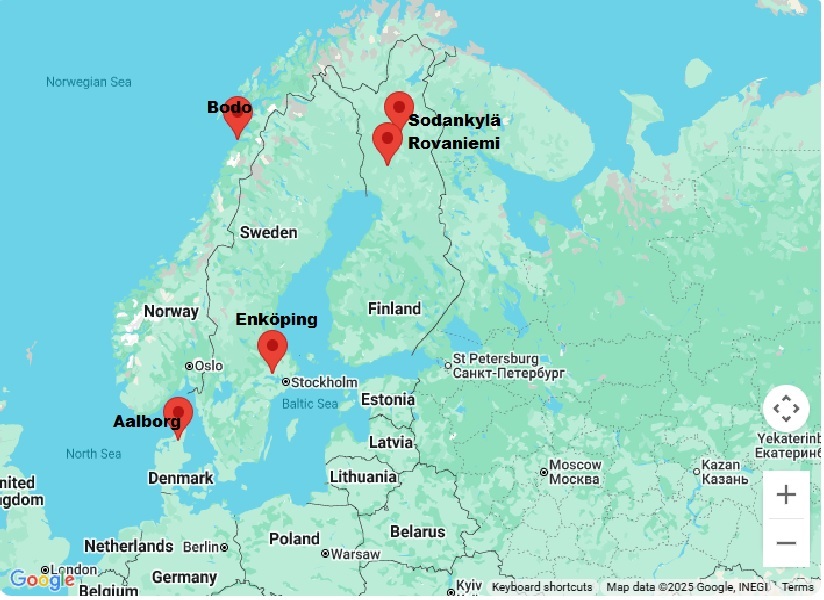
Over the past year, the alliance has divided responsibilities among its newest and long-standing members. Finland, now a frontline state after joining NATO in 2023, has been tasked with leading land operations. Its Multi-Corps Land Component Command, based in Rovaniemi and Sodankylä, will coordinate NATO’s forward forces near the Russian border.
Sweden, still settling into its role as a member, announced that Enköping will host NATO’s regional logistics headquarters. From there, equipment, supplies, and troop movement will be coordinated across the country. “NATO’s presence in Sweden strengthens our security and deterrence,” said Defence Minister Pål Jonson. “The logistics centre contributes to the defence of NATO’s northern flank.”
Norway is preparing Bodø as the hub for NATO’s air operations in the region. Denmark, meanwhile, is pushing for Aalborg Air Base to serve as the headquarters for NATO’s special operations forces.
Why the geography matters
For Alexander Tetzlaff, a major and military analyst at the University of Copenhagen’s Centre for Military Studies, the distribution is logical. Finland sits on NATO’s front line with Russia, making it natural to control ground operations from Finnish soil. Norway offers the depth and reach needed for air campaigns. Sweden’s central location makes it a practical choice for logistics. Denmark, already tightly integrated with allies in special operations, wants to formalize that role.
“You can see the different countries positioning themselves and trying to define what role they should play in a future joint force command for the Nordic region,” Tetzlaff explained.
Precision mechanics
All of these new headquarters will ultimately fall under NATO’s Joint Force Command Norfolk, created in 2018. But the structure is still young, and coordination between national commands and NATO headquarters remains a work in progress.
“It’s like precision mechanics in a pocket watch, where each nut has a function,” Tetzlaff said. “It’s one thing to set up a headquarters and assign responsibility. It’s quite another to make sure it works in wartime.”
The roadmap so far
- Finland: Leads land operations from Rovaniemi and Sodankylä
- Sweden: Hosts logistics headquarters in Enköping
- Norway: Establishes air operations command in Bodø
- Denmark: Seeks control of special operations command from Aalborg
The pieces are on the table. What remains is to see whether NATO can make them click into a system that works not just on paper, but under pressure.