
Sweden’s newest graduates in law, economics and the social sciences are running into the weakest labour market in two decades. A nationwide survey released Monday by the white-collar union Saco found that only 69% of this summer’s graduates had jobs lined up by June—down eight points from 2023 and the lowest share since tracking began in 2005.
“It’s a perfect storm,” says Viktor Göransson, labour-market analyst at Saco. “The economy tipped over just as the largest graduating class we’ve ever seen entered the market.”
Two blows at once
The downturn is squeezing graduates on both sides.
- The economy contracted 0.7% in the first quarter, and the National Institute of Economic Research expects near-zero growth in 2025. Firms are cutting trainee programmes—the main entry point for economists, lawyers and social-science majors.
- Meanwhile, pandemic-era enrolment surged. Between 2020 and 2022, undergraduate intake in these fields rose 22%. Many who delayed graduation now find themselves competing in a market that has suddenly shrunk.
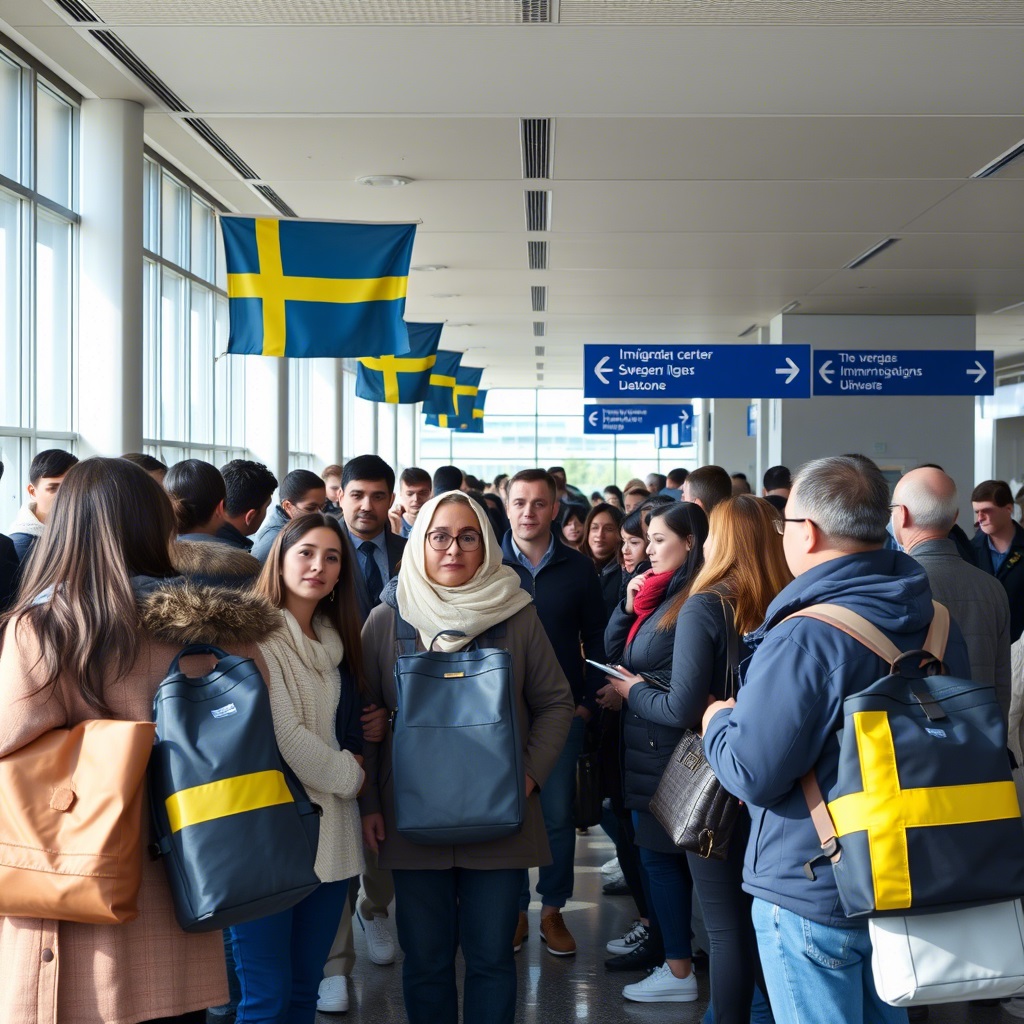
Discipline by discipline
- Law: Only 62% of new law graduates had contracts this spring, down from 72% last year. Public legal-aid offices and mid-tier firms cut summer associate slots by a third.
- Economics & Business: Banks and consultancies trimmed graduate intakes 15%. Entry-level roles at the Big Four now draw 150–200 applicants apiece.
- Social Sciences: Agencies and NGOs, once reliable first employers, are under budget freezes and barely hiring at all.
Graduates in these fields now face prospects closer to Italy and Greece than to Sweden’s engineers or nurses, who still enjoy placement rates above 90%.
| Rank | Country | Unemployment rate (%) |
|---|---|---|
| 1 | Spain | 10.4 |
| 2 | Finland | 9.9 |
| 3 | Sweden | 8.3 |
| 4 | Estonia | 7.7 |
| 5 | France | 7.0 |
The table above shows the latest harmonised Eurostat data (June 2025)
The policy scramble
The government has earmarked 1.2 billion kronor for extra internships in the autumn budget, but companies must actually take them up. Universities are bolting on micro-credentials in data analysis and ESG reporting, hoping to give students a pivot.
Career advisers are blunt. “If you’re still hunting in September, look at compliance, sustainability or tech-adjacent roles,” says Sofia Lund at KTH. “Traditional pipelines are clogged.”
The long shadow
Graduating in a recession leaves scars. Research from IFAU shows it cuts lifetime earnings by 7–10%. “We risk creating a lost cohort if the market doesn’t rebound quickly,” Göransson warns.
For now, the Class of 2025 is stuck refreshing inboxes, hoping for offers before the downturn turns into a permanent CV gap.
Sweden in the European picture
Why does Sweden’s jobless rate look so high compared to much of Europe?
- Overall unemployment: 8.3–8.7% (June–August 2025), among the top four in the EU after Spain, Finland and Estonia.
- Youth unemployment: 24%, second only to Spain.
Drivers behind the numbers:
- The cyclical slowdown—GDP has flat-lined and hiring is frozen.
- A broader statistical net—Sweden counts all active job-seekers, not just those registered with the employment service.
- Structural mismatches—foreign-born workers face 12.4% unemployment.
- Pandemic-era bulges—record graduating classes are hitting the market just as vacancies dry up.
Bottom line
Sweden’s labour market is weak, but not uniquely so. The jobless rate is among the EU’s highest, especially for the young, yet Spain and Finland still post worse figures. What makes 2025 different is timing: the biggest graduating class in decades is colliding with an economy that has stopped hiring.