
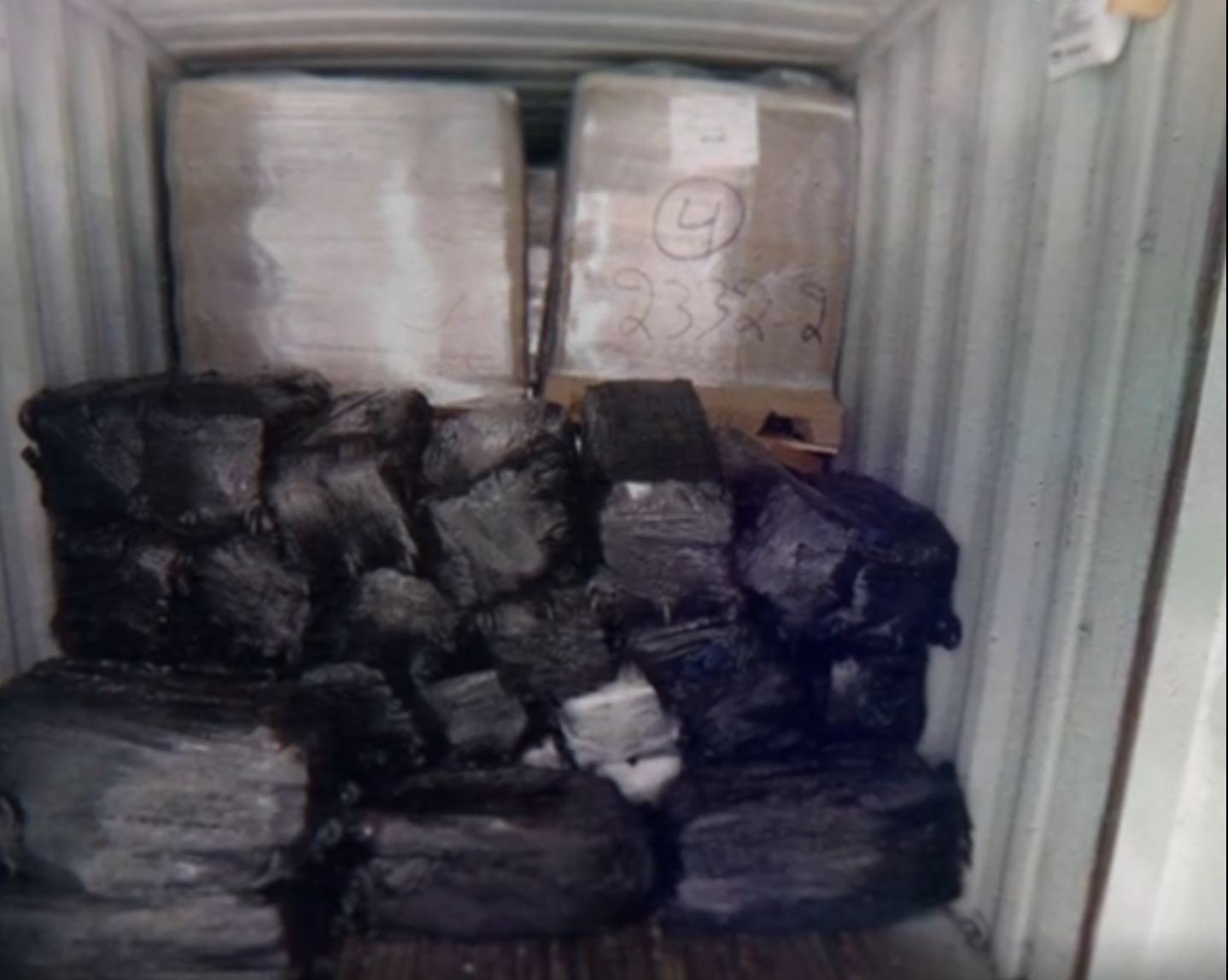
On a gray April morning in 2024, a shipping container sat quietly in the port of Norvik, south of Stockholm. Labelled as a rice shipment, it had slipped across oceans from Colombia to Sweden. But when customs officials ran it through an X-ray scanner, the grain sacks looked wrong. Beneath the cover cargo lay something else.
The next day, police cracked it open and found 1.3 tons of cocaine. Street value: more than one billion kronor. The largest drug seizure in Sweden’s history.
The bust should have been a crushing blow to organized crime. Instead, it exposed just how porous Sweden’s ports have become.
The Strawberry Man’s Network
Investigators quickly traced the shipment back to Ismail “The Strawberry Man” Abdo, a gang leader already notorious in Stockholm’s underworld. His right-hand man, Besha Aziz — known in encrypted chats by the alias Gorilla — had directed a team of couriers sent to retrieve the drugs.
The plan failed. Police, who had staged an ambush by keeping the terminal dark and seemingly unguarded, arrested five men who arrived to collect the container. But the case raised a deeper question: how did Abdo’s crew know so much about the shipment’s status in the first place?
Encrypted messages suggested the gang had inside information from the port itself.
Dock Workers With Criminal Pasts
That suspicion gained weight when Uppdrag Granskning discovered that two dock workers on duty during the cocaine discovery had extensive criminal records.
One had been convicted of aggravated money laundering just months before the container arrived. The other had nine prior convictions, including drug offenses, and had served time as recently as late 2022. Both men had documented ties to Stockholm’s gang world.
Despite this, neither had undergone a background check before being hired by Hutchison Ports, the Chinese operator running the Norvik container terminal through subcontractors.
Customs reports show that on the night of April 17, one of these workers approached officers with unusual questions. Could customs arrest people? Did they need to call the police first? To investigators, the exchange looked less like curiosity and more like probing for weaknesses.
Security Blind Spots
The revelations are embarrassing for Hutchison Ports, which has yet to explain why convicted criminals were allowed access to one of Sweden’s most sensitive entry points for goods. When confronted, the company’s local CEO dismissed the claims as “strange to say — insulting.”
But the case highlights a glaring problem. Ports are prime targets for traffickers. The European cocaine trade depends on precisely this kind of infiltration, with dockside insiders tipping off smugglers when to move in. Antwerp, Rotterdam, Hamburg — all have faced scandals involving corrupt port workers. Now Sweden can be added to that list.
The Stakes
For police, the cocaine seizure was a rare victory in a long-running war. Yet it also revealed how close criminal networks have come to embedding themselves in the country’s logistics infrastructure.
The drugs in that single container were never meant for Sweden alone. With a billion-kronor street value, the haul would have supplied multiple markets across Europe. That scale suggests the Strawberry Man’s operation is part of a much wider trafficking pipeline — one that will not vanish with a single record bust.
The bigger question now is whether Sweden can tighten its ports fast enough to keep traffickers from simply trying again.
Sweden Joins Europe’s Cocaine Battleground
Sweden’s 1.3-ton cocaine seizure is historic for the country, but in the wider European context, it is only a glimpse of the scale traffickers are working with.
- Antwerp, Belgium: In 2023 alone, authorities seized more than 116 tons of cocaine, making it Europe’s primary gateway for the drug trade. Criminal infiltration of port workers has become so widespread that Belgian police have described parts of the harbour as “controlled by traffickers.”
- Rotterdam, Netherlands: The port reported 59 tons seized in 2022, with Dutch authorities warning that smuggling is “systematic” and increasingly violent.
- Hamburg, Germany: One of Europe’s busiest ports, Hamburg has seen record shipments hidden in fruit containers. A 2021 operation uncovered 16 tons in a single bust.
Compared to those numbers, Sweden’s 1.3 tons may look small. But the Norvik case matters because it suggests that global cartels are testing new routes. With tighter scrutiny in Belgium and the Netherlands, smugglers are likely probing smaller ports like Sweden’s as alternative entry points.