
In a nation long revered for its digital governance and disciplined public administration, Sweden’s political elite is now under fire for a string of startlingly careless security lapses — incidents that experts warn reflect a deeper cultural complacency at the highest levels of government.
The latest episode involves Justice Minister Gunnar Strömmer (Moderate Party), who last week left his personal tablet on a commercial flight landing at Stockholm Arlanda Airport. The device, reportedly used to stream ice hockey mid-flight, was retrieved just ten minutes later — after airline staff literally chased him through the terminal.
“I forgot it on the seat,” Strömmer told SVT with casual nonchalance. “That can happen. But it never happens with anything related to work.”
The tablet, he insists, contained no sensitive data — a claim backed by security experts who note modern devices are generally secure if password-protected and updated. Still, the optics are damning: a cabinet minister, responsible for upholding the rule of law and national security, losing track of tech in a public space teeming with 60 fellow passengers.
“It’s embarrassing,” says Joakim von Braun, security advisor and former defence official. “Especially given the Government Offices’ recent track record. You’d think they’d have learned by now.”
He’s not wrong.
The Pattern: From Toilets to Courtrooms
Strömmer’s slip-up comes barely a week after revelations that a binder containing classified documents from Prime Minister Ulf Kristersson’s 2022 trip to Turkey — a pivotal NATO accession negotiation — was left behind… in an airport toilet.
Yes, a toilet.
According to Dagens Nyheter, the binder — a copy of the PM’s briefing materials — was discovered by a cleaner. While the Government Offices’ security chief, Fredrik Agemark, later downplayed the incident, claiming “no classified information” was involved and thus “no damage assessment” was needed, critics aren’t buying it.
The binder was forgotten by a government official reportedly stressed and rushing to catch public transport — a policy that forbids taxis for cost-saving reasons, even after high-stakes international missions.
“This isn’t just about lost items,” says Håkan Svenneling, foreign policy spokesperson for the Left Party, which has since reported Kristersson to the Constitutional Committee (KU). “It’s part of a systemic failure. Confidentiality isn’t being treated with the gravity it demands.”
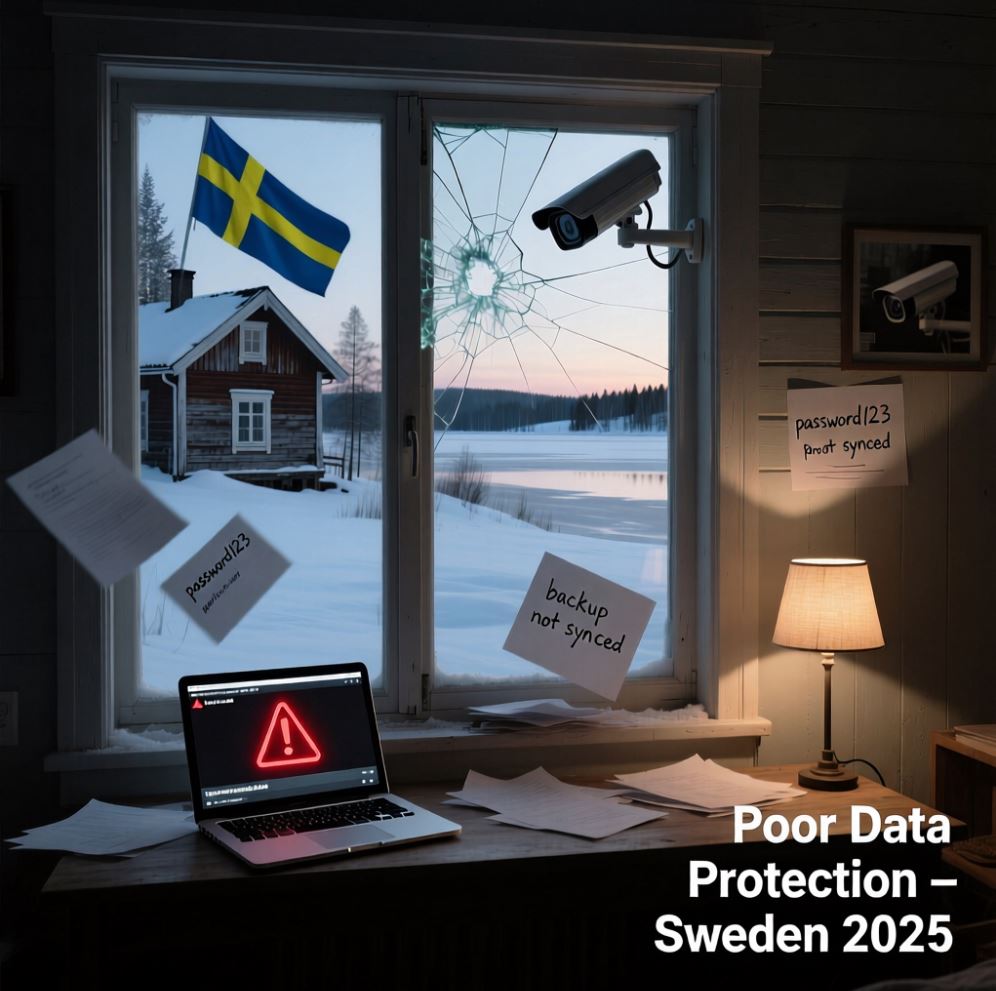
Culture of Complacency?
Adding fuel to the fire: former national security advisor Henrik Landerholm, recently acquitted of negligence charges after leaving secret documents in a “course yard” (also found by a cleaner), cited “stress” as his defence — echoing the same justification now used by the Arlanda binder’s owner.
Jörgen Holmlund, intelligence analysis professor at the Swedish National Defence College, calls the tablet incident “amusing” — but only on the surface.
“In light of repeated losses — devices, binders, documents — it’s clear we’re not instilling the human factor: situational awareness, personal accountability, basic discipline,” Holmlund warns. “These aren’t catastrophic breaches — yet. But they’re red flags. Each incident normalizes carelessness.”
A Leadership Problem?
The Nordic Business Journal reached out to the Prime Minister’s Office for comment. Their response? A referral to the Government Offices’ press service — a bureaucratic brush-off that, to many, speaks volumes.
Sweden’s NATO accession process — a historic geopolitical pivot — demands ironclad discretion. Yet, in the midst of sensitive negotiations, Sweden’s leaders are misplacing briefing binders in restrooms and streaming hockey on tablets left in economy class.
To foreign investors and security partners watching closely, the message is unsettling: if Sweden’s top officials can’t safeguard their own briefcases, can they safeguard national interests?
The Bottom Line
While no single incident has (yet) led to a confirmed data breach, the accumulation paints a troubling portrait: a leadership culture that treats security as an afterthought — and embarrassment as an acceptable cost of doing business.
In boardrooms across the Nordics, executives invest millions in cybersecurity, employee training, and risk protocols. Meanwhile, in Stockholm’s corridors of power, binders vanish into toilets and ministers shrug off lost tech with a “that can happen.”
Perhaps it’s time Sweden’s political class took a lesson from its own corporate sector: in security, there are no small mistakes — only missed warnings. The Nordic Business Journal Magazine will continue to monitor developments in Sweden’s government security protocols — and the leadership culture behind them.