
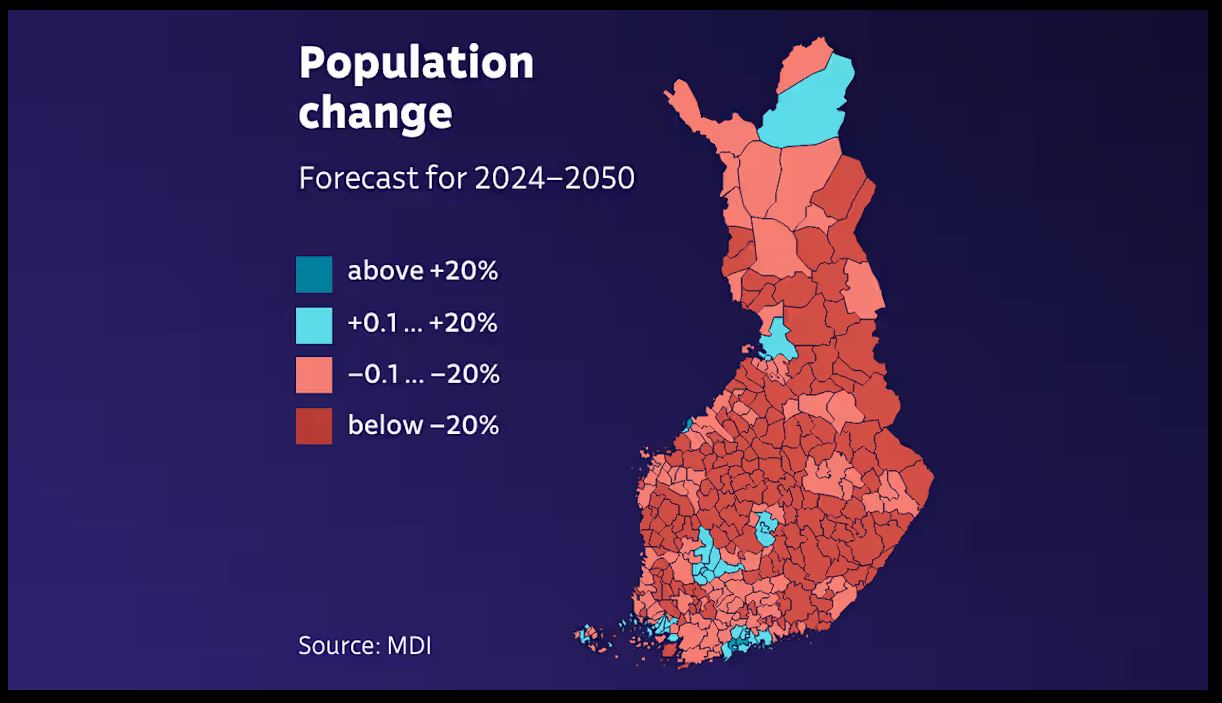
Finland is facing a demographic crisis that could reshape its future. A recent population forecast, released by the consulting firm MDI, paints a troubling picture for the Nordic nation over the next 25 years. This new outlook, extending beyond the previous projections which typically ended in 2040, reveals that Finland’s population will continue to shrink rapidly in the coming decades, with most municipalities witnessing significant declines. But what is driving this sharp drop, and can Finland survive it?
A Shrinking Nation: What the Forecast Shows
Finland, like many developed nations, is grappling with an aging population and low birth rates. According to MDI’s report, the country’s population is set to shrink dramatically, with some areas expected to lose a substantial portion of their inhabitants. The report suggests that Finland could lose up to one million people by the year 2050 unless corrective actions are taken. While many countries in Europe face similar demographic challenges, Finland’s rate of population decline is more acute than most of its Nordic neighbours.
For a deeper understanding of the situation, the MDI report includes an interactive map that allows users to explore the specifics of how different municipalities will be affected. Across Finland, rural areas are facing the steepest declines. Small towns and villages, especially in the north and east, are expected to lose a significant percentage of their populations, as younger generations migrate to larger cities in search of better opportunities.
The Root Causes: Aging, Low Birth Rates, and Outmigration
So why is Finland’s population declining at such a fast pace? The primary reasons lie in an aging population and a low birth rate. Like other developed nations, Finland’s birth rate has steadily fallen below replacement levels. The average number of children per woman is now around 1.4, significantly below the 2.1 needed to maintain a stable population.
At the same time, Finland’s aging population means that there are fewer young people entering the workforce to replace retiring baby boomers. By 2030, Finland’s median age is expected to rise above 45, one of the highest in Europe. The economic implications of an aging workforce are already being felt, with certain sectors, particularly healthcare, social services, and construction, struggling to find enough workers.
In addition to this, Finland has been experiencing a steady outmigration, especially from rural areas. Many young Finns move to urban centres such as Helsinki, Tampere, and Turku, where job opportunities, higher wages, and vibrant cultural scenes are more readily available. This urban migration has left rural municipalities struggling to maintain their populations and economic viability.
Can Immigration Provide a Lifeline?
One of the few solutions offered by experts to stave off this demographic decline is continued immigration. Finland has seen immigration increase in recent years, with people coming from countries like Syria, Iraq, and Somalia, particularly following the 2015 refugee crisis. However, there are major hurdles to relying on immigration as a long-term solution.
The political climate in Finland is currently in flux, with far-right populist parties like the True Finns gaining considerable traction. Recently, a prominent member of the True Finns party called certain classes of immigrants “low-quality humans,” stoking fears that these sentiments could sour Finland’s willingness to accept migrants. Teemu Keskisarja, the Finns Party’s first deputy chair, claimed immigrants coming to Finland were of “low quality” and referred to the “great replacement” conspiracy theory as a fact – as Finns Party leader and Finance Minister Riikka Purra did a day earlier. The growing strength of these populist parties, with their anti-immigration rhetoric, complicates the debate over whether Finland can or should continue to encourage immigration.
Political Polarization: The True Finns Dilemma
With a party like the True Finns gaining influence, there is a real question about whether Finland can create an environment welcoming to immigrants. As part of their platform, the True Finns advocate for restricting immigration and focusing on the assimilation of those who already live in the country. While they are not alone in their concerns about immigration, their increasingly prominent voice has led to concerns about growing political polarization.
“Immigration is often presented as a solution to demographic challenges, but the political climate in Finland is not conducive to the integration of immigrants, especially those from non-European countries,” said Dr. Mikael Seppänen, a Finnish political scientist. “The political discourse is becoming more hostile to migrants, and that could make Finland a less attractive destination for those seeking a better life.”
While Finland’s economy has benefited from immigration, especially in industries like IT, healthcare, and construction, there is a growing concern that negative perceptions of immigrants, especially within right-wing circles, could make it more difficult to recruit and retain the talent needed to reverse the population decline.
Urban vs. Rural: Diverging Population Trends
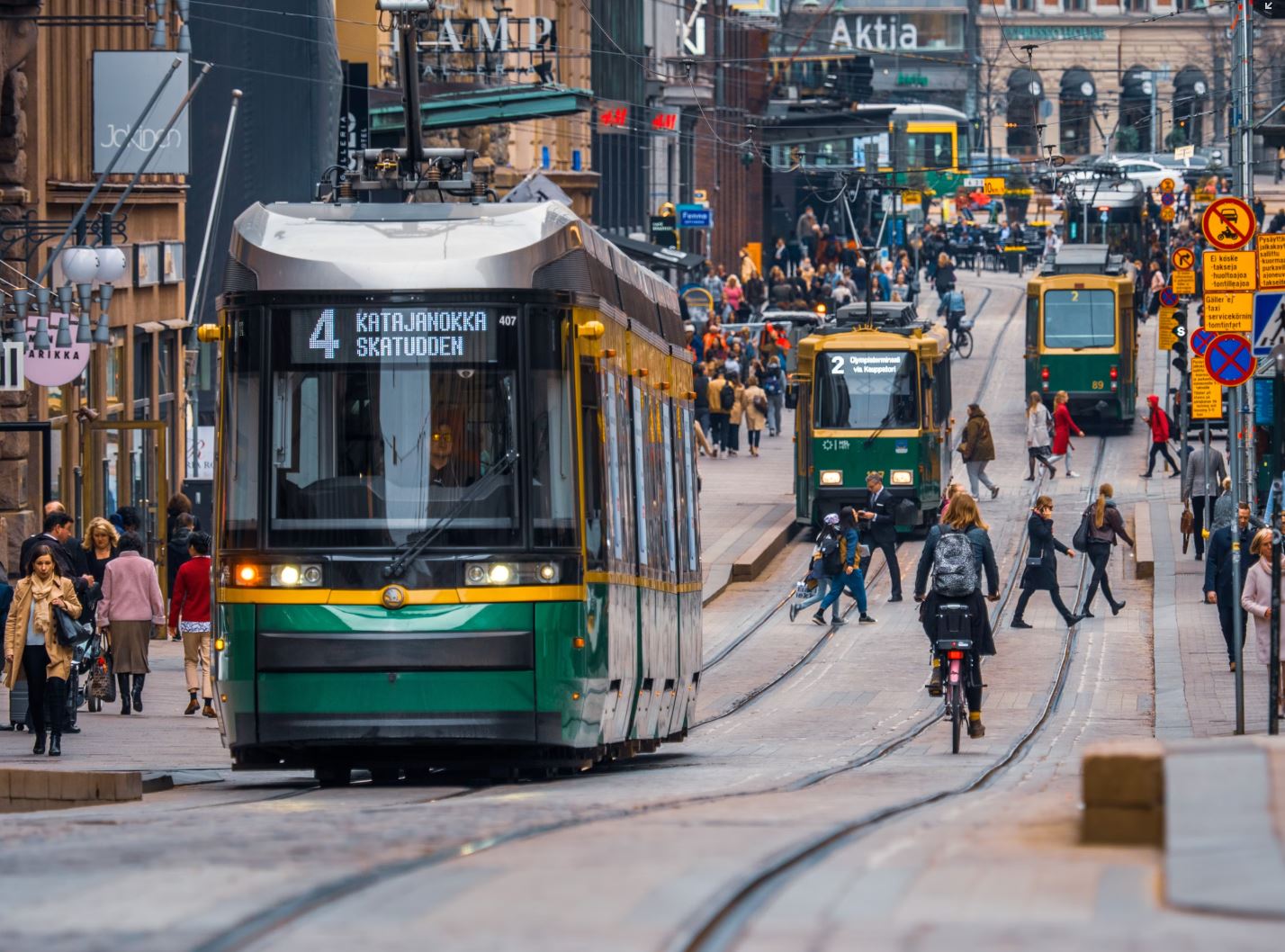
Interestingly, not all areas of Finland are facing the same fate. While rural municipalities are projected to experience significant losses, urban regions, particularly the capital area around Helsinki, are expected to continue growing. Helsinki and its surrounding metropolitan area have seen significant immigration in recent years, with many immigrants settling in these more cosmopolitan, job-rich environments.
The urban-rural divide is stark. While Helsinki’s population is projected to increase by 10-20% over the next 25 years, many rural municipalities in the north and east of Finland could see their populations decrease by as much as 30-40%. This is creating an imbalance that could exacerbate the challenges faced by smaller communities, which rely on younger, working-age individuals to maintain local economies.
Some rural municipalities have started offering incentives for young families to move back to their hometowns, including tax breaks and housing subsidies. However, such initiatives have so far proven only marginally successful, and many experts believe that a more comprehensive national approach is needed.
A Bleak Future or a Wake-up Call?
As Finland faces a shrinking population, questions about the future of its economy, welfare system, and social cohesion loom large. The country’s aging population will require increasing investment in healthcare and elder care, while a shrinking workforce could stifle economic growth. While immigration could play a role in alleviating these challenges, the country’s political climate, and the rise of anti-immigrant sentiment, poses a significant obstacle.
Ultimately, Finland’s future may depend on its ability to reconcile its demographic needs with the growing political division over immigration. For now, the population forecast serves as a stark reminder that the country must act swiftly and decisively to secure its future — not just for Finns, but for newcomers who may be willing to build a life there as well.
What do you think? Will Finland’s future be defined by demographic decline or political reform? Join the conversation below.