
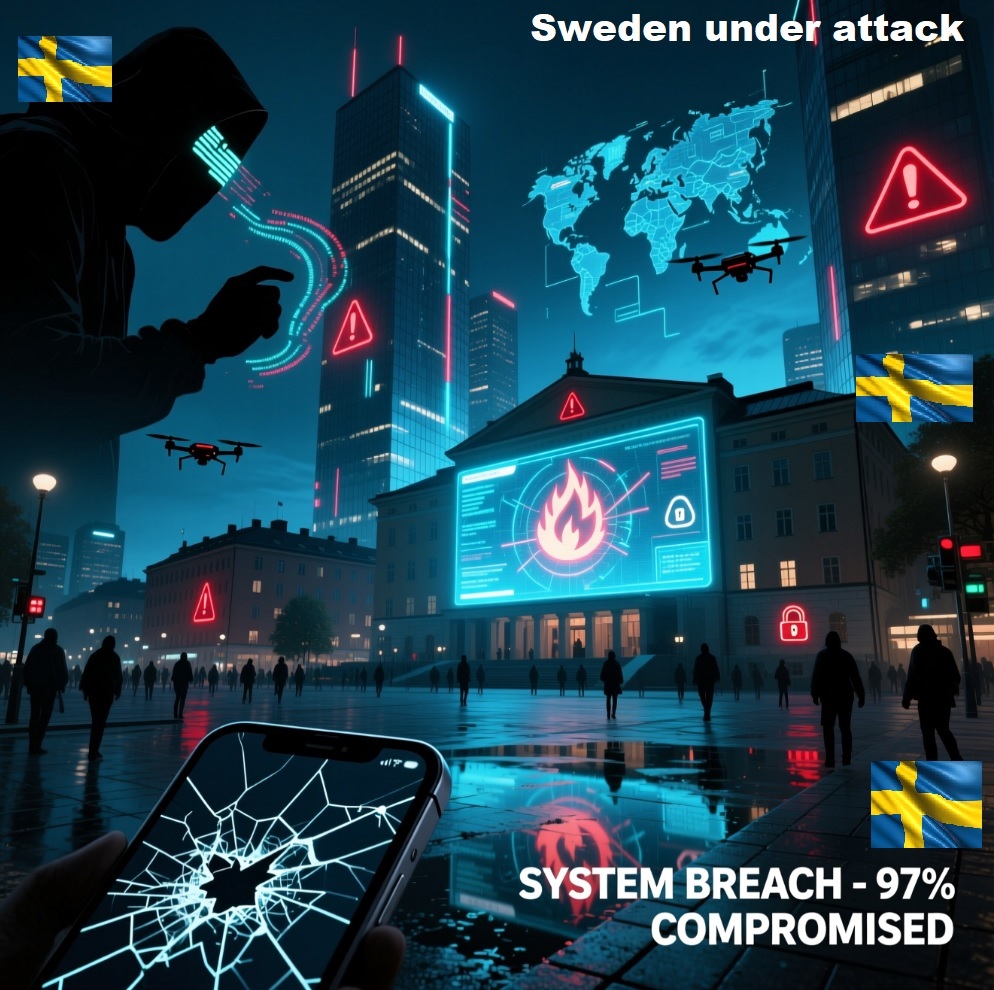
Stockholm, Sweden — 18 September 2025 – A significant cyberattack has targeted Swedish defence infrastructure, compromising three companies closely linked to the nation’s defence industry. The attack, which occurred earlier this week, exploited vulnerabilities within Miljödata, a key system supplier. As a result, several sensitive systems related to Sweden’s defence operations are now under scrutiny.
The Attack: A Blow to Sweden’s Defence Network
The cyberattack, which was identified early on September 14, appears to have targeted Miljödata’s systems—an essential supplier of IT services and data management solutions for numerous industries, including the defence sector. Miljödata’s clients include a wide range of critical organizations, but this breach primarily affects three defence contractors known to work closely with the Swedish Armed Forces.
Details of the attack remain limited, but sources suggest that the hackers gained access to a network containing highly sensitive information, including classified communications and defence-related documents. The breach has raised alarms across Sweden’s cybersecurity community, as the affected companies are integral to the supply chain of the nation’s military assets and infrastructure.
“The attack has the potential to disrupt not only the defence supply chain but also the operational readiness of critical defence systems,” said Erik Nyström, a cybersecurity expert based in Stockholm. “We are dealing with something far more significant than just a data breach—this could be a strategic attack against Sweden’s defence capabilities.”
An Investigation Underway
In response to the attack, the Swedish Armed Forces have initiated an immediate investigation. The Swedish Security Service (Säpo) is also involved, focusing on whether foreign state actors or cybercriminal groups could be behind the attack. Given the high stakes and the involvement of defence contractors, authorities are exploring various scenarios, including the possibility of espionage or sabotage by hostile foreign nations.
“We are taking this attack very seriously,” said Major-General Anders Persson, spokesperson for the Swedish Armed Forces. “We have activated our cybersecurity protocols, and our teams are working around the clock to contain the damage and understand the full scope of the breach. This is a national security matter.”
Sweden, which has long maintained a neutral stance in international conflicts, has been strengthening its defence capabilities in recent years in response to growing concerns over cyber warfare and regional instability. This incident raises questions about the country’s readiness in the face of increasingly sophisticated cyber threats.
Impact on Sweden’s Defence Industry
The attack’s ramifications are already being felt across Sweden’s defence industry. Three of Miljödata’s primary clients, all of which hold significant contracts with the Swedish Armed Forces, are now on high alert. These companies are involved in the development and maintenance of defence systems, including weapons platforms, radar systems, and military logistics software.
One of the affected firms, a leading defence technology provider, confirmed that part of its data, including proprietary algorithms and designs, was accessed during the breach. The company has since taken immediate action to secure its systems and prevent further unauthorized access. The other two companies, whose names have not been disclosed, are still evaluating the full extent of the damage.
“We are cooperating fully with authorities and our security teams are working relentlessly to mitigate the effects of the breach,” said Lars Håkansson, a senior executive at one of the affected companies. “We are focused on recovering the systems and ensuring that no classified information was exposed.”
Cybersecurity experts speculate that the attack could be the work of a well-coordinated group, possibly state-sponsored. There is a growing concern that adversaries may be probing Sweden’s military capabilities in preparation for future threats.
Growing Concerns Over Cybersecurity in Defence
The rise in cyberattacks targeting critical infrastructure, especially within the defence sector, has become an increasing concern globally. As countries modernize their defence capabilities, the digital domain has become just as important as physical military strength. This attack serves as a stark reminder that cybersecurity must be treated as a top priority by governments and defence companies alike.
In a statement, Sweden’s Ministry of Defence acknowledged the seriousness of the incident and vowed to take all necessary measures to safeguard the country’s defence assets moving forward.
“We cannot underestimate the importance of cybersecurity in the 21st century,” said Minister of Defence Karin Enström. “We are already strengthening our defence systems against cyber threats to ensure that this kind of breach does not happen again.”
A Call for Better Cyber Defences
As investigations continue, experts are calling for increased investment in cyber defence and enhanced collaboration between private defence contractors and government agencies. With the growing sophistication of cyberattacks, it is clear that traditional defence systems are no longer enough to protect sensitive military data.
“This incident underlines the urgent need for more comprehensive cybersecurity frameworks, both in Sweden and globally,” said Johan Sundqvist, a cybersecurity consultant. “It’s no longer just about securing data—it’s about protecting the very infrastructure that sustains national defence capabilities.”
The Swedish government is expected to announce new measures in the coming weeks, including more stringent regulations for private contractors handling sensitive military data. Additionally, authorities are calling for a broad reassessment of Sweden’s defence cyber strategies.
The Bigger Picture: Is Cyberwarfare the Future of Defence?
As cyberattacks become an increasingly frequent part of modern warfare, the lines between traditional military conflict and digital warfare are becoming more blurred. The attack on Miljödata is not just an isolated incident; it is part of a broader pattern of rising cyber tensions that threaten not only individual countries but global stability.
In this rapidly evolving digital age, defence sectors worldwide are beginning to rethink how they can secure their most critical assets. If Sweden, a country known for its advanced technological infrastructure, can be vulnerable to such a breach, then the threat is undoubtedly real for every nation in the world.
With the full extent of the attack still unclear, one thing is certain: Sweden’s defence sector is facing a new kind of threat, one that could have lasting implications for national security and global cyber relations. The coming weeks will be critical as investigators work to uncover the full scope of the breach and its potential impact on Sweden’s defence posture.
Stay tuned for updates as this developing story unfolds.