
In a nation long proud of its commitment to civil discourse and human rights, Sweden finds itself at the centre of a heated political and moral debate — sparked by a single, searing word: “beasts.”
The controversy erupted when Moderate Party group leader Mattias Karlsson took to social media platform X (formerly Twitter) to denounce a group of protesters gathered near the Jewish Hillel School in Stockholm’s affluent Östermalm district. The demonstrators, affiliated with the Jewish Anti-Zionist Alliance, were protesting a lecture by a former Israeli Defence Forces (IDF) soldier. Karlsson’s post didn’t mince words: “This is anti-Semitism in its purest form. Those who do this are not activists — they are beasts.”
The backlash was swift. Jewish community leaders, opposition politicians, and civil society voices condemned the language as dehumanizing and dangerous. Aron Verständig, chairman of the Jewish Central Council, called the rhetoric “unacceptable.” Social Democratic leader Magdalena Andersson went further, declaring that “a line has been crossed,” and demanding Prime Minister Ulf Kristersson hold his own party’s leadership accountable.
But perhaps the most incendiary figure in the unfolding drama is not Karlsson — but Sweden’s Foreign Minister, Maria Malmer Stenergard.
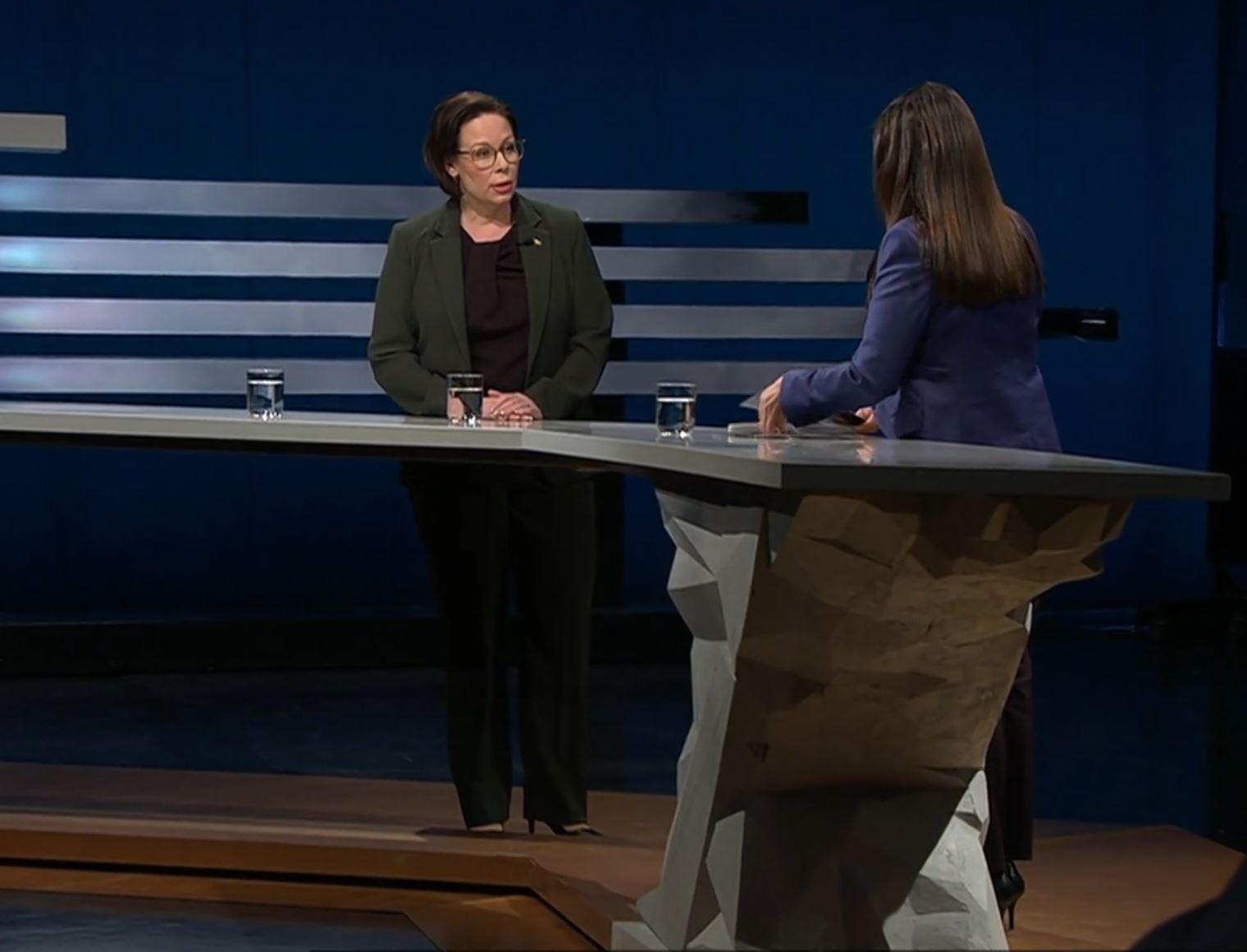
Stenergard not only shared Karlsson’s post but doubled down in a televised interview with SVT, declaring: “Just like the protesters, I am exercising my freedom of expression.”
“Strong Expression, Stronger Frustration”
When pressed on whether she truly believed the demonstrators were “beasts,” Stenergard didn’t retreat. “It is a strong expression,” she conceded, “but it reflects the strong frustration that many feel — that Jews are not safe in Sweden today.”
She painted a grim picture of rising anti-Semitism since October 2023: Jewish parents fearful for their children’s safety, individuals questioning whether they can wear the Star of David in public without fear, and schools becoming flashpoints for political confrontation.
“We can’t have it like that in Sweden,” she insisted. “I can’t accept that people demonstrate and thereby contribute to anxiety among parents and children.”
Her defence hinges on the principle of free speech — a right she says protesters themselves are exercising. But critics argue that equating political dissent with dehumanizing language undermines the very democracy she claims to protect.
Political Earthquake
The fallout has sent tremors through the Swedish political establishment. Magdalena Andersson, never one to shy from confrontation, launched a direct assault on Prime Minister Kristersson: “When you call other people beasts, you have crossed a line… Of course, he must tell us how he views leading moderates calling Swedish Jews beasts.”
Andersson didn’t stop there. When asked what she would do if a Social Democrat had used such language, her answer was unequivocal: “Scolded it after notes — and there would be consequences.”
Kristersson, however, has remained conspicuously silent — a silence that many interpret as tacit approval, or at best, political paralysis.
Context Complicates the Clash
Adding nuance to the controversy is the revelation that the protest occurred near a lecture by a former IDF soldier — a detail critics say was initially omitted from mainstream reporting. Supporters of the demonstrators argue their presence was a legitimate response to what they see as militarized propaganda on school grounds. Opponents counter that targeting a Jewish institution — regardless of intent — fuels fear and division.
The Jewish Anti-Zionist Alliance, meanwhile, maintains that their protest was non-violent and rooted in solidarity with Palestinians — not hatred of Jews. But in the current climate, intent matters less than impact. And for many Jewish families in Sweden, the impact has been fear.
A Nation at a Crossroads
This is more than a debate over one inflammatory word. It is a referendum on Sweden’s soul.
Can a society uphold free speech while drawing red lines against dehumanization? Can it condemn anti-Semitism without silencing dissent? Can political leaders model restraint in an age of outrage?
Maria Malmer Stenergard believes her language is justified by the urgency of the moment. “What is not reasonable,” she told SVT, “Is that we have been experiencing increasing anti-Semitism in Sweden since October 2023.”
Her critics, however, warn that responding to hate with hate — even rhetorically — only deepens societal fractures.
As Prime Minister Kristersson weighs his response, Sweden watches — and waits. The world, too, is watching. How a beacon of progressive values navigates this storm may well set a precedent for democracies everywhere.
Voices from the Debate
“Calling people ‘beasts’ doesn’t fight anti-Semitism — it fuels the fire.”
- Aron Verständig, Chairman, Jewish Central Council
“Freedom of expression doesn’t mean freedom from consequence.”
- Magdalena Andersson, Leader of the Social Democrats
“When Jewish children feel unsafe walking to school, strong words are the least we owe them.”
- Maria Malmer Stenergard, Foreign Minister
“Protest is not persecution. Conflating the two endangers democracy.”
- Jewish Anti-Zionist Alliance, statement to press
Final Thought:
In Sweden, a land where consensus once reigned, the battle over words may prove more divisive — and more defining — than any policy dispute. The question now is not just what was said, but what Sweden will become because of it.