
Reykjavík, Iceland’s capital, is reeling from an unprecedented early-winter snowstorm that has not only buried the city under nearly half a meter of snow but also shattered a 104-year-old meteorological record for October. The event marks one of the most extreme weather anomalies in Iceland’s recent climate history—and a stark illustration of the increasing volatility of North Atlantic weather patterns.
Record-Breaking Snowfall
Over a 48-hour period from Monday to Wednesday, a powerful Arctic air mass originating from Greenland swept across southwestern Iceland, triggering relentless snowfall. By Tuesday morning, the Icelandic Meteorological Office (IMO) had already recorded 27 centimetres of snow at its official Reykjavík station—surpassing the previous October record of 15 cm set in 1921.
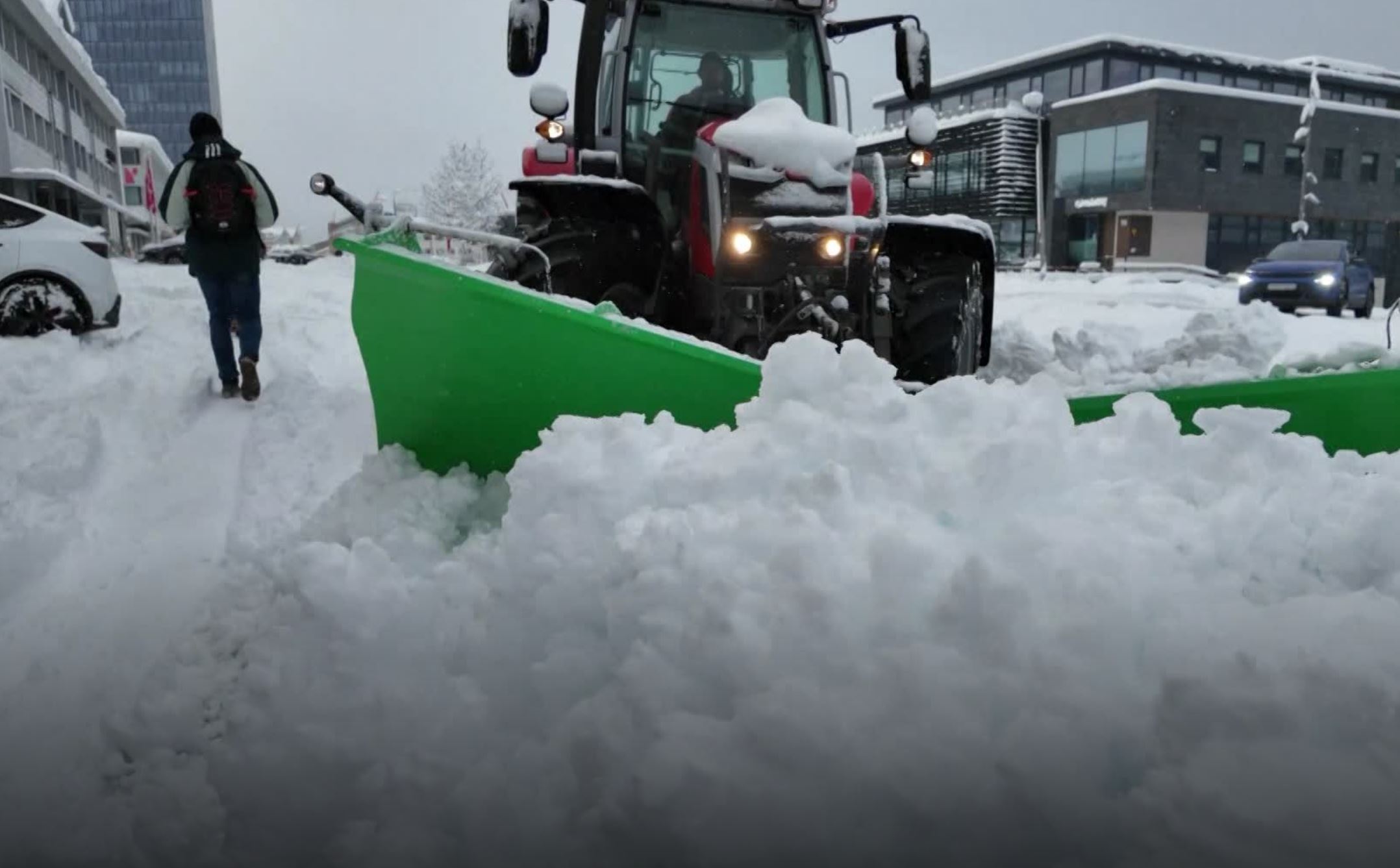
The storm did not relent. With visibility at times reduced to just 500 meters due to blizzard-like conditions, an additional 13 cm accumulated overnight. By Wednesday morning, snow depth in central Reykjavík reached a staggering 40 centimetres—a figure virtually unheard of for October and approaching the city’s all-time snow depth records of 55 cm (January 1937) and 51 cm (February 2017).
“This is not just unusual—it’s exceptional,” said a senior meteorologist at the IMO. “Based on the 1991–2020 climate normals, Reykjavík averages zero days with snow cover in October. What we’ve witnessed defies statistical expectation.”
Climate Context and Anomalies
While Iceland’s rugged terrain and subarctic location make it prone to volatile weather, snowfall of this magnitude in late October is extraordinary—even by Icelandic standards. Climate scientists note that such extremes may reflect broader shifts in polar jet stream behaviour, which can funnel Arctic air farther south than usual during periods of stratospheric instability.
Notably, this event occurred against a backdrop of above-average autumn temperatures across the North Atlantic. The contrast between a warming regional climate and sudden, intense cold outbreaks underscores the growing unpredictability of seasonal transitions—a concern for infrastructure planning, emergency response, and tourism across the Nordic region.
Transport Chaos and Public Response
The snowstorm brought Reykjavík’s transport network to a near standstill. On Tuesday morning, roads became treacherous as drivers—many still on summer tires—found themselves stranded on icy streets. The Reykjavík Police issued urgent warnings, with Duty Chief Árni Friðleifsson telling national broadcaster RÚV: “Driving on summer tires in these conditions isn’t just unwise—it’s reckless. People need to stay off the roads unless absolutely necessary.”
Outside the capital, disruptions continued into Wednesday. A bus skidded off a highway, temporarily closing a key route, while the vital corridor between Reykjavík and Keflavík International Airport faced repeated delays. At least seven transatlantic flights—bound for the U.S. and Canada—were cancelled due to poor visibility and runway conditions, stranding hundreds of passengers during a peak travel window.
Outlook: Thaw Ahead, But Risks Remain
As of Thursday morning, temperatures in Reykjavík hovered at –7°C, with snowpack measured at 36 cm after some wind-driven redistribution. However, a significant warm front is advancing from the southwest. Forecasts from the IMO indicate a rapid temperature rise over the weekend, with highs expected to reach 10–11°C by Saturday—a swing of nearly 18 degrees in just 72 hours.
While the thaw will ease travel conditions, it introduces new risks: rapid melting combined with frozen ground could lead to localized flooding, particularly in low-lying urban areas with overwhelmed drainage systems.
Broader Implications for the Nordics
This event serves as a potent reminder that climate change does not merely mean gradual warming—it also amplifies the frequency and intensity of extreme weather outliers. For Nordic cities like Reykjavík, which are not historically equipped for heavy October snowfall, such anomalies pose serious challenges to urban resilience, emergency preparedness, and seasonal infrastructure planning.
As the region continues to experience increasingly erratic weather patterns, policymakers and businesses alike must prioritize adaptive strategies—from revising tire regulations and snow-clearing protocols to reevaluating climate risk models for critical transport and energy networks.
For now, Reykjavík digs out—literally and figuratively—from a storm that has rewritten the record books and reignited urgent conversations about climate resilience in a warming, yet increasingly unpredictable, Arctic-adjacent world.