
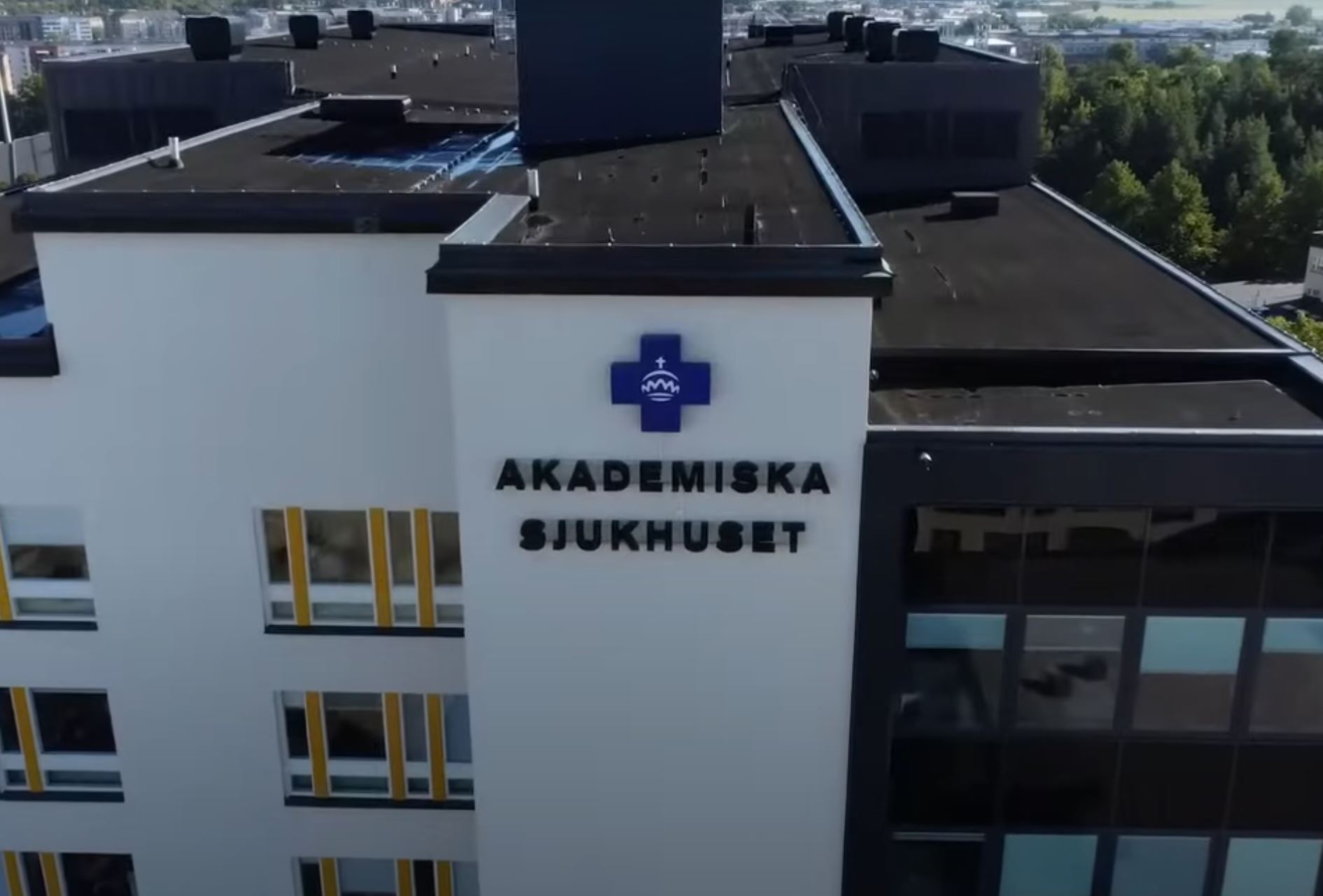
The police have launched an investigation into three suspected cases of attempted murder after several employees at the children’s hospital department of Akademiska sjukhuset in Uppsala fell seriously ill and required intensive care. As of now, no suspect has been identified.
What we know
- Three staff members in the same department became ill: one on October 25, two on November 3.
- All three required intensive care at the time of being admitted; they have since been discharged to less intensive treatment and have been interviewed by police.
- According to Sveriges Television (SVT), all three worked in the same department within the children’s hospital unit.
- The police’s press spokesperson, Magnus Jansson Klarin, says many samples are being taken to determine why they fell ill. The only consistent commonalities: same symptoms and same workplace.
- The hospital’s public statement says investigations into indoor air quality, tap water, medication management and patient-related links have thus far shown no obvious cause.
- Some hospital staff, speaking anonymously to SVT, suggest the illnesses are linked to unexpectedly low potassium levels—a serious issue, since potassium helps regulate heart activity. They say they can’t see a natural explanation for all three falling ill with the same anomaly at that workplace.
Why this matters
From a business and organisational perspective several issues stand out:
Risk to staffing & operations: This isn’t a routine illness cluster. Having three people in intensive care in the same department creates major disruption. It raises questions about continuity of care, staffing resilience and reputational risk for Akademiska sjukhuset.
Workplace safety and trust: For hospital staff, feeling safe in the workplace is essential. If employees believe the workplace is unsafe (for example, via potential poisoning), this could erode trust in management and lead to retention problems. The employee commentary in the initial article (“Unpleasant”, “it is serious … difficult to see a natural cause”) underlines that.
Legal and regulatory exposure: The transition from “cluster illness” to “attempted murder investigation” markedly ups the stakes. If a malicious act is confirmed, the hospital will face not only medical-investigation costs, but also legal liabilities, insurance implications and broader risk to its brand.
Precedent for health-care providers: A hospital environment is among the most highly regulated and delicate organisational settings. The fact that environmental/home-workplace causes have been ruled out (so far) gives this incident an unusual dimension—opening potential scrutiny into internal processes, supplies, security protocols and staff-vulnerability to malicious actions.
Key unanswered questions
- What exactly are the symptoms and lab findings for the affected staff members? “Low potassium” is mentioned, but what’s the precise medical diagnosis and timeline?
- What access control and security measures exist in the department? If poisoning is suspected, how could someone introduce a harmful substance into a hospital unit?
- Why did the three incidents cluster in the same department but on different dates? Does this suggest a continuing opportunity for whoever did it, or multiple exposures?
- What is the status of the investigation: which such cases typically involve forensic toxicology, security camera analysis, staff interviews, supply-chain review. No suspect yet means this may take time — but it also means the hospital remains at risk.
- What are the potential financial impacts for the hospital (and for the region) if staffing disruptions, medical-liability claims or regulatory fines result?
Recommendation for management & business leaders
For hospital executives, regional health authorities and business-leaders in the Nordic healthcare sector:
- Review and update incident-response protocols. This includes rapid triage of unusual illness clusters, coordination with law-enforcement, communication plans and staff-support.
- Communicate proactively. Stakeholders—staff, patient families, regional authorities—need clear, honest information. Delays or ambiguity fuel speculation and erode confidence.
- Audit security and supply-chain vulnerabilities. Although work-environment factors (air, water) are reportedly not implicated, the possibility of malicious poisoning means review of access, supervision, chemical/medication controls and environmental monitoring.
- Monitor financial and operational impact. Even if the root cause is confirmed as external—not organisational fault—the hospital and region may still face increased costs, staffing shortfalls, or reputational damage that affects future patient volumes.
- Share lessons across the health-care network. Others in the Nordic region should view this case as a warning: unusual health clusters can signal organisational risk far beyond the event itself.
What started as three staff members suddenly falling ill has escalated into a police investigation of attempted murder at one of Sweden’s major children’s hospitals. For the business side of healthcare in the Nordics, this matters not just as a crime story but as a case study in organisational risk, staff trust, operational resilience and regulatory exposure. The fact that no suspect is yet identified keeps the situation unresolved—and the risk open.
The Nordic Business Journal (NBJ) will continue to follow the developments and will report promptly our findings or the emergence of new development.