
In a landmark move underscoring Sweden’s deepening economic and moral commitment to Ukraine, leading Nordic grocery retailers Ica and Coop have launched an unprecedented, large-scale program to feature and promote Ukrainian-made food products across their national retail networks. Far more than a symbolic gesture, this initiative represents a strategically coordinated, state-backed commercial effort to accelerate Ukraine’s post-war economic recovery by integrating its producers into one of Europe’s most competitive and trusted food retail ecosystems.
A Strategic Trade Initiative, Not Just Solidarity
While public statements from Ica and Coop emphasize solidarity with Ukraine, the underlying strategy is economically sophisticated and operationally robust. Both retailers have implemented an expedited onboarding protocol that reduces the average time for Ukrainian suppliers to get products onto shelves from 6–9 months to under 3 months — a reduction of more than 50%. This is achieved through streamlined documentation, waived entry fees, dedicated logistics lanes, and pre-vetted quality assurance checkpoints.
The initiative includes over 120 Ukrainian products currently available in more than 1,200 stores across Sweden, spanning high-demand categories such as:
- Organic honey and wild berry preserves (notably from the Carpathian region)
- Freeze-dried berries and dried fruits (high in antioxidants, popular in health-conscious markets)
- Cold-pressed sunflower and rapeseed oils (Ukraine is the world’s largest exporter of sunflower oil)
- Artisanal flavoured popcorn, plant-based snacks, and specialty grain products
These items are not positioned as “charity goods” but as premium, competitively priced alternatives to existing offerings — a critical factor in gaining consumer trust and long-term shelf presence.
Government-Retail Partnership: A Model for Economic Resilience
This effort is not occurring in isolation. It is part of a broader Swedish national strategy — the Ukraine Market Access Initiative (UMAI), launched in 2023 and formally endorsed by the Ministry for Foreign Affairs and the Swedish Agency for Economic and Regional Growth (Tillväxtverket). The program coordinates between retailers, logistics providers, and Ukrainian trade associations to remove systemic barriers to export.
Key components include:
- Donation of refrigerated transport units to Ukrainian cooperatives, enabling cold-chain compliance for perishable exports — a critical hurdle for many small producers.
- Joint marketing campaigns featuring Ukrainian brands in-store and via digital channels, with Coop’s “Till Ukraine” campaign and Ica’s “För Ukraina” shelf tags driving consumer awareness.
- Trade facilitation grants covering certification costs (e.g., EU organic, HACCP) for Ukrainian SMEs.
- Training programs delivered by Swedish food safety experts to help Ukrainian producers meet stringent Nordic and EU regulatory standards.
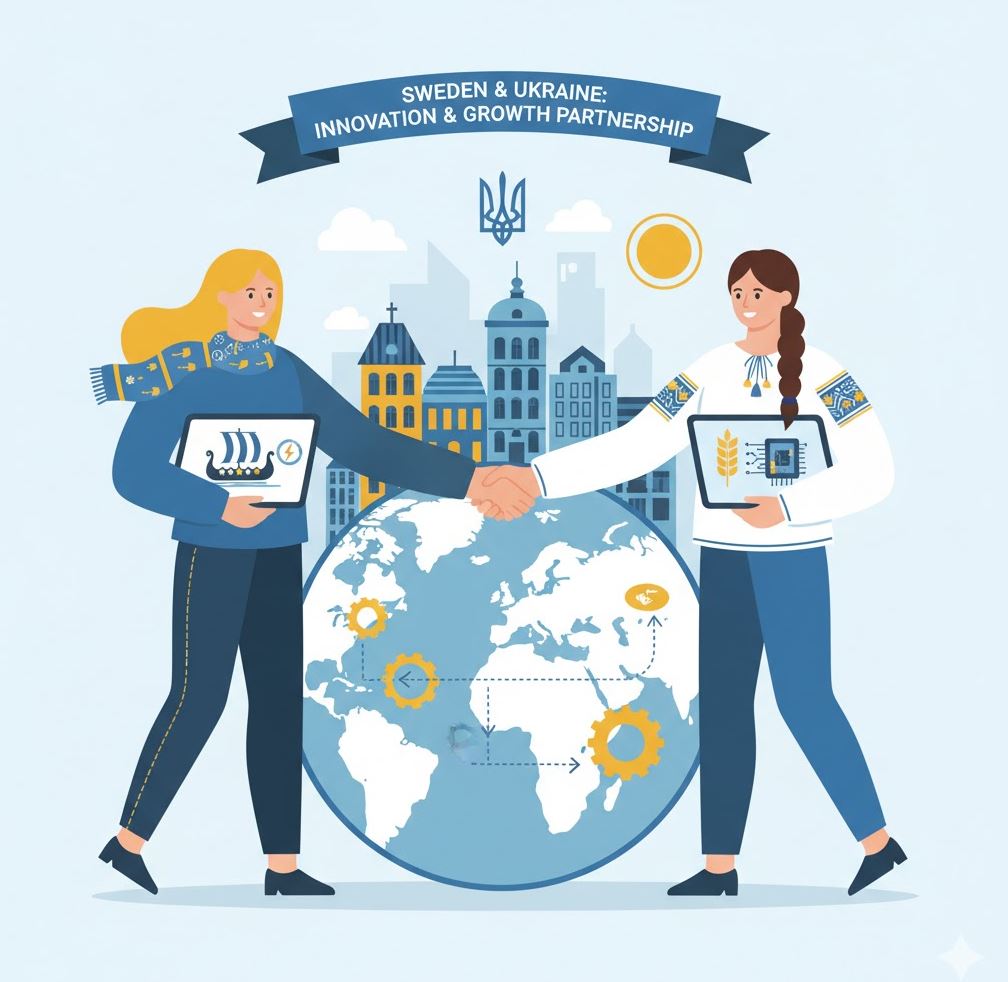
Economic and Geopolitical Impact
The initiative delivers dual value:
- For Ukraine: Over 300 Ukrainian SMEs have accessed new export revenue streams, with some reporting 200–400% year-over-year growth in export sales to Sweden alone. This diversifies Ukraine’s export base beyond traditional commodities (grain, steel) into higher-value agri-food products — a vital step toward post-conflict economic resilience.
- For Sweden: Consumers benefit from increased product diversity and access to sustainably sourced, high-quality goods. Retailers enhance their ESG credentials and deepen customer loyalty — a clear competitive advantage in a market where 78% of Swedes say they prefer to buy from companies supporting Ukraine (Nordic Consumer Insights, Q3 2025).
Critically, this model transforms solidarity from a rhetorical stance into a measurable economic engine. According to the Ukrainian Export Promotion Office, Sweden has become the 7th largest EU importer of Ukrainian food and beverage products in 2024, with retail sales exceeding €180 million — up 310% from 2022.
Why This Matters for the Nordic Region
This initiative sets a new benchmark for how Nordic businesses can leverage their market power in support of geopolitical stability. Unlike aid programs that rely on donor funding, Ica and Coop’s model is self-sustaining: Ukrainian producers earn revenue, Swedish retailers gain loyal customers, and consumers enjoy better products — all while contributing to Ukraine’s sovereignty through economic empowerment.
Other Nordic retailers — including Norway’s Rema 1000 and Denmark’s Netto — are now evaluating similar frameworks. The European Commission has cited the Swedish model as a “template for market-based solidarity” in its 2025 report on Ukraine’s economic recovery.
Conclusion: Trade as a Tool of Sovereignty
Ica and Coop’s actions are not merely commercial decisions — they are acts of strategic statecraft conducted through the marketplace. In an era where economic resilience is inseparable from national security, Sweden has demonstrated that supporting Ukraine means more than donating tanks or aid packages. It means opening your supermarket shelves, your supply chains, and your consumer trust to Ukrainian entrepreneurs.
This is not charity. It is investment.
It is not sympathy. It is strategy.
And it is working.
— Nordic Business Journal Analysis Team
Data Snapshot (as of Q3 2025)
– 🇺🇦 312 Ukrainian suppliers active in Swedish retail
– 💰 €184M in Ukrainian food exports to Sweden (2024)
– ⏱️ Average shelf-entry time: 8 weeks (vs. 26 weeks pre-2023)
– 📈 74% of Swedish shoppers report purchasing Ukrainian products at least monthly
– 🚚 112 refrigerated trucks donated to Ukrainian logistics cooperatives
Sources: Swedish Food Agency, Ukrainian Export Promotion Office, Ica & Coop Sustainability Reports, Nordic Consumer Insights (NCI), Tillväxtverket