
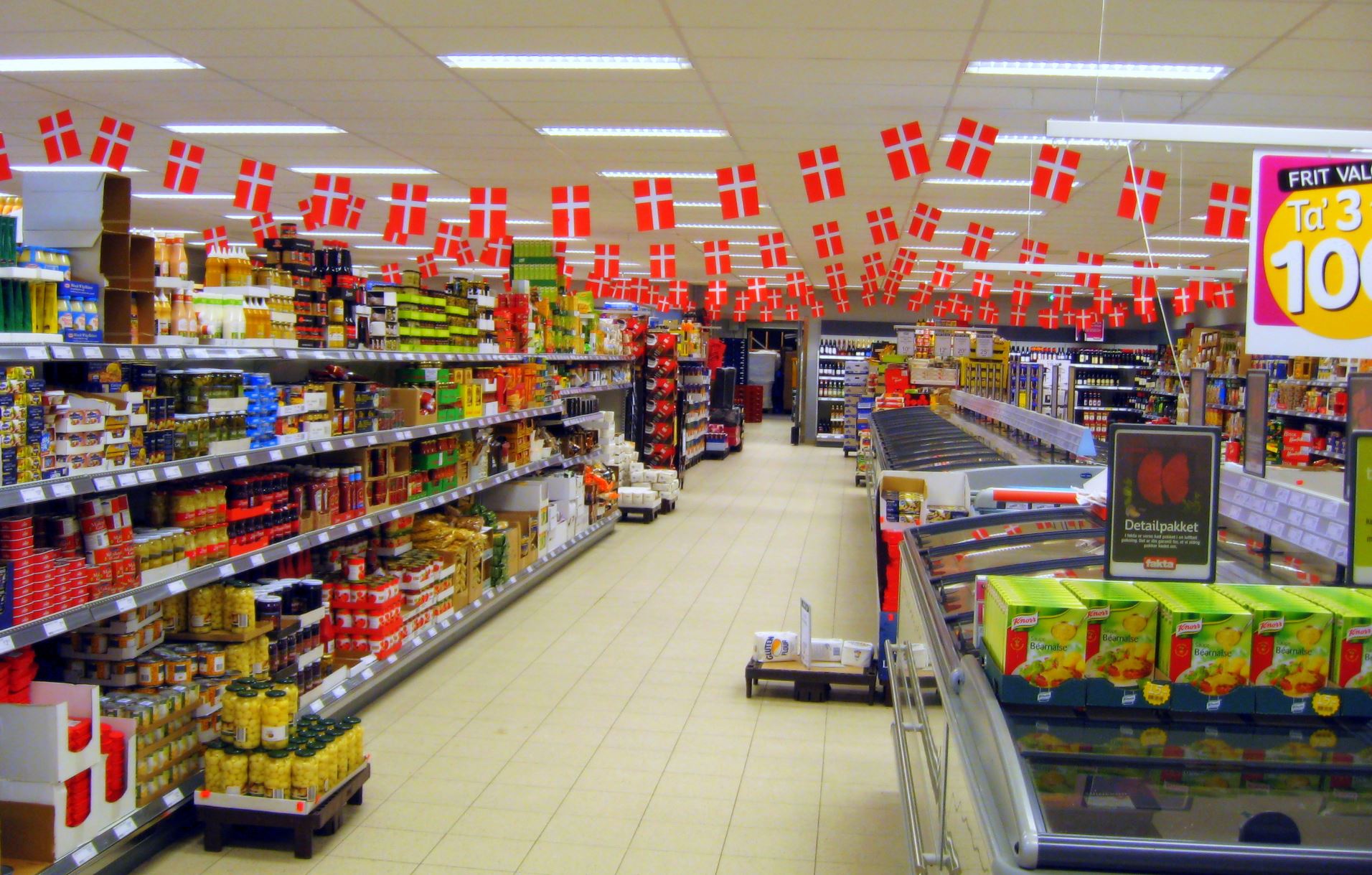
After five straight years of persistent inflation, Danish households are finally catching a break. Prices for food and non-alcoholic beverages have fallen for three consecutive months — October’s drop the steepest since early 2023. The trend marks a turning point for consumers, politics, and policy heading into the 2026 election year.
1. From Record Highs to Real Declines
Between 2020 and late 2025, Danish food prices surged more than 30%, pushed up by global supply shocks, extreme weather, and high energy costs. Beef, eggs, coffee, and grains became inflation’s poster children — beef alone hit nearly 50% above pre-pandemic levels.
Now, the pressure is easing:
- Coffee: down 3.4% in October — the sharpest fall since 2021.
- Flour and groats: down 5.3%, leading all food categories.
- Overall: food and non-alcoholic drinks down 1.8% in October, following smaller declines in August and September.
Prices are still 4.5% higher than a year ago, but the momentum has shifted.
“We’re seeing the first sustained easing of food price pressures since the inflation surge began,” says Louise Aggerstrøm Hansen, Chief Economist at Danske Bank. “This isn’t a blip — it’s the result of global and domestic forces finally moving in sync.”
2. What’s Driving the Reversal
The drop isn’t primarily a domestic policy win. It’s rooted in global market shifts:
- Coffee: Bumper harvests in Brazil and Vietnam boosted inventories; ICE futures down over 22% since March.
- Beef: Chinese imports eased while European supply improved, pushing Danish prices 8% below their 2024 peak.
- Grains: Global wheat and barley stocks hit multi-year highs, softening volatility caused by war and drought.
“The idea that inflation is ‘sticky’ has been overplayed,” Hansen adds. “When input costs fall, prices follow — the lag is closing.”
3. The Big Shock Still Ahead: Cheaper Electricity
The biggest relief won’t come from groceries but from power bills. Starting January 1, 2026, Denmark will scrap its household electricity tax, cutting average bills by 30–35% — savings of €300–€400 per family.
Why it matters: electricity weighs four times more in household spending than beef. Lower power costs ripple through everything — refrigeration, logistics, manufacturing, even cooking.
Economists expect this to shave 0.8–1.2 percentage points off 2026 headline inflation.
“This is a systemic disinflationary shock,” Hansen says. “It lowers costs across the entire value chain.”
4. More Relief Coming — and One New Headache
Tax cuts on coffee and chocolate will follow in summer 2026, as the 2022 “sin tax” fully phases out. The CPI impact is minor, but politically, it reinforces the sense that cost pressures are finally easing.
The catch: new packaging fees. Since October 1, 2025, the Extended Producer Responsibility (EPR) scheme requires retailers to pay for packaging waste. Most chains admit they’ll eventually pass the cost on.
So far, the impact hasn’t appeared in official data — either because retailers are delaying price hikes or offsetting costs through scale. But Hansen warns,
“It’s a structural cost increase. If passed on, it could add up to 1.8% to grocery inflation early next year.”
5. Strategic and Political Stakes
This moment doubles as a policy stress test.
- Government: The timing of the electricity tax repeal is politically sharp. Inflation peaked in 2024; the ruling coalition can now point to visible relief heading into election season.
- Businesses: Retailers must decide whether to absorb the packaging fee or risk consumer backlash. The next quarter will reveal pricing discipline.
- Consumers: For the first time since 2019, real disposable income could rise as food, power, and “sin” taxes all ease together.
6. Outlook: Cautious Optimism
Danske Bank expects headline inflation to drop below 2% by Q3 2026, finally within target. Food prices should stabilize, electricity will anchor disinflation, and structural reforms — not central bank tightening — are now doing the heavy lifting.
“It’s a healthier, more durable path to price stability,” Hansen concludes. “But packaging costs remain the swing factor for early 2026.”
Key Takeaways for Nordic Business Leaders
| Factor | Impact | Timing | Strategic Implication |
| Food prices | Sustained decline | Q4 2025–Q2 2026 | Refresh affordability messaging; avoid deep-discount overreach |
| Electricity tax repeal | Major disinflationary driver | Jan 2026 | Reassess energy-heavy operations; expect demand rebound |
| Coffee/chocolate tax removal | Moderate relief | Summer 2026 | Launch “tax-free” campaigns for premium products |
| Packaging fee (EPR) | New cost pressure | Q1 2026 | Explore eco-efficient packaging; monitor competitors |
| Consumer sentiment | Rising | Now–mid-2026 | Build loyalty through value-focused communication |
7. The Bigger Picture
Denmark is entering rare alignment: global prices are cooling, domestic policy is easing household costs, and inflation expectations are finally anchoring lower. After five years of relentless increases, Danes can expect their shopping baskets — and electricity bills — to genuinely shrink.
The challenge is keeping it that way.
Businesses need transparency. Policymakers need restraint. And consumers deserve to see this relief last.
The tide has turned. The question now is whether Denmark will ride it — or let it fade.
Sources: Statistics Denmark (Oct 2025), Danske Bank Economic Forecast (Nov 2025), Danish Energy Agency, ECB Inflation Tracker, ICE Futures Coffee and Wheat Indices.