
At least 42 migrants perished in the Central Mediterranean on November 8 when an overloaded rubber dinghy capsized off Libya’s coast, according to the International Organization for Migration (IOM). Just seven survivors were rescued from the wreckage, which carried 49 people primarily from sub-Saharan Africa. The victims—29 Sudanese, eight Somalis, three Cameroonians, and two Nigerians—add to a death toll that has surpassed 1,000 migrants in 2025 alone along this route, bringing the total number of lives lost in the Mediterranean since 2014 to over 33,800.
This latest tragedy is not an isolated incident but a predictable outcome of a failed policy architecture that has transformed the world’s deadliest migration route into a humanitarian catastrophe with profound implications for Nordic countries.
The Central Mediterranean: A Statistical Emergency
The central route connecting North Africa to Europe—particularly from Libya and Tunisia to Italy and Greece—has become synonymous with mass casualty events. Data from the IOM’s Missing Migrants Project reveals a grim pattern:
- 2015-2017 peak: Annual deaths exceeded 3,700 in 2015 and surpassed 4,000 in 2016, with single incidents claiming up to 850 lives
- Consistent mortality: Even in recent years, casualty figures regularly exceed 2,000–3,000 annually
- Demographic concentration: Sub-Saharan Africans comprise the overwhelming majority of victims, with Sudanese, Somalis, Eritreans, Nigerians, Cameroonians, Malians, and Gambians appearing repeatedly in survivor reports and casualty lists
Table 1: Fatal Incidents by Nationality Composition (Selected)
| Date | Location | Fatalities | Primary Nationalities |
| April 2015 | Off Libya | ~850 | Eritrea, Senegal, Mali, Gambia, Ethiopia |
| September 2016 | Off Egypt | 204 | Multiple sub-Saharan African states |
| June 2023 | Off Greece | 82+ | Data pending |
| November 2025 | Off Libya | 42 | Sudan, Somalia, Cameroon, Nigeria |
Preliminary figures subject to verification
The October 2025 Tunisia incident, which claimed 40 lives (including 12 children under five), and a simultaneous Libya shipwreck with 18 fatalities further demonstrate that these are recurring, not exceptional, events. In all cases, sub-Saharan Africans constitute the primary victim demographic.
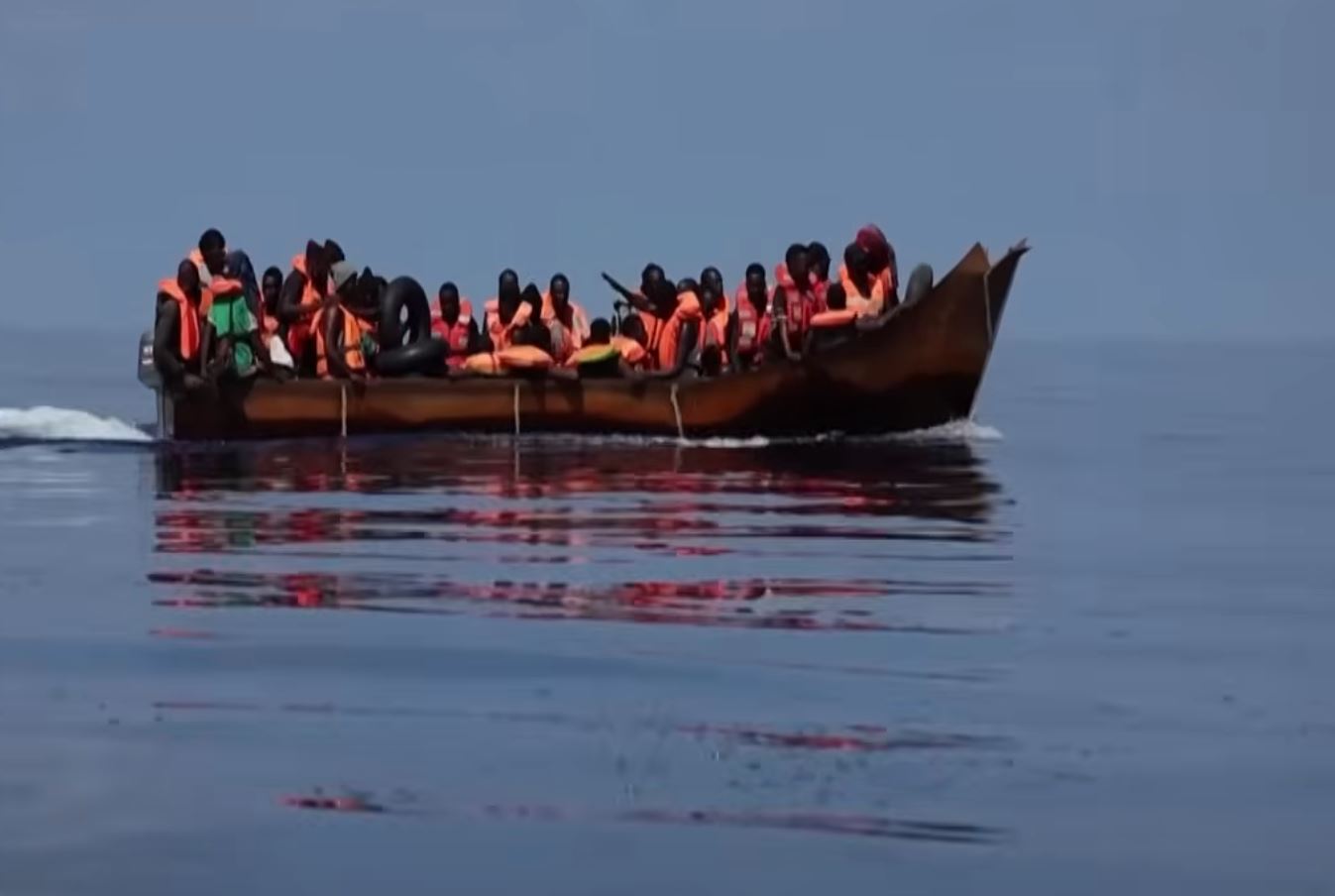
Root Cause Analysis: When Policy Becomes Peril
The persistence of this crisis stems from a dysfunctional interplay between push factors in Africa and policy failures in Europe that inadvertently amplify risk.
African Push Dynamics
- Conflict and instability: Civil war in Sudan, insurgencies across the Sahel, and authoritarian repression in Eritrea and Cameroon drive forced displacement
- Economic precarity: Youth unemployment exceeding 60% in some regions, combined with currency devaluation and food insecurity, makes migration a rational economic calculation
- Climate vulnerability: Desertification and resource scarcity in the Horn of Africa and Sahel are projected to displace 86 million Africans by 2050, according to World Bank estimates
- Governance collapse: State fragility in Libya and Mali has enabled smuggling networks to operate with impunity, while limiting legal migration pathways
European Policy Failure as a Risk Multiplier
European migration policies have evolved from containment to externalisation, creating a system that exports border control while importing human tragedy:
- Border externalization paradox: The EU’s €1 billion+ investment in Libyan coast guard capacity and African migration partnerships has hardened borders without addressing root causes. This has merely displaced routes to more dangerous pathways, increasing mortality by an estimated 30% since 2017, per IOM data.
- Visa regime strangulation: Hardened visa policies for African nationals have reduced legal migration by 45% from pre-2015 levels while pushing migrants into smuggler-dependent irregular channels. The result: a 70% increase in maritime crossing attempts despite stagnating arrival numbers.
- Aid diversion: Over 40% of EU development aid to Africa is now earmarked for migration control, cannibalizing funds from job creation and climate adaptation programs that could reduce push factors.
- Circular migration collapse: Restrictions on temporary labour mobility have eliminated a critical safety valve. Pre-2015 circular migration programs allowed 200,000+ seasonal workers annually; today that figure is under 30,000, trapping populations in conflict zones.
The Nordic Dimension: Values Versus Strategy
For Nordic nations—Sweden, Denmark, Norway, Finland, and Iceland—this crisis presents both a humanitarian imperative and a strategic dilemma:
Humanitarian Leadership Undermined
Nordic countries have historically contributed 18% of UNHCR’s budget despite representing less than 4% of global GDP. Yet their influence on EU-wide migration policy remains marginal. Norway’s NOK 1.2 billion development commitment to the Sahel (2021-2025) is commendable, but it cannot offset the destabilizing effects of EU externalization policies that Nordic states have tacitly supported.
Economic Implications
- Labor market paradox: Nordic economies face acute skill shortages (estimated 200,000 unfilled positions by 2027), yet restrictive asylum policies prevent matching African labour with demand. The economic cost of this mismatch exceeds €12 billion annually across the Nordics, according to OECD estimates.
- Remittance leverage: African migrants in the Nordics send home $850 million annually—funds that dwarf official development assistance and directly address poverty. Each prevented migration represents a lost development finance stream.
Sovereignty Tensions
Denmark’s controversial decision to process asylum seekers in Rwanda and Sweden’s 2023 reduction in resettlement quotas signal a retreat from Nordic solidarity principles. These policies, while domestically popular, undermine Nordic advocacy for human rights-based migration governance at the EU level, reducing moral authority in African partnerships.
Policy Prescriptions: From Containment to Management
The Libya shipwreck underscores that the current strategy is not reducing migration—it is simply making it more lethal. A Nordic-led policy reset should focus on:
1. Legal pathway expansion: Create 50,000 annual humanitarian visas for sub-Saharan African nationals, prioritizing vulnerable groups. This would cut smuggler revenue by an estimated €200 million annually while providing labour market access.
2. Conditional engagement: Tie development aid to African partners directly to migration management outcomes—not border enforcement but job creation and legal mobility infrastructure.
3. Rescue and responsibility sharing: Establish a Nordic-Mediterranean rescue consortium with predictable disembarkation protocols, ending the ad hoc “port of safety” negotiations that delay rescues.
4. Circular migration revival: Negotiate EU-wide seasonal worker programs with Sahel and Horn of Africa nations, modelled on Norway’s successful agricultural worker schemes but scaled tenfold.
5. Climate mobility framework: Advocate for UN recognition of climate-induced migration to create legal protections for the 86 million projected African climate migrants, pre-empting future crises.
Conclusion: The Cost of Inaction
The 42 lives lost off Libya are not a tragedy of circumstance but a policy choice. Each death represents a governance failure—African and European alike. For Nordic countries, continuing to underwrite EU externalization policies while maintaining humanitarian pretensions is strategically untenable and morally indefensible.
The business case is clear: current policies cost lives, damage African economic partnerships, and deprive Nordic economies of needed labour. The humanitarian case is clearer: as long as safer pathways are blocked, the Mediterranean will continue to serve as a mass grave for Africa’s youth.
Nordic leadership must shift from managing the consequences of failed policy to architecting solutions that align economic interests with humanitarian obligations. The alternative is another decade of shipwrecks, another 10,000 funerals at sea, and a continued erosion of the rules-based international order that Nordic prosperity depends upon.
For Nordic Business Journal readers, the question is not whether migration will continue—it will. The question is whether Nordic nations will lead in making it safe, legal, and mutually beneficial, or continue to subsidize a system that drowns both people and principles.