
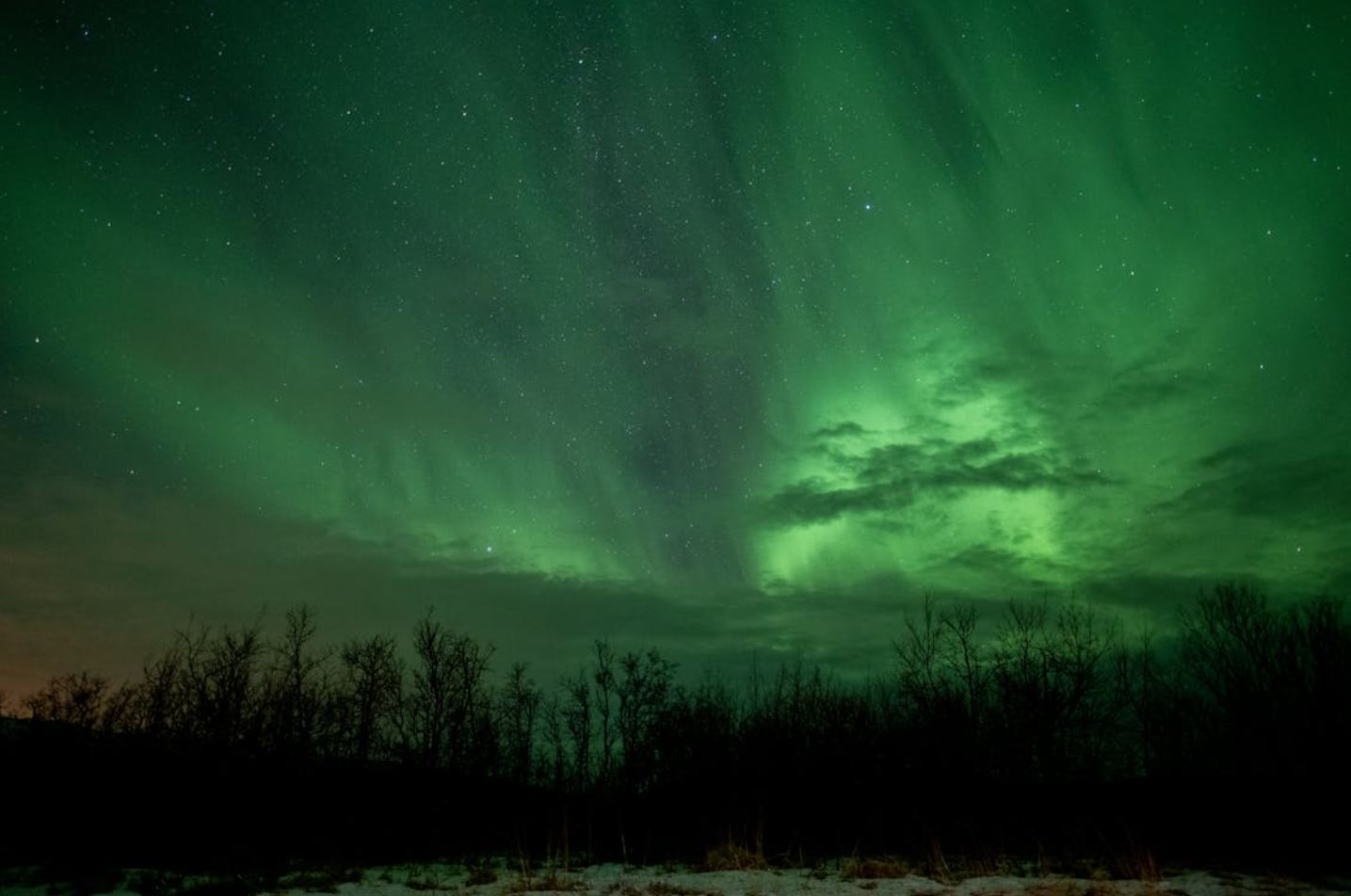
COPENHAGEN, DENMARK — A sequence of unprecedented solar activity has triggered one of the most powerful geomagnetic storms in over a year — and potentially the strongest since May 2024 — delivering a rare spectacle of the aurora borealis visible across Denmark, including its southernmost regions. The event, driven by three consecutive coronal mass ejections (CMEs), including the most powerful solar flare of 2025 to date, is now entering its peak phase, with heightened risks to critical infrastructure and aviation systems.
The Science Behind the Spectacle
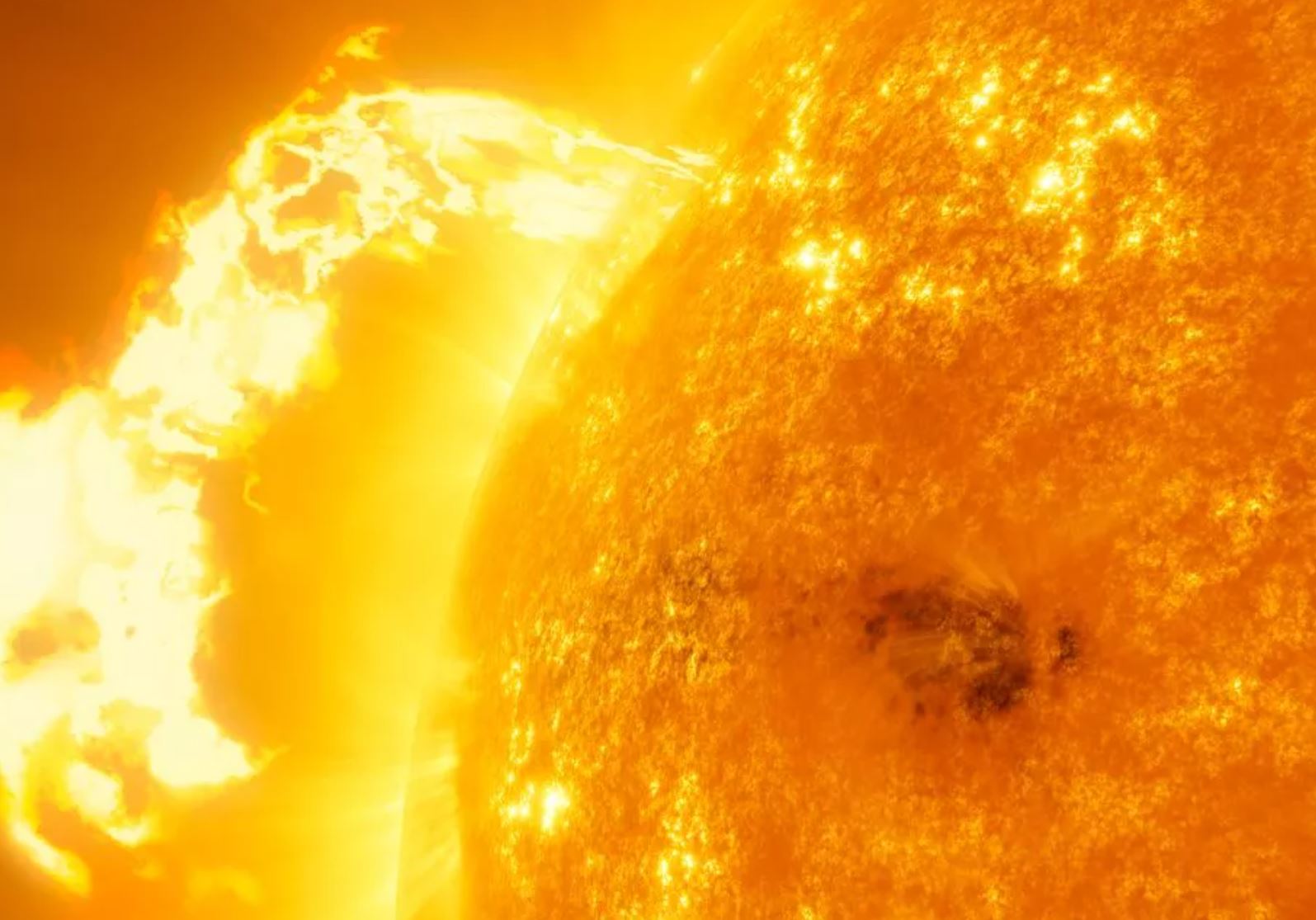
Between November 9 and 11, the Sun unleashed three major solar flares — including an X5-class flare on November 11, the most intense of the year — each accompanied by a massive ejection of magnetized plasma into space. These events, known as coronal mass ejections (CMEs), travelled toward Earth at speeds exceeding 740 km/s, with the final CME forecast to reach over 1,000 km/s — nearly triple the typical solar wind velocity of 300–500 km/s.
What makes this event extraordinary is the phenomenon known as a “cannibal CME”: the second and third CMEs overtook and merged with the first, compressing the plasma cloud and amplifying its magnetic energy. This “triple cannibal” effect has produced a Category 4 (G4) geomagnetic storm — the second-highest level on the NOAA Space Weather Scale — and is expected to peak between 7:00 PM and 10:00 PM CET on Wednesday, November 12, with residual effects continuing into Thursday, November 13.
“This is not just a strong storm — it’s a textbook example of how solar activity can compound,” says Dr. Michael Linden-Vørnle, astrophysicist at DTU Space. “We haven’t seen a G4 storm of this magnitude since May 10, 2024. The last time we experienced something comparable was in 2003 — and before that, 2006, when radiation levels reached aviation safety thresholds.”
Northern Lights Visible Far South — But Weather Is the Wild Card
For the first time since 2024, residents across Denmark — including Copenhagen, Funen, and southern Jutland — have reported visible auroras. Typically confined to latitudes above 60°N, the aurora borealis is now visible as far south as 55°N due to the extreme disturbance of Earth’s magnetosphere.
The aurora’s signature green glow — caused by oxygen atoms at 100–200 km altitude — has been supplemented by rare crimson and violet hues at higher altitudes (>250 km), indicating exceptionally energetic particle collisions in the upper atmosphere.
Visibility Outlook (November 13, 2025):
- Best Chance: Southern Denmark (e.g., Sønderborg, Tønder, Ribe) — clear skies forecast between 9 PM and 1 AM.
- Moderate Chance: Eastern Denmark (Zealand, Lolland-Falster) — partial clearing expected after midnight.
- Low Chance: Northern Jutland and islands — persistent cloud cover and rain will likely obscure views.
- Key Advantage: The Moon does not rise until after midnight, minimizing light pollution during peak auroral activity.
Dr. Linden-Vørnle advises the public to monitor real-time aurora forecasts via apps like My Aurora Forecast or Aurora Alerts, or follow trusted Facebook groups such as Aurora Watch Denmark. “There are no guarantees — but if you’re prepared, with a clear northern horizon and patience, you may witness something you’ll remember for decades.”
Beyond the Lights: Significant Technological Disruptions Expected
While the visual spectacle captures public attention, the true impact of this storm lies in its disruption to critical systems:
Aviation and Radiation Risks
- Radiation Exposure: Passengers and crew on transatlantic and high-latitude routes (e.g., Copenhagen–New York, Copenhagen–Reykjavik) are exposed to 15–20% higher cosmic radiation levels than normal — approaching levels last seen in 2006.
- Flight Rerouting: Airlines are already diverting polar routes southward to avoid communication blackouts and elevated radiation exposure.
- High-Frequency (HF) Radio Blackouts: HF communications — vital for transoceanic aviation and maritime operations — have been severely degraded over northern latitudes. Air traffic controllers are relying on satellite-based systems as backups.
GPS and Navigation Disruptions
- Ionospheric disturbances are causing significant GPS signal delays, phase shifts, and loss of lock — impacting precision agriculture, maritime navigation, and logistics operations.
- “The ionosphere is acting like a turbulent lens,” explains Dr. Linden-Vørnle. “Signals from satellites are refracted, delayed, or drowned in solar radio noise. Accuracy can drop from centimetre-level to tens of meters — unacceptable for autonomous systems.”
Power Grid Vulnerabilities
- While Denmark’s grid is well-shielded, transformers in northern Europe remain vulnerable to geomagnetically induced currents (GICs). Grid operators from Sweden to Germany are monitoring for voltage fluctuations and transformer heating. No major outages have been reported, but contingency protocols are active.
Satellite Operations
- Low-Earth orbit satellites, including those used for Earth observation and broadband internet (e.g., Starlink), are experiencing increased atmospheric drag due to upper-atmosphere heating, potentially shortening orbital lifespans.
- Some satellite telemetry systems have reported transient anomalies, though no permanent damage has been confirmed.
Historical Context: A 20-Year Event?
Professor Clive Dyer of the Surrey Space Centre describes this event as a “20-year occurrence” — a reference not only to its intensity but also to the rarity of a triple CME cascade producing such sustained magnetic disturbance. The last comparable event occurred during the Halloween Storms of 2003, which caused widespread power outages in Sweden and disrupted satellite services globally.
“This isn’t an anomaly — it’s a symptom of solar maximum,” notes Dr. Linden-Vørnle. “The Sun is now in the ascending phase of Cycle 25, and we’re entering the most active window of the 11-year cycle. Events like this will become more frequent — and more disruptive — over the next two years.”
Business and Operational Implications
For Nordic businesses, particularly in logistics, aviation, maritime, and tech sectors, this event underscores the growing vulnerability of modern infrastructure to space weather — an often-overlooked risk in corporate continuity planning.
Recommendations for Nordic Enterprises:
- Aviation & Logistics: Monitor FAA/ESA space weather advisories; reroute flights away from polar corridors during G4+ events.
- Maritime & Shipping: Use dual-frequency GPS receivers and verify position data via inertial navigation systems.
- Telecom & IT: Prepare for HF radio outages; ensure satellite backup systems are operational.
- Energy Sector: Review transformer monitoring protocols; increase grid surveillance during geomagnetic storms.
- Data Centres & Satellite Operators: Implement redundancy for timing systems (e.g., GPS-derived time stamps) vulnerable to ionospheric delay.
Looking Ahead: A Prolonged Threat
While the peak of the G4 storm is expected to subside by Thursday morning, a fourth CME — smaller but still significant — is predicted to arrive Saturday, November 15. Combined with the lingering effects of this storm, the region may experience elevated auroral activity and continued minor disruptions through the weekend.
“The Sun is not done with us yet,” says Dr. Linden-Vørnle. “This is a wake-up call. We’ve spent decades building technology that depends on space — but we’ve rarely planned for space’s volatility. The next decade will demand space weather resilience as a core component of national and corporate infrastructure strategy.”
Final Advisory:
To view the aurora: Find a dark, northern-facing location away from city lights. Check cloud cover via the Danish Meteorological Institute (DMI) radar. Monitor real-time Kp index (aim for Kp ≥ 6). The Moon’s absence until midnight is a rare advantage — seize it.
To mitigate technological risks: Follow updates from NOAA’s Space Weather Prediction Centre (SWPC), ESA’s Space Weather Office, and DTU Space’s public alerts.
About the Nordic Business Journal
The Nordic Business Journal delivers authoritative analysis of economic, technological, and environmental trends shaping the Nordic region. We provide actionable insights for executives, policymakers, and investors navigating an increasingly interconnected and volatile global landscape — including the rising impact of space weather on critical infrastructure.
Updated: November 13, 2025 | 10:30 CET
Sources: DTU Space, NOAA SWPC, Danish Meteorological Institute (DMI), ESA Space Weather, Surrey Space Centre, NASA Solar Dynamics Observatory.
This article has been updated with the latest forecast data and expert commentary as of November 13, 2025. For ongoing alerts, subscribe to our Space Weather Risk Bulletin at www.nordicbusinessjournal.com/nature