
Stockholm, Sweden — In a significant development for media integrity in the Nordic region, Sveriges Television (SVT), Sweden’s public service broadcaster, has revised its reporting on former U.S. President Donald Trump’s January 6, 2021 speech following international criticism that it selectively edited the address to imply he incited violence — while omitting key calls for peace.
The controversy, which gained renewed momentum in late 2024 after the BBC’s Panorama documentary faced similar accusations, has sparked a broader reckoning across European public broadcasters about the ethics of journalistic editing, contextual framing, and the perception of bias in politically sensitive reporting.
The Allegation: Omission of Peaceful Appeals
According to multiple independent analyses and viewer complaints, SVT’s original 2024 report — part of its broader coverage on the U.S. Capitol insurrection — presented a spliced excerpt of Trump’s speech that omitted his explicit directive to supporters to “peacefully and patriotically express your opinions.” This phrase, delivered during a pivotal moment in the speech, directly contradicted the narrative that Trump was inciting an unlawful assault on the Capitol.
By isolating only, the most confrontational segments — including Trump’s repeated urging of supporters to “fight like hell” and “walk down to the Capitol” — and removing the subsequent clarifying language, the original edit created a misleading impression that Trump’s entire message was an incitement to violence. This editorial choice mirrored the structure of the BBC’s now-infamous Panorama segment, which was later retracted and apologized for by the BBC after an independent review found it “misleadingly edited.”
SVT’s Initial Response and Subsequent Revision
SVT initially defended its reporting in a statement to Swedish media outlet Kvartal, asserting that its coverage was “factually accurate and contextually sound.” The broadcaster maintained that its intent was to illustrate how Trump’s rhetoric contributed to the escalation of events, not to fabricate a false narrative.
However, under mounting pressure from media watchdogs, political commentators, and the public — both in Sweden and internationally — SVT took the unusual step of revising its online archive.
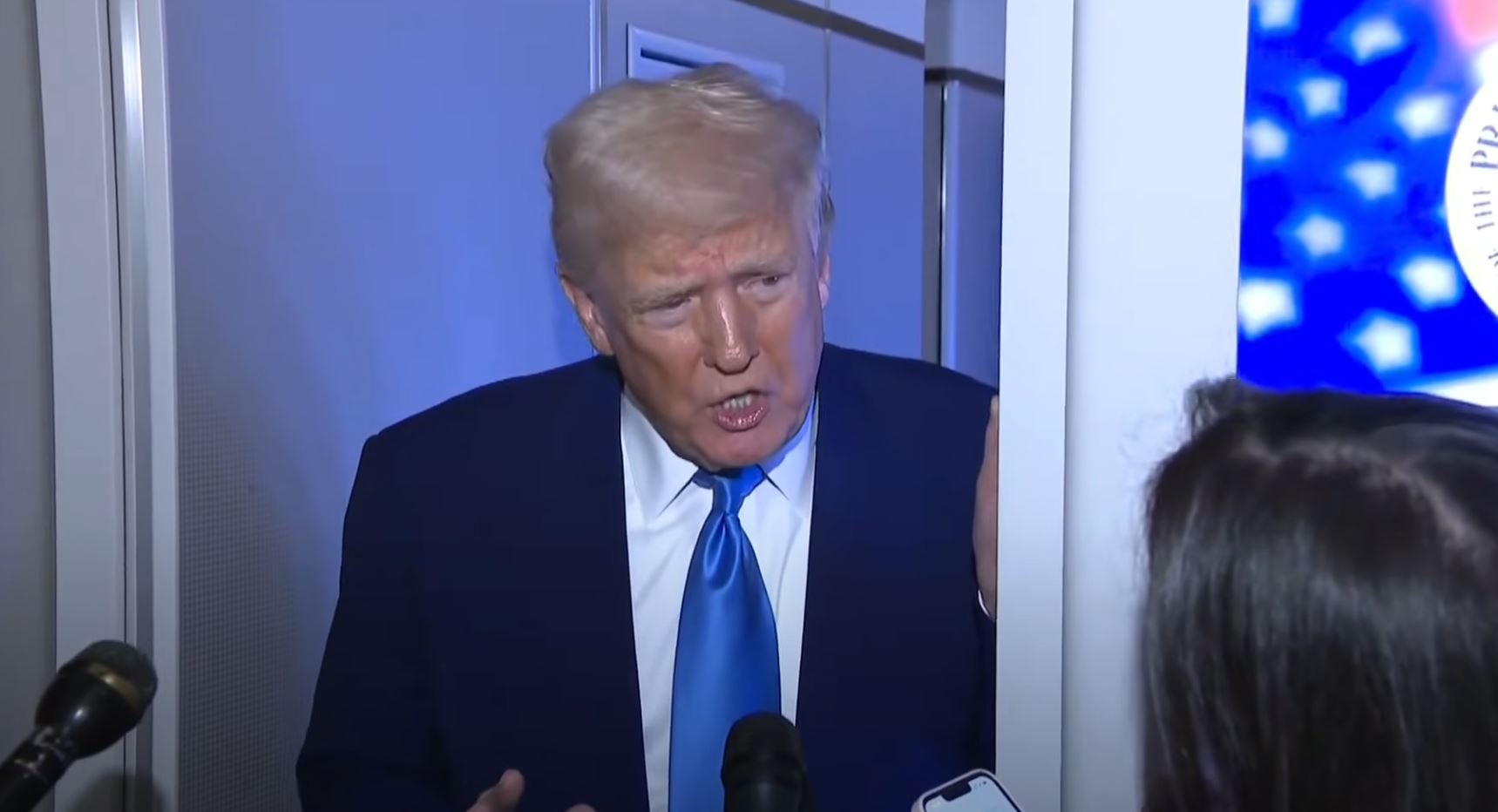
Key changes implemented by SVT include:
– Insertion of black frames and 3–5 second pauses between edited segments of the speech, clearly demarcating non-continuous excerpts.
– Addition of on-screen text explicitly noting: “This clip combines non-consecutive excerpts from President Trump’s January 6 speech. The full speech included calls for peaceful protest.”
– Updated accompanying article text to provide fuller context, including direct quotes from the omitted portions and a link to the full, unedited speech archived on the U.S. National Archives website.
Karin Ekman, Executive Producer of SVT’s International News Desk, stated:
“Our commitment to journalistic integrity is non-negotiable. While our original edit did not alter the factual content of the speech, we acknowledge that the presentation could be misinterpreted as implying a linear, unbroken incitement — which it was not. The revision is not an admission of falsehood, but of editorial oversight. We have a responsibility to ensure our audience understands the structure of the source material, especially when dealing with high-stakes political discourse.”
Analysis: A Broader Crisis of Trust in Media Framing
This episode is not merely about one broadcaster’s mistake — it reflects a systemic challenge facing public media in the digital age.
1. The “Context Collapse” Problem
In an era of algorithm-driven news consumption, viewers increasingly encounter video clips stripped of temporal and rhetorical context. SVT’s original edit, while technically accurate in its selection of words, failed to preserve the sequence and intent of the speech — a critical journalistic failing in an age where soundbites shape public perception more than full transcripts.
2. The BBC Effect
The BBC’s retractions in 2024 acted as a catalyst for SVT’s response. When the world’s most respected public broadcaster admits to misleading editing, it creates a domino effect. SVT’s decision to revise its own content — without waiting for formal sanctions — demonstrates a rare and commendable level of institutional self-awareness.
3. Nordic Media’s Reputation at Stake
Sweden consistently ranks among the world’s most trusted media environments. SVT’s initial defence, followed by its transparent revision, may ultimately strengthen public trust — provided the broadcaster continues to adopt clear editorial standards for political speech coverage.
Recommendations for Nordic Media Outlets:
– Implement mandatory contextual labelling for all spliced political speeches.
– Publish full-source transcripts alongside edited clips on digital platforms.
– Establish independent editorial review panels for high-sensitivity political content.
– Adopt the “Pause-and-Clarify” standard — now effectively pioneered by SVT — as a Nordic best practice.
Conclusion: Integrity Through Transparency
SVT did not fabricate facts. But it failed to safeguard context — a cornerstone of responsible journalism. Its revision, though belated, sets a vital precedent: even in the face of political polarization, public broadcasters must prioritize clarity over concision.
In a time when misinformation thrives on omission, SVT’s corrective action — however imperfect — is a step in the right direction. The real test now lies not in whether SVT edited the clip, but whether it has learned how to edit ethically.
As global media scrutiny intensifies, Nordic public broadcasters must lead — not follow — in upholding the highest standards of truth, transparency, and contextual integrity.
Additional Context (November 2025 Update):
SVT has since published a new editorial guideline for political speech coverage, effective January 2025, requiring all edited political clips to include:
– A timestamped source link to the full original recording.
– A visual marker (black frame or banner) for any non-sequential edits.
– A brief explanatory caption in both Swedish and English for international audiences.
The move has been praised by the European Broadcasting Union (EBU) and the International Press Institute as “a model for democratic media in the post-truth era.”
This article was updated on November 14, 2025, to reflect SVT’s formal editorial policy changes and ongoing industry response.