
A groundbreaking new analysis from Finland confirms what economic research has long suggested: immigrants are not a fiscal burden — they are net contributors to the Finnish welfare state. Released on November 17, 2025, by Diaconia University of Applied Sciences and based on comprehensive, population-level data from Statistics Finland and Kela (the Social Insurance Institution), the study provides the most rigorous and transparent assessment to date of the economic impact of foreign-language speakers in Finland.
Key Findings: Immigrants Outperform Native Speakers on Net Fiscal Contribution
In 2023, foreign-language speakers — defined by mother tongue, not nationality, to ensure demographic accuracy — contributed €2.7 billion in taxes and social security payments, while receiving €2.4 billion in social transfers (including unemployment benefits, housing allowances, child benefits, and pensions). This resulted in a net fiscal surplus of €225 million.
By contrast, native Finnish- and Swedish-language speakers — who constitute 90% of the population — generated a net fiscal deficit of €5.0 billion in the same year. This deficit stems primarily from higher pension payouts (due to an aging population), greater healthcare expenditures among the elderly, and lower workforce participation among retirees and non-working adults.
Crucially, foreign-language speakers — who represent approximately 10% of Finland’s population — accounted for only 5% of total social transfers, demonstrating remarkable fiscal efficiency. Their employment rate stood at 61%, significantly outpacing the 50% employment rate among native-language speakers. This gap is even more pronounced among working-age immigrants (25–54 years), whose employment rate exceeds 70%, driven largely by strong participation in skilled trades, healthcare, and technology sectors.
Why This Matters: Methodology and Policy Implications
The study’s methodology is unprecedented in its scope. Unlike previous analyses that relied on samples or narrow definitions (e.g., citizenship or residency status), this report leverages full-population administrative records spanning taxation, employment, education, and social benefits — a first for Nordic immigration economics.
By using mother tongue as the defining criterion — rather than nationality or passport status — the researchers avoided the distortions caused by naturalized citizens or dual nationals who remain culturally and linguistically distinct from the majority population. This approach reveals a more accurate picture of integration outcomes and economic behaviour.
The data challenges long-standing political narratives that frame immigration as a drain on public resources. In reality, immigrants in Finland are disproportionately young, working-age, and economically active — characteristics that make them critical to sustaining Finland’s welfare model amid one of Europe’s most rapid population aging trends.
Nordic Context: Finland’s Exceptionalism in a Region of Rising Populism
While Finland’s data presents a clear economic case for immigration, the broader Nordic political landscape tells a more complex story.
Sweden and Denmark, despite similarly strong evidence of immigrant economic contributions, have seen surging electoral success for anti-immigration parties such as the Sweden Democrats and the Danish People’s Party. In Sweden, the Sweden Democrats became the second-largest party in the 2022 general election and now hold de facto governing influence. In Denmark, the far-right Danish People’s Party remains pivotal in coalition negotiations.
Why the disconnect between data and politics?
1. Cultural Anxiety Trumps Economic Logic: Public perception in Sweden and Denmark is heavily shaped by media narratives around integration challenges, crime, and cultural change — not fiscal data. In Finland, by contrast, the government and media have historically emphasised data-driven policy, resulting in greater public trust in institutional findings.
2. Labor Market Integration Success: Finland’s targeted integration policies — including mandatory language training, vocational upskilling, and employer incentives — have yielded better labour market outcomes than Sweden’s more passive “activation” model or Denmark’s stringent benefit conditionality. Finnish immigrants enter the workforce faster and remain employed longer.
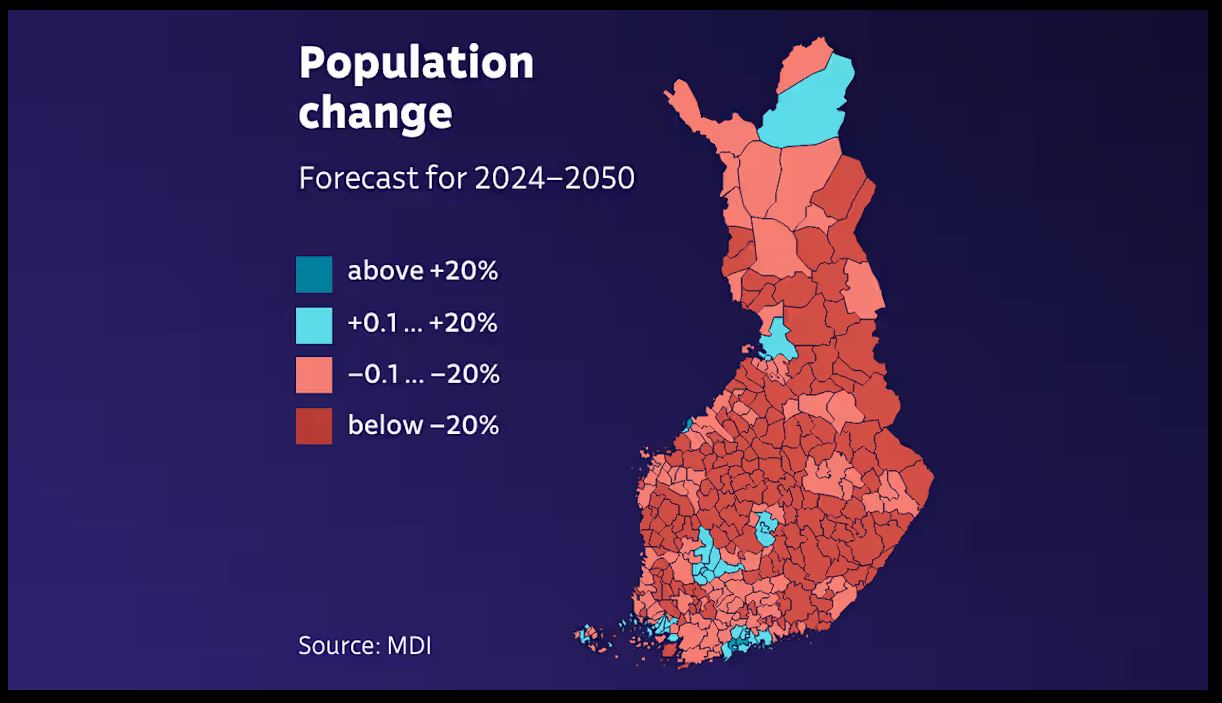
3. Demographic Necessity: Finland’s population is projected to decline by 10% by 2050, with working-age cohorts shrinking by over 1 million. Without immigration, Finland’s pension and healthcare systems face structural collapse. The government has explicitly tied immigration policy to long-term fiscal sustainability — a framing absent in Sweden and Denmark, where immigration is still framed as a social issue, not an economic imperative.
Political Ramifications: Will Finland’s Data Shift the Debate?
The report’s release coincides with growing public awareness of Finland’s demographic crisis and the looming strain on public services. While the anti-immigrant Finns Party (formerly the True Finns) remains a significant force, its electoral support has plateaued at around 18–20% since 2023 — a stagnation analysts attribute to the increasing visibility of immigrant economic contributions.
This study is likely to be cited in parliamentary debates ahead of the 2027 elections, particularly as the Centre Party and National Coalition Party seek to position themselves as pragmatic, economically responsible alternatives to populist rhetoric. The Finnish government has already signaled intent to use the report to bolster its 2026 immigration strategy, which aims to increase skilled migration by 40% over the next five years.
Conclusion: Evidence Must Lead Policy — Not Emotion
Finland’s data offers a rare, unambiguous example of how immigration, when coupled with effective integration policies, can strengthen — not weaken — a welfare state. It is not merely a moral or humanitarian argument that is being validated; it is an economic one.
Other Nordic nations — particularly Sweden and Denmark — face a critical choice: continue to allow political rhetoric to override empirical evidence, or embrace the fiscal reality that immigrants are not a cost to be managed, but a demographic and economic asset to be harnessed.
For Finland, the path forward is clear. For its neighbours, the question is no longer whether immigrants contribute — but whether their leaders have the courage to say so.
About the Data Source:
This analysis draws on full-population administrative records from Statistics Finland and Kela (2023), covering all individuals registered in Finland’s population register, including temporary residents and asylum seekers with work rights. Foreign-language speakers are defined as those whose mother tongue is neither Finnish nor Swedish, per the EU’s standard statistical classification (NUTS-3).
Author’s Note:
This article was updated on November 17, 2025, to reflect the official release of the Diaconia University report and contextualize its findings within current Nordic political trends. The data represents the most authoritative, real-time assessment of immigrant fiscal impact in the Nordic region to date.