
In a troubling revelation that underscores systemic gaps in Sweden’s welfare administration, the Swedish Payments Authority (Betalningsförmedlingen) has confirmed that at least SEK 40 million in public benefits were paid in 2024 to individuals who lack legal residency rights in the country. The findings, drawn from a cross-agency data analysis, highlight persistent administrative vulnerabilities that continue to allow taxpayer funds to flow to ineligible recipients—even as some face imminent deportation.
Breakdown of Erroneous Payments
The misallocated funds span several key welfare programs administered by the Swedish Social Insurance Agency (Försäkringskassan):
- Unemployment insurance: SEK 17 million paid to approximately 300 individuals
- Activity compensation (aktivitetsstöd): SEK 9 million to around 220 people
- Child allowance and parental benefit: SEK 8 million distributed to roughly 1,200 recipients
These figures represent only the confirmed cases. The Payments Authority cautions that the actual total is likely higher, as individuals registered solely with coordination numbers—temporary identifiers issued to foreign nationals without residency rights—could not be fully cross-checked against migration databases.
Detection Through Deportation Procedures
Ironically, one of the primary detection mechanisms has been border enforcement operations. According to the Payments Authority’s report, border police routinely uncover ongoing welfare disbursements during pre-deportation screenings.
“When the police are about to carry out a deportation, they check their records and see that it is common for welfare benefits to be paid continuously to the person who is to be deported,” the authority noted in its findings.
This reactive discovery process underscores a critical failure in inter-agency coordination. Despite Sweden’s advanced digital public infrastructure, real-time data sharing between migration, tax, and social welfare authorities remains insufficient to pre-empt such errors.
Historical Context and Systemic Challenges
The 2024 figures echo longstanding concerns. A 2021 audit by the Swedish National Audit Office (Riksrevisionen) revealed that between 2014 and 2020, national agencies disbursed SEK 313 million, while municipalities paid an additional SEK 122 million, to individuals whose residence permits had expired or were never valid. Despite repeated recommendations for tighter controls, the issue persists—suggesting that structural reforms have yet to take full effect.
Authorities Pledge Reform
In response, Per Eleblad, Director General of the Payments Authority, announced a comprehensive initiative to address the problem:
“We will systematically review all benefit categories where there is a risk of payments to individuals without lawful residency. Our goal is to institutionalise these checks permanently to prevent future errors and safeguard public funds.”
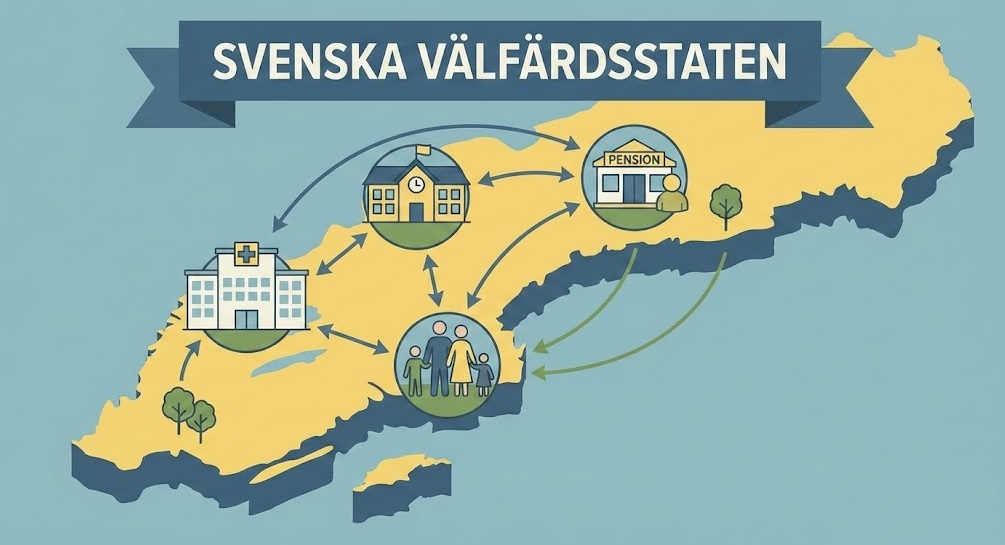
The agency plans to enhance data integration between the Swedish Migration Agency, the Tax Agency, and Försäkringskassan, aiming to create near real-time verification protocols that automatically suspend benefits upon loss of residency status.
Implications for Public Trust and Fiscal Responsibility
The continued leakage of welfare funds not only represents a fiscal inefficiency but also risks eroding public confidence in Sweden’s social safety net—particularly at a time of heightened scrutiny over migration policy and public spending. With Sweden facing economic headwinds and budgetary constraints, ensuring that benefits reach only those legally entitled is both a legal and democratic imperative.
Looking Ahead
While technological solutions are being developed, experts warn that process redesign—not just data linkage—is essential. Delays in updating residency status, bureaucratic silos, and legal ambiguities around temporary permits all contribute to the problem. A holistic approach, involving legislative clarity, inter-agency mandates, and automated cutoff mechanisms, will be required to close the gap.
For now, the SEK 40 million uncovered in 2024 serves as both a warning and a call to action: Sweden’s welfare state, long heralded as a model of efficiency and equity, must modernize its internal controls to maintain its integrity in an increasingly complex administrative landscape.
The Nordic Business Journal will continue to monitor reforms and their impact on public expenditure and migration policy compliance.