
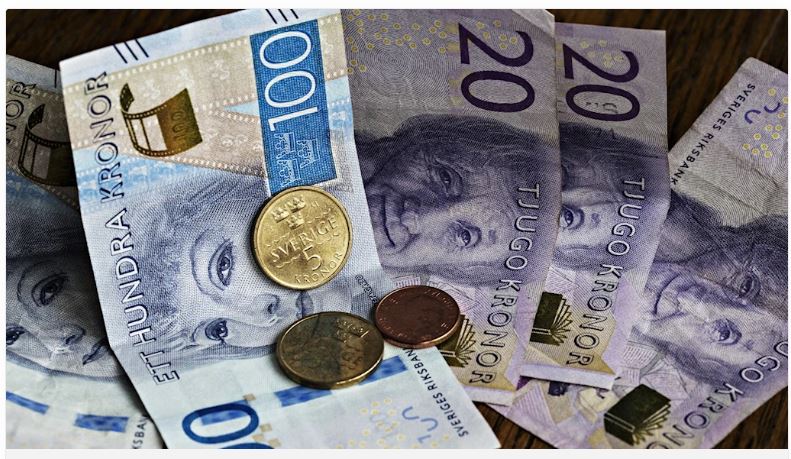
Stockholm — The Swedish krona (SEK) has solidified its position as the strongest-performing currency in the G10 group in 2025, reflecting Sweden’s resilient macroeconomic fundamentals and shifting investor sentiment in global foreign exchange markets. According to Bloomberg data as of December 1, the krona has appreciated by 17.2% against the U.S. dollar year-to-date, trading at approximately 9.45 SEK per USD—its most robust level in over a decade.
The G10—a group of ten leading industrialized nations that includes Sweden, the United States, the United Kingdom, Japan, Canada, Australia, New Zealand, Norway, Switzerland, and the eurozone—serves as a benchmark for global currency performance due to the depth and liquidity of their financial markets. Within this cohort, the Swedish krona’s outperformance underscores both domestic policy credibility and external tailwinds.
Drivers of Krona Strength
Several structural and cyclical factors underpin the krona’s rally:
1. Monetary Policy Divergence: While many central banks—including the U.S. Federal Reserve and the European Central Bank—have begun cutting rates in response to cooling inflation and slowing growth, Sweden’s Riksbank has maintained a relatively hawkish stance. Although it paused its hiking cycle earlier this year, the central bank has signalled a cautious approach to easing, supporting real yields and attracting carry-trade inflows.
2. Fiscal Discipline and Current Account Surplus: Sweden continues to run a healthy current account surplus—projected at 3.1% of GDP in 2025 by the IMF—bolstered by strong exports in green technology, engineering, and pharmaceuticals. Combined with prudent fiscal management, this has enhanced investor confidence in the krona as a “safe-ish” haven among small open economies.
3. Energy and Geopolitical Dynamics: Unlike some of its Nordic peers, Sweden benefits from a largely nuclear- and renewable-powered energy grid, insulating it from recent spikes in European natural gas prices. This energy resilience, coupled with neutrality in geopolitical tensions, has made Swedish assets comparatively attractive amid global uncertainty.
G10 Currency Rankings: A Shifting Landscape
Contrary to initial assumptions in earlier market commentary, the Swiss franc (CHF)—long considered a classic safe-haven currency—has not been the worst performer in 2025. In fact, it has appreciated by 12.9% against the dollar, the second-strongest gain in the G10. The franc’s strength reflects continued demand for Swiss assets during periods of volatility and the Swiss National Bank’s (SNB) careful management of exchange rate pressures.
The actual underperformers in the G10 this year have been the Japanese yen (JPY) and the New Zealand dollar (NZD). The yen has weakened by nearly 6% against the dollar despite the Bank of Japan’s recent pivot toward modest tightening, as persistent yield differentials and Japan’s reliance on energy imports continue to weigh on sentiment. Meanwhile, the kiwi has suffered from slowing Chinese demand—New Zealand’s largest trading partner—and dovish signals from the Reserve Bank of New Zealand.
Norway’s krone (NOK) has also posted solid gains, rising 12.4% against the dollar, supported by elevated North Sea oil prices and Norway’s sovereign wealth fund’s strong global returns, which bolster capital inflows.
Outlook: Can the Krona Sustain Its Momentum?
Looking ahead into 2026, analysts at SEB and Nordea suggest the krona’s upside may moderate. Key risks include:
- A faster-than-expected U.S. economic rebound, which could strengthen the dollar
- Potential Riksbank rate cuts if Swedish domestic demand shows signs of stalling.
- Broader risk-off sentiment that might favour traditional reserves like the dollar or yen over smaller currencies.
Nevertheless, the krona’s 2025 performance marks a significant turnaround from its post-pandemic volatility and highlights Sweden’s growing appeal as a stable, innovation-driven economy in an increasingly fragmented global landscape.
Conclusion
The Swedish krona’s status as the top G10 currency in 2025 is not merely a function of short-term speculation but a testament to Sweden’s sound economic governance, energy independence, and strategic positioning in the green transition. As global investors recalibrate portfolios for a post-high-inflation era, the krona may well remain a currency of choice among prudent, yield-conscious investors.
— Nordic Business Journal, providing authoritative analysis on Nordic economies since 2010.