
As Sweden’s upcoming election approaches, voters’ concerns are becoming increasingly central to the political landscape. Recent polling data reveals an evolving shift in trust, with the Tidö parties—comprising the Sweden Democrats (SD), the Moderates, and other centre-right parties—gaining ground on key issues that matter most to voters. While the opposition continues to hold a substantial lead in certain areas, the situation on key political issues is much closer than recent opinion polls would suggest.
A survey conducted by Verian in June highlights an intriguing development: the Tidö parties are narrowing the gap when it comes to political issue ownership. This new trend could potentially alter the dynamics in the lead-up to the election.
Tidö Parties Gain Ground, but Challenges Remain
The Verian survey tracks the ownership of 23 political issues, comparing the influence of the governing Tidö parties and the opposition parties. The results show that the opposition currently controls nine critical issues, while the Tidö parties now have ownership of eight. A notable improvement, as the Tidö parties were previously only associated with seven issues, compared to the opposition’s eleven, in June.
This shift in issue ownership signals growing confidence in the Tidö parties’ ability to address key voter concerns. However, many of the issues that voters care about remain unresolved. This unresolved terrain could play a decisive role in shaping the election results next year.
Balance of Power on Key Issues
Looking at the twelve issues voters rank as most important, the survey paints a relatively balanced picture. Four of the issues are dominated by the opposition, another four by the Tidö parties, while the remaining four issues are still up for grabs—suggesting that neither bloc has a clear advantage across the board.
Per Söderpalm, Head of Opinion at Verian, comments on this balance: “While opinion polls suggest a clear advantage for the opposition, when we focus on issue ownership, the picture becomes much more even.” This insight suggests that despite the opposition’s stronger polling numbers, the Tidö parties have been successful in making inroads into critical voter concerns, particularly those tied to economic policy, law and order, defence, and immigration.
Key Issues: Where the Tidö Parties Are Strong and Where They Lag
One of the survey’s most revealing findings is that the government parties, particularly the Sweden Democrats, are making strides on issues that directly influence voters’ daily lives, including law and order, defence, and immigration. These have traditionally been strongholds for the Tidö parties and continue to remain their strong suit in the current political climate.
However, there are areas where the opposition maintains a clear lead. Issues such as environmental policy and climate change, gender equality, healthcare, and pensions remain firmly in the hands of the opposition. These are topics of significant concern to Swedish voters, particularly as the country grapples with the ongoing challenges of climate change, demographic shifts, and rising inequality.
Söderpalm points out that the balance of power on economic issues—such as the economy, schools and education, and energy policy—could be pivotal. “On issues that could be classified as economic, there is a delicate balance between the blocs. If either side can gain control over these, it could heavily influence the outcome of the election,” he adds.
Party-Level Insights: The Social Democrats Maintain Strong Influence
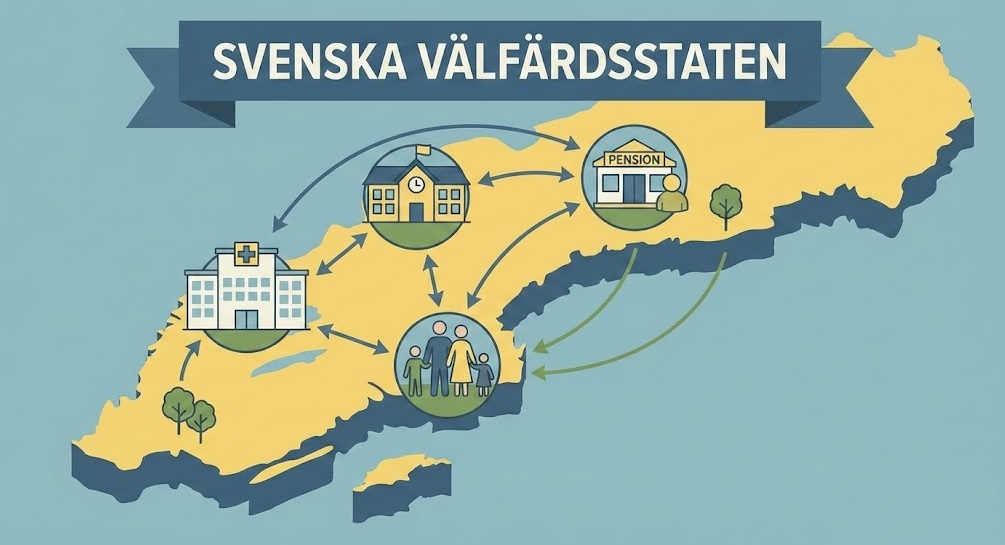
At the party level, the survey indicates that the Social Democrats (S) continue to dominate when it comes to issue ownership, holding a commanding 15 of the 23 issues surveyed. This dominance reflects the party’s long-standing position as a central figure in Swedish politics, particularly in areas such as healthcare, pensions, and social equality.
In contrast, the Moderates (M), traditionally the main centre-right rival to the Social Democrats, hold ownership of just six issues. The Sweden Democrats, meanwhile, have control over three critical issues, primarily those linked to immigration, law and order, and defence.
What’s at Stake in the Final Stretch
While the polling data presents a snapshot of the political landscape, the election remains fluid, and many key issues remain unresolved. As the political parties sharpen their focus, voters will likely be looking to see how the Tidö parties and the opposition refine their positions on issues like economic recovery, climate change, and public services. The outcome of these debates could significantly impact the electoral prospects of both blocs.
It is also important to note that while opinion polls show the opposition leading in popular support, the electorate is often swayed by the degree to which parties can take ownership of issues that directly resonate with people’s lives. The final months of the election campaign will likely see intensified battles over economic issues, social welfare, and national security—each of which could prove pivotal in shaping the election result.
What’s Still Unresolved?
Several issues remain notably unresolved and could become decisive in the final months leading up to the election. These include:
- Economic Inequality: The debate over how to address growing income inequality, particularly in relation to housing and the cost of living, is likely to remain a key battleground for both blocs.
- Climate Policy: Despite the opposition’s strength in this area, the Tidö parties have yet to fully demonstrate a unified or compelling climate strategy, which could be crucial as Sweden moves toward its climate goals.
- Social Services: Healthcare, education, and pensions are areas of concern where voters are looking for clarity on long-term policy. How the government and opposition plan to address the pressures on these systems will influence voter trust.
Final Thoughts
As Sweden’s 2026 election draws nearer, the dynamics between the Tidö parties and the opposition remain in flux. While the opposition retains a lead in certain key areas, the Tidö parties are making notable progress, particularly in areas of national security and immigration. The balance of issue ownership is shifting, and as unresolved issues continue to simmer, the election could hinge on how the parties navigate the final stretch of campaigning.
Swedish voters are likely to continue evaluating the parties on their ability to address the issues that matter most to them. With many key issues still undecided, both the Tidö parties and the opposition have significant opportunities to sway the electorate as they prepare for one of the most consequential elections in recent history.
Parties Seen as Leading on Each Issue
| Issue | Party/Parties | Share of voters |
| Healthcare | Social Democrats (S) | 31% |
| School and education | Social Democrats (S) | 26% |
| Law and order | Sweden Democrats (SD) | 25% |
| Environment and climate | Greens (MP) | 24% |
| Defence | Moderates (M) | 31% |
| Elderly care | Social Democrats (S) | 30% |
| National economy | Social Democrats (S) | 31% |
| Immigration | Sweden Democrats (SD) | 32% |
| Integration | Sweden Democrats (SD) | 25% |
| Energy policy | Moderates + Social Democrats (M+S) | 18% |
| Employment | Social Democrats (S) | 28% |
| Pensions | Social Democrats (S) | 27% |
| Personal finances | Moderates (M) | 29% |
| Inflation/price increases | Moderates + Social Democrats (M+S) | 22% |
| Social issues | Social Democrats (S) | 33% |
| Taxes | Moderates (M) | 29% |
| Foreign policy | Social Democrats (S) | 26% |
| Gender equality | Social Democrats (S) | 25% |
| Housing | Social Democrats (S) | 24% |
| EU | Social Democrats (S) | 21% |
| Family policy | Social Democrats (S) | 29% |
| Business conditions | Moderates (M) | 33% |
| Regional policy | Social Democrats (S) | 21% |
How to read the numbers
These percentages show how large a share of the electorate believes that the listed party has the strongest policy in that specific area. The issues themselves are ordered by importance based on Verian’s voter surveys.
Survey background
Verian interviewed about 1,000 people online, randomly selected from the Sifo panel. Participants were 18 to 84 years old.
The question was: Which party do you think has the best policy on the issues listed here?
Fieldwork ran from November 17 to 23.