
In much of the Nordic region this December, daylight has become a rarity—almost a myth. In Stockholm, not a single full hour of sunshine has been recorded so far this month. Helsinki saw just 20 minutes of sun before a rare break in the clouds offered a few hours of relief last Friday. Across Sweden, Finland, and Norway, residents are deep in the heart of the polar night, a period when the sun barely crests the horizon—or doesn’t rise at all.
This prolonged darkness isn’t just an atmospheric curiosity; it has real physiological and psychological consequences. But it also presents an opportunity—to adapt, to recalibrate, and to prepare for the light’s return.
The Science of Light Deprivation
Dr. Arne Lowden, Associate Professor of Psychology at Stockholm University and a leading researcher on light exposure and circadian rhythms, explains that even minimal daylight exposure can make a significant difference during these dark months.
“Even if it’s overcast or the sun never fully rises, getting outside during midday—when ambient light is at its peak—helps regulate your internal body clock,” Lowden says. “Without that cue, melatonin production stays elevated longer into the day, making people feel sluggish, unmotivated, or even depressed.”
Lowden emphasises that the remedy isn’t necessarily more artificial light—though light therapy lamps can be effective—but rather strategic use of natural light. “Ten to fifteen minutes outside around noon, even in heavy cloud cover, can deliver more lux (a measure of light intensity) than sitting under indoor lighting all day,” he notes.
For businesses and policymakers, this has implications for workplace well-being, especially in sectors where indoor work dominates. Forward-thinking Nordic companies have begun integrating dynamic lighting systems that mimic daylight patterns, helping to sustain alertness and productivity through the darkest months.
Finland’s Fleeting Sun—and What Comes Next
In Helsinki, last Friday’s unexpected sunshine was more than a morale boost—it was a meteorological anomaly. The Finnish Meteorological Institute (FMI) confirmed that prior to that day, Helsinki had recorded only 20 minutes of direct sunlight since December 1. Normally, the capital averages closer to 20–30 hours of sunshine for the entire month.
Meteorologist Joonas Koskela of Foreca notes that while this year’s cloud cover has been unusually persistent, the broader weather pattern is shifting. “Cold, clear conditions have returned temporarily, but Atlantic systems are pushing eastward,” he explains. “Southern and central Finland are expected to see above-zero temperatures this week, which will melt existing snow cover and turn new precipitation to rain.”
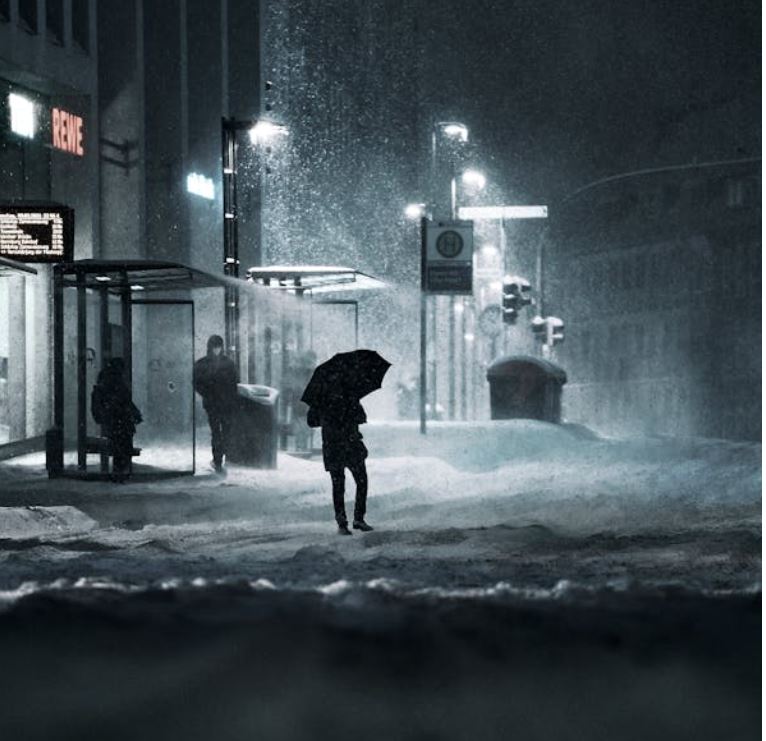
However, this warmth may be short-lived.
According to the latest long-range forecast from the European Centre for Medium-Range Weather Forecasts (ECMWF), a return to colder conditions is likely around the New Year. High pressure building over northern Europe in late December could usher in drier but significantly colder air masses—particularly affecting eastern and northern regions, including Lapland.
The forecast for Christmas week (starting December 22) suggests temperatures slightly above seasonal norms, with a drying trend. But by the week of December 29, colder air may dominate, reducing precipitation and stabilising snow cover in the north. By early January, conditions are expected to settle near historical averages for both temperature and rainfall.
Turning Toward the Light
The psychological toll of December’s darkness is well-documented—seasonal affective disorder (SAD) affects up to 10% of people in northern latitudes—but there’s hope on the horizon. As Dr. Lowden reminds us, “By early February, daylight increases by nearly four minutes per day in Stockholm. That’s over an hour of additional light by mid-February—and a game-changer for mood and energy.”
This natural rhythm is deeply embedded in Nordic culture. From kos (the Finnish concept of cozy contentment) to Sweden’s mys and Norway’s kos, the region has long embraced darkness not as a deficit, but as a season unto itself—one for reflection, rest, and community.
For businesses, understanding this seasonal shift is more than cultural literacy; it’s operational intelligence. Employee wellness programs, flexible scheduling, and lighting design can all be calibrated to support well-being during the darkest stretch of the year.
Looking Ahead
As the Nordic region braces for a volatile transition between a brief warm spell and a potential cold snap post-Christmas, both individuals and organisations would do well to acknowledge the powerful interplay between light, weather, and human performance.
The darkness of December may test resilience—but it also reveals the ingenuity of societies long adapted to extreme seasons. And with every passing day after the winter solstice on December 21, the light begins its slow, steady return.
— Reporting by the Nordic Business Journal. Sources: Stockholm University, Finnish Meteorological Institute, Foreca, ECMWF.