
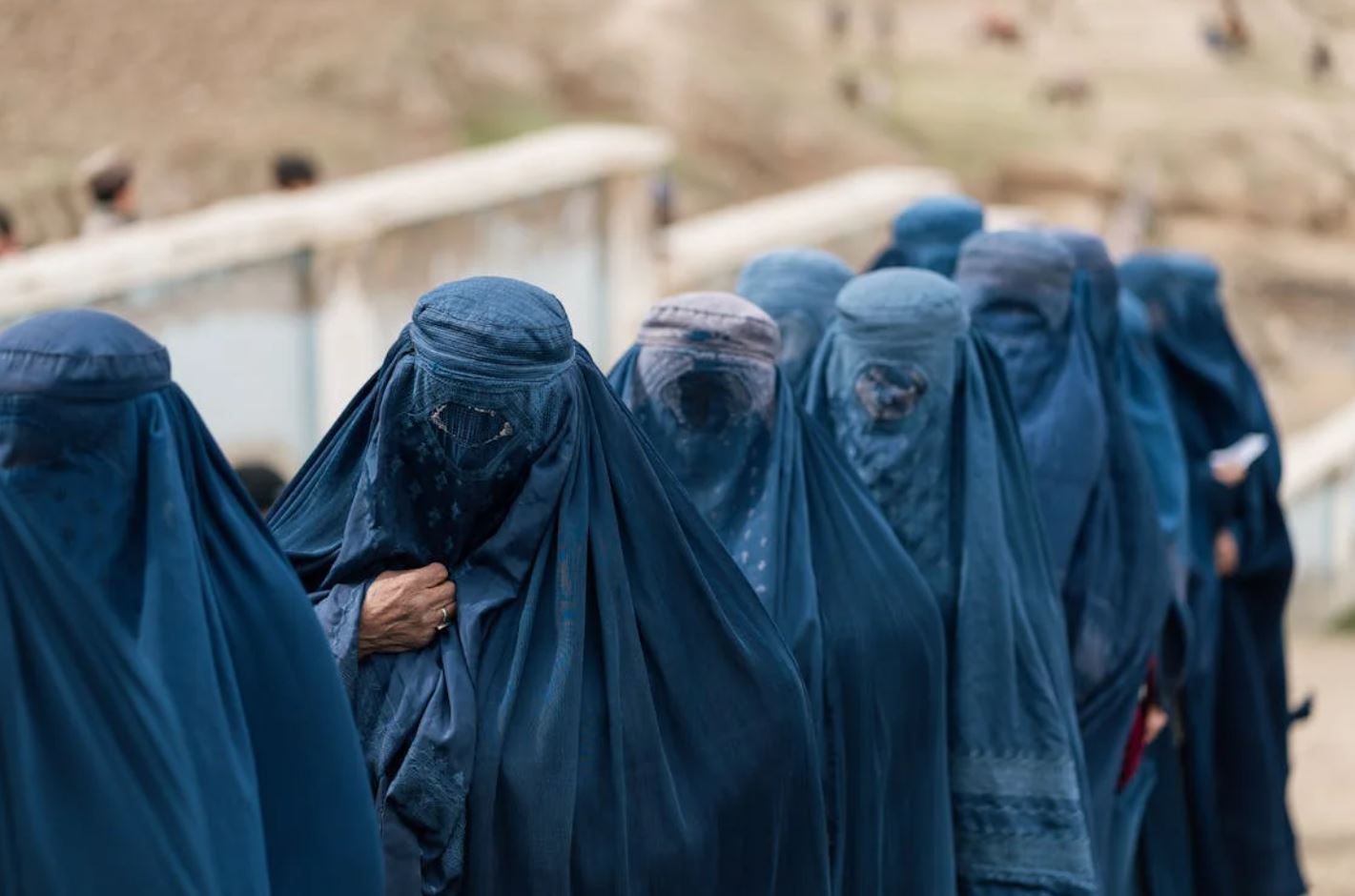
In an era defined by intensified debates over national identity, secularism, and integration, Sweden is confronting a deeply polarizing question: Should full-face veils like the burqa and niqab be banned in public spaces? Recent polling suggests this is no longer a fringe issue—it’s a mainstream political flashpoint with significant implications for Sweden’s social cohesion, economic integration, and international reputation.
According to a November 2025 SVT/Verian survey, 47% of Swedes now support a ban on full-face coverings in public—a notable uptick from 41% in 2023. Meanwhile, 36% remain opposed, and 17% are undecided. This shift reflects broader European trends, as countries like France, Belgium, Austria, and the Netherlands have already implemented varying forms of facial covering bans, often under the banner of “secular neutrality” or “public safety.”
But in Sweden—a nation long celebrated for its liberal immigration policies and strong human rights framework—the debate carries unique weight. It’s not merely about clothing; it’s about competing visions of integration, gender equality, and the limits of religious expression in a secular democracy.
Political Divides Deepen
The issue has become a litmus test within Sweden’s fragmented political landscape. Following the Christian Democrats’ (KD) national congress in September 2025, party leader Ebba Busch reaffirmed her call for a ban, stating bluntly: “Islam must adapt in Sweden.” Her remarks echo growing concerns among centre-right and right-wing parties that certain religious practices are incompatible with Swedish societal norms, particularly regarding gender equality and transparency in public interaction.
Prime Minister Ulf Kristersson (Moderates) and even Social Democratic leader Magdalena Andersson—traditionally more cautious—have both left the door open to legislative action. This cross-bloc ambiguity underscores how the issue now transcends traditional left-right divides, tapping into anxieties about integration that resonate across the electorate.
In stark contrast, Daniel Helldén of the Green Party continues to reject any ban as a violation of religious freedom and a disproportionate response to a statistically marginal phenomenon. Only an estimated 100–200 women in Sweden regularly wear the niqab or burqa—a tiny fraction of the population—raising questions about the real-world necessity versus symbolic politics.
The Integration Imperative
For Nordic Business Journal readers, this debate is more than ideological—it’s economic. Successful integration is critical to Sweden’s labour market resilience, especially amid demographic pressures from an aging population and persistent skill shortages. Policies that alienate minority communities risk undermining trust, reducing civic participation, and deterring talent.
Yet integration also requires clear societal frameworks. Supporters of a ban—like voter Nedo Dervisevic, quoted in earlier reporting—argue that facial visibility fosters communication, trust, and security in public services, schools, and workplaces. “It’s important that you know who you’re talking to. That you see the eyes and the face,” he says—a sentiment echoed by many Swedes across class and region.
Opponents, however, warn that singling out Islamic attire fuels stigmatization and exclusion. Anita Eriksson, a sceptical voter, poses a pointed rhetorical question: “Who among the parliamentary parties should stand up for religions, if not the ‘Christian Democrats’?” Her remark highlights the tension between Sweden’s Christian democratic heritage and its modern multicultural reality.
A European Context—and a Global Reckoning
Sweden’s hesitation stands in contrast to its Nordic neighbours. Denmark banned full-face veils in 2018; Norway has localised restrictions in schools and public institutions. Even Finland, known for its tolerance, is reviewing similar proposals in light of rising public concern.
Globally, the conversation is evolving beyond bans toward positive integration strategies: language access, civic education, and inclusive urban design. Some EU policymakers now advocate for “integration contracts” that emphasize mutual obligations—state support in exchange for adherence to core democratic values—without resorting to prohibitive legislation.
As Sweden grapples with this issue in 2026—a year that may see renewed coalition negotiations or even early elections—the burqa debate will likely intensify. But the deeper question remains: How can Sweden uphold its values of freedom, equality, and openness while ensuring that all residents feel both included and accountable to shared societal norms?
What’s Next?
In our next feature, the Nordic Business Journal will explore how Nordic employers are navigating cultural and religious diversity in the workplace, including case studies from IKEA, Spotify, and public sector innovators. We’ll examine best practices in inclusion that balance operational needs with individual rights—offering actionable insights for leaders across the region.
Have thoughts on integration policy, religious expression, or workplace inclusion? We’d love to hear from you. Connect with us on LinkedIn, email our editorial desk at insights@nordicbusinessjournal.com, or join our upcoming Nordic Policy Forum in Stockholm this February.