
As Sweden navigates the dual pressures of digital transformation and fiscal austerity, smaller municipalities are increasingly falling behind in the AI race. With limited budgets, scarce technical talent, and competing public priorities, rural and mid-sized communities risk being left out of the very innovations that could streamline services, reduce administrative burdens, and enhance transparency.
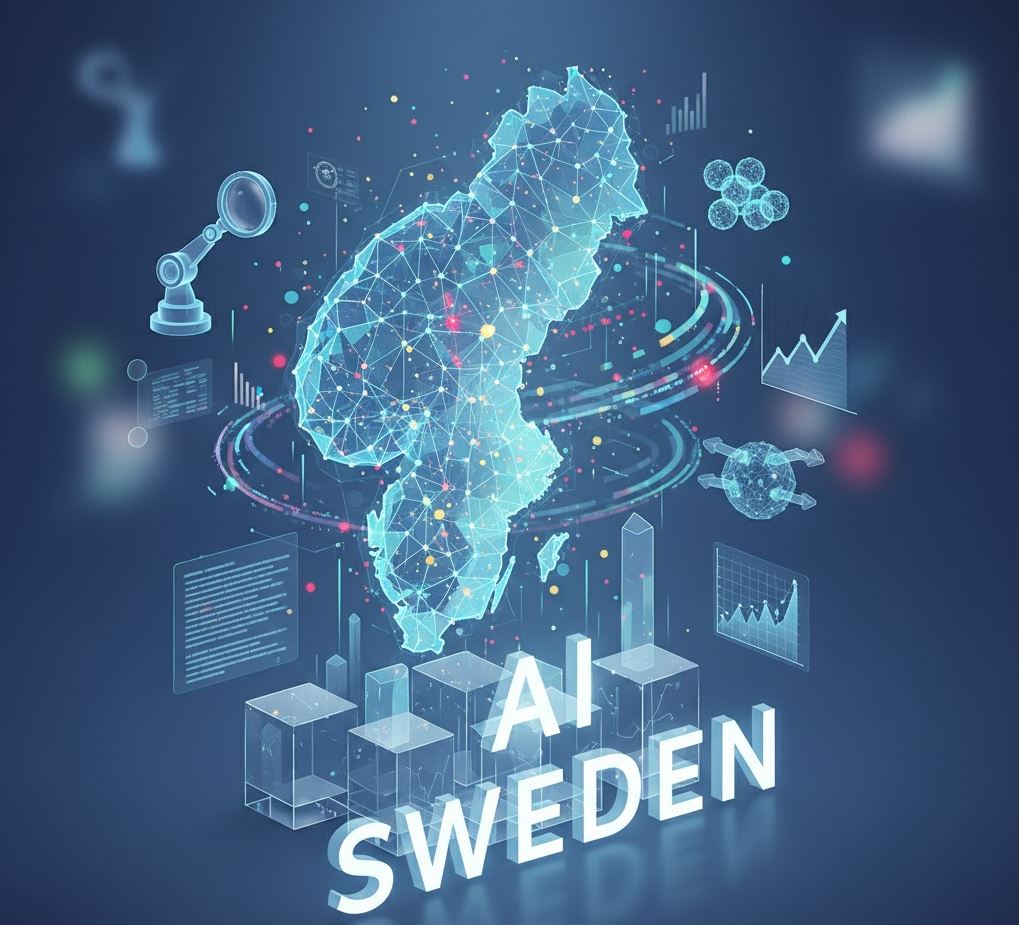
In response, Sweden’s Social Insurance Agency (Försäkringskassan) and Tax Agency (Skatteverket)—two of the nation’s most digitally mature public bodies—have proposed a bold solution: a national AI-verkstad (AI workshop). Conceptualised as a centralised, government-backed “one-stop shop” for AI development, the initiative aims to democratise access to ethical, scalable, and secure AI tools tailored for public-sector use.
From Pilot to Proof of Concept
The coastal municipality of Mörbylånga—a community of just over 8,000 residents—has become an early testbed for this vision. In 2025, it launched a pilot project using generative AI to automatically redact personal data from documents subject to Sweden’s Freedom of the Press Act. The results so far are promising: processing times have been cut by over 60%, and the system maintains high accuracy in identifying sensitive information while preserving document usability.
“This isn’t about replacing civil servants,” says Lena Bergström, Mörbylånga’s digital transformation lead. “It’s about freeing them from repetitive tasks so they can focus on citizen engagement and complex decision-making.”
The AI-verkstad model could provide similar municipalities with pre-vetted tools, technical support, compliance frameworks, and even shared infrastructure—lowering entry barriers and accelerating deployment without the need for in-house AI expertise.
The Human Cost of Automation: A Cautionary Note
Yet as Sweden leans into AI, a troubling side effect is emerging in the labour market. According to Swedish Radio News, enrolment in Stockholm University’s translation studies program has declined by 10% since 2023, with nearly one-fifth of admitted students abandoning the program before classes even begin. Many cite the perceived obsolescence of human translation in an era of real-time AI interpreters like Google Translate, DeepL, and emerging EU-backed multilingual models.
This trend raises urgent concerns—not just for education, but for democracy itself. The European Union still relies heavily on human interpreters and translators for legislative negotiations, legal proceedings, and policy drafting. Machine translation, while useful for informal communication, lacks the nuance, contextual awareness, and legal precision required in high-stakes multilingual governance.
“The risk isn’t just job loss—it’s a degradation of democratic discourse,” warns Dr. Erik Lindqvist, a language policy researcher at Uppsala University. “AI can assist, but it cannot yet mediate cultural subtleties or deliberate ambiguity in political texts.”
A Nordic Opportunity
For Nordic business leaders and public administrators, the Swedish AI-verkstad experiment offers valuable lessons. First, it underscores the importance of collaborative digital infrastructure—a concept already familiar in the Nordic tradition of shared public services. Second, it highlights the need for AI literacy not just among technologists, but among civil servants, educators, and policymakers.
Moreover, as the EU advances its Artificial Intelligence Act (fully enforceable as of mid-2025), Sweden’s public-sector AI initiatives could serve as a compliance blueprint for ethical, transparent, and human-centric deployment—particularly in high-risk domains like public administration.
Looking Ahead
The success of the AI-verkstad will depend on sustained funding, inter-agency coordination, and strong feedback loops with end users in municipalities. Early adopters like Mörbylånga are proving that small-scale innovation can drive systemic change—but scaling responsibly remains the true challenge.
Next in Our AI & Public Sector Series:
In our next feature, we’ll examine how Finland and Denmark are approaching AI upskilling for public employees—and whether a pan-Nordic AI competency hub could accelerate regional resilience.
We Want to Hear From You
Are you involved in digital transformation in your municipality or organisation? Have insights on balancing automation with human expertise? Connect with us at insights@nordicbusinessjournal.com or join the conversation on LinkedIn using NordicAIForward. Your perspective could shape our next investigation.