
Sweden is preparing for a significant new role in European security architecture: contributing advanced air surveillance capabilities to Ukraine in the event of a future peace settlement. Prime Minister Ulf Kristersson announced the readiness to deploy JAS 39 Gripen fighter jets for aerial monitoring and broader security support following a cessation of hostilities. The statement came during a high-profile Ukraine peace dialogue held in Paris, attended by leaders from around 30 allied nations.
“We took another step toward credible security guarantees for Ukraine,” Kristersson told reporters, underlining Sweden’s commitment to long-term defence cooperation.
From Air Policing to Strategic Airpower Aid
What marks this moment as historic is twofold:
- Sweden is prepared to commit military capability — not only humanitarian or logistical support — should a peace agreement materialise, including air surveillance from Gripen aircraft and maritime de-mining capacity in the Black Sea.
- Discussions continue on modernizing Ukraine’s air force with up to 100–150 modern JAS 39 Gripen E fighter jets, a development that could reshape Kyiv’s aerial defence for decades.
That latter element is not conditional on peace; it reflects a strategic, long-term cooperation pathway agreed last October in Linköping, Sweden. There, President Volodymyr Zelenskyy and Prime Minister Kristersson signed a letter of intent for Ukraine to acquire a large fleet of Gripen fighters — one of the most ambitious export undertakings in Swedish defence history.
The Gripen Deal in Perspective
The JAS 39 Gripen is a lightweight, efficient multirole aircraft designed for networked, cost-effective operations. Its advanced avionics and flexible deployment profile make it well suited for modern, layered air defence concepts — especially for nations transitioning from legacy Soviet hardware toward Western systems.
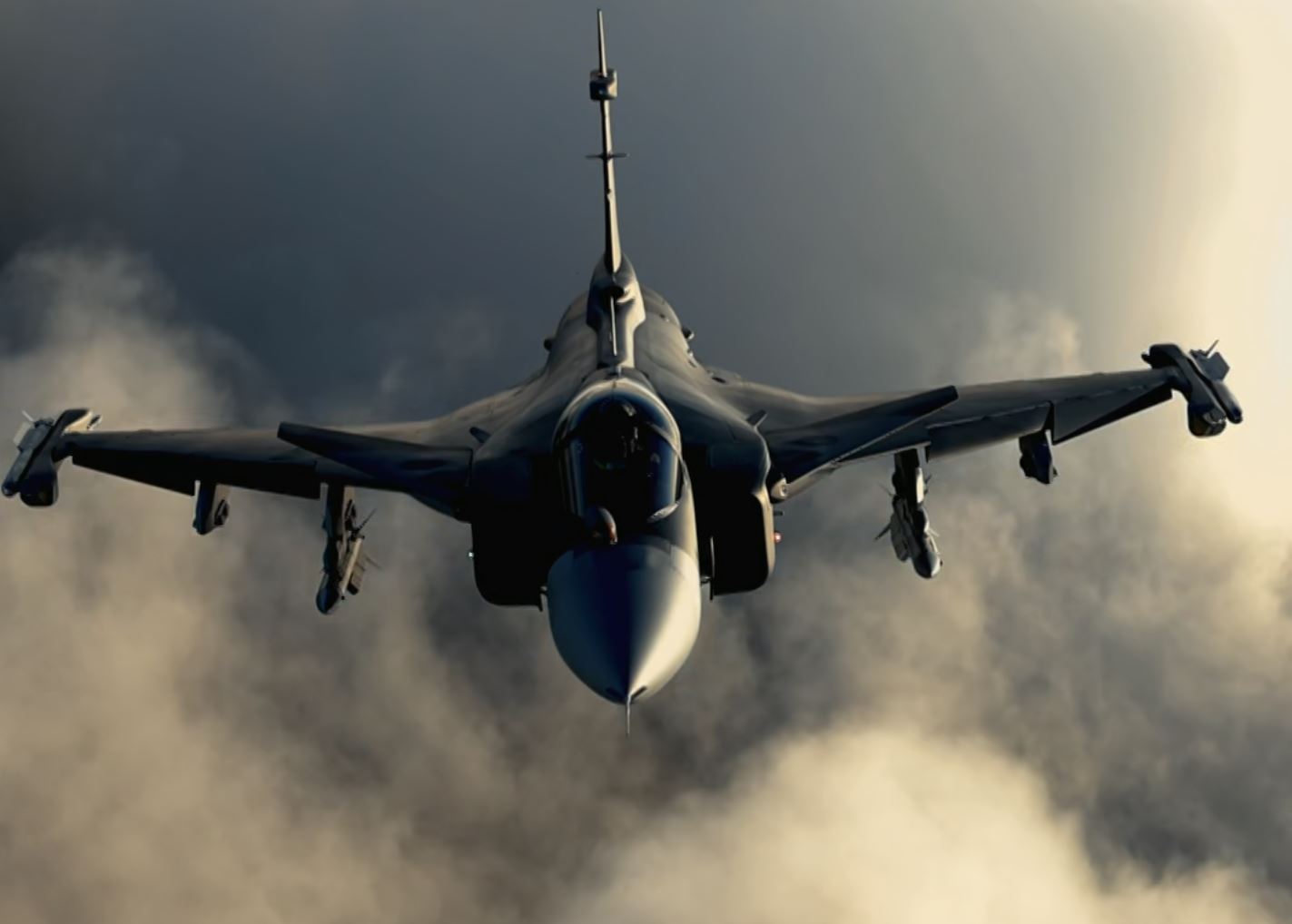
Under the letter of intent framework:
- Ukraine could receive up to 150 Gripen E aircraft over the coming decade once a binding contract is concluded.
- First deliveries might begin as early as 2026, though Sweden emphasises this is a long-term project spanning 10–15 years rather than immediate wartime transfers.
- Talks are underway about financial support mechanisms — including potential Swedish assistance and multinational funding — to make such a sizeable acquisition viable.
- Future plans also envision local Gripen production in Ukraine by around 2033, a move that could reshape the country’s defence industry and deepen European defence integration.
From a defence-industrial perspective, such cooperation aligns with broader Nordic and European trends favouring interoperability, shared production networks, and a shift away from legacy platforms toward NATO-compatible systems.
Security Guarantees and Geopolitical Preconditions
Sweden’s contributions — both in potential aircraft deployment and long-range fighter sales — are conditioned on a broader peace architecture:
- A credible and sustainable cessation of hostilities — Russia’s willingness to negotiate remains a central unknown.
- Detailed security guarantees, particularly with the United States leading oversight of a future ceasefire and European partners contributing enforcement and surveillance roles.
- Domestic ratification by the Swedish Parliament and Cabinet for any binding commitments.
Kristersson also reiterated Sweden’s ongoing support for Ukrainian defence training — a pillar of long-term capacity building that complements hardware aid.
Implications for Nordic and European Security
Sweden’s stance reflects a broader shift in Nordic defence policy. Once characterized by armed neutrality, Stockholm’s recent accession to NATO and its embrace of advanced defence cooperation signal a recalibration in response to persistent European security threats.
For the Nordic business community, defence sector engagement carries strategic industrial and economic implications:
- Saab’s Gripen production line could see sustained demand, with ripple effects for supply chains across Sweden and allied partner nations.
- Joint development and potential co-production initiatives could drive technology transfer into emerging markets, including avionics, radar systems, and integrated air-defence networks.
- Financing mechanisms supported by EU and NATO frameworks remain critical in enabling large defence acquisitions like the Gripen fleet.
Sweden’s announcement at the Paris peace talks underscores a crucial evolution: Nordic countries engaging not just as humanitarian allies or economic supporters, but as strategic contributors to European defence capability. The Gripen initiative — blending immediate surveillance readiness with long-range fighter modernization — exemplifies this shift.
Sweden’s role in Ukraine offers a case study in how midsize defence economies can punch above their weight through smart partnership, interoperable systems, and sustained political will.
Next in Nordic Business Journal:
We will take an in-depth look at the economic and industrial impact of potential Swedish-Ukrainian co-production of Gripen aircraft, including implications for EU defence supply chains and Nordic technology firms. Connect with us for exclusive insights and updates on this dynamic sector.
Connect with Nordic Business Journal — For analysis, events, and to stay engaged with Europe’s evolving defence and economic landscape.