
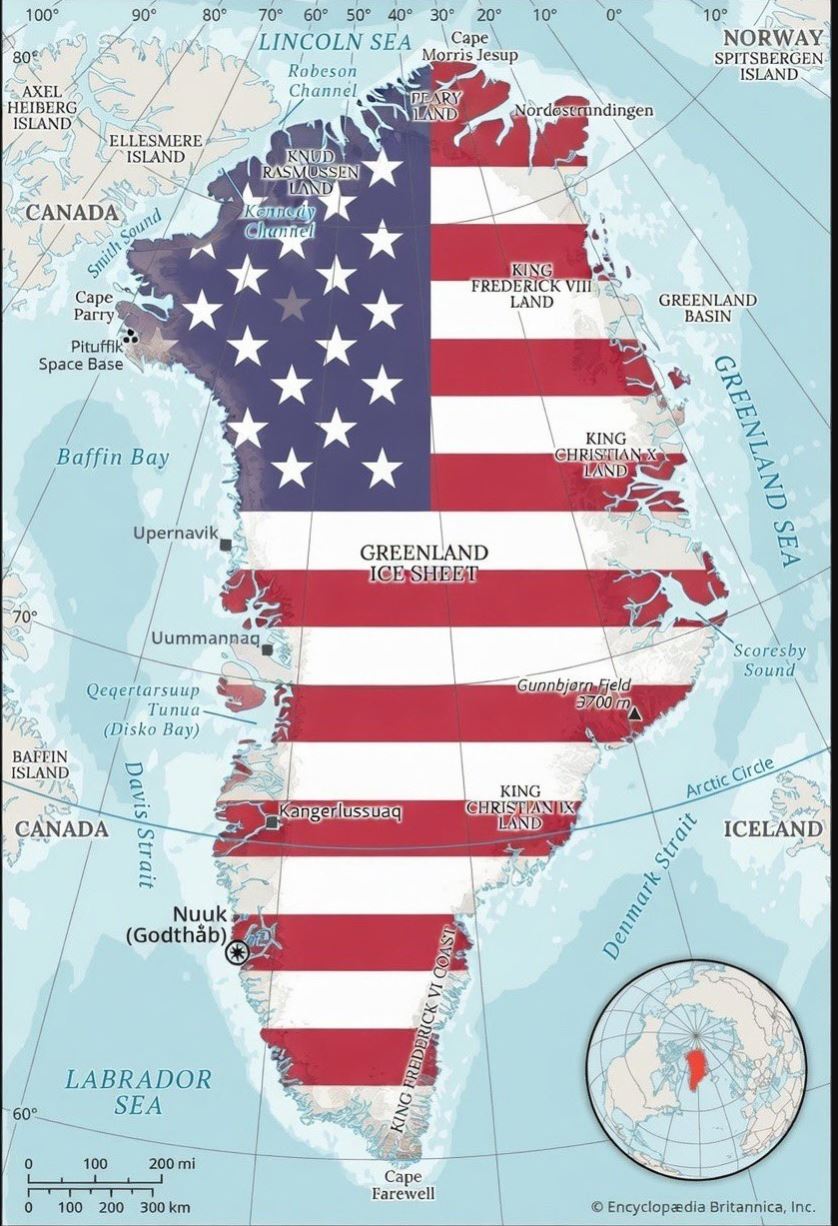
In a dramatic escalation of his Arctic ambitions, President Donald Trump has threatened to impose tariffs on nations that oppose his administration’s push to acquire Greenland—a move that could destabilise transatlantic trade relations and reshape Nordic business dynamics.
The tariff threat, delivered during a White House healthcare event, marks a significant shift from diplomatic persuasion to economic coercion. “I may put a tariff on countries if they don’t go along with Greenland, because we need Greenland for national security,” Trump declared, explicitly linking trade policy to territorial expansion.
From Real Estate to Rare Earths: The Economic Drivers
Trump’s renewed focus on Greenland comes as the Arctic island emerges as a critical chess piece in the global race for critical minerals. The island holds the world’s eighth-largest reserves of rare earth elements—essential components for everything from electric vehicle batteries to defence systems—valued at an estimated 36 million tonnes.
However, the economic reality is more complex than the rhetoric suggests. Greenland currently has only two active mines operational, with no rare earth production despite decades of exploration. The harsh Arctic climate, infrastructure deficits, and political sensitivities have kept major projects like the Kvanefjeld and Tanbreez deposits in development limbo.
Nordic Business Community Responds
The tariff threats have triggered a unified response from Nordic nations, with Denmark, Finland, Iceland, Norway, and Sweden issuing a joint statement emphasizing that “matters concerning Denmark and Greenland are for Denmark and Greenland to decide alone.”
For Nordic businesses, the crisis presents both risks and opportunities. Companies in mining, infrastructure, and Arctic logistics sectors could benefit from increased Western investment as the US seeks to counter Chinese and Russian influence. However, potential tariffs on European goods could disrupt established supply chains and trade relationships worth billions annually.
The Infrastructure Challenge: A Decade-Long Investment Horizon
Greenland’s development potential faces formidable obstacles. The island has fewer than 100 miles of roads connecting its communities, with transportation relying primarily on ships and aircraft. Mining experts estimate that bringing major deposits to production would require $10-15 billion in infrastructure investment over the next decade.
The European Union has already designated Greenland’s Amitsoq graphite project as a Strategic Project under its Critical Raw Materials Act, with London-listed GreenRoc Mining receiving a 30-year exploitation license in December 2025. These signals growing European commitment to developing Arctic resources through partnership rather than acquisition.
Political Risk Premium Escalates
Trump’s aggressive stance has introduced significant political risk premiums into Arctic investment calculations. Greenland’s parliament unanimously rejected US overtures, stating: “We do not want to be Americans, we do not want to be Danes, we want to be Greenlanders.”
The island’s government has instead emphasized its desire for independence from Denmark, with Prime Minister Múte Egede declaring: “If we have to choose between the United States and Denmark here and now, we choose Denmark. We choose NATO. We choose the Kingdom of Denmark. We choose the EU.”
Business Implications for Nordic Companies
For Nordic businesses, the crisis accelerates several key trends:
• Arctic Infrastructure Boom: Increased Western investment in ports, roads, and logistics facilities as NATO allies seek to counter Russian and Chinese influence
• Critical Minerals Race: Heightened competition for Greenland’s rare earth deposits, with Western companies receiving preferential treatment over Chinese bidders
• Energy Security Focus: Growing emphasis on Arctic energy resources as Europe seeks alternatives to Russian supplies
• Shipping Route Development: Melting ice caps opening new trans-Arctic shipping lanes that could reduce Asia-Europe shipping times by 40%
The Path Forward: Partnership Over Annexation
Despite Trump’s threats, the Biden administration’s approach of building partnerships rather than demanding ownership appears more aligned with business realities. The US already maintains critical military facilities at Pituffik Space Base under existing agreements, providing missile warning and space surveillance capabilities without the complications of territorial acquisition.
Recent bipartisan Congressional delegations to Copenhagen have emphasized strengthening US-Danish-Greenlandic cooperation within existing frameworks. Senator Chris Coons, leading a delegation meeting with Danish and Greenlandic business leaders, stressed the importance of “sovereignty and self-determination” while exploring opportunities for “stronger trade relations.”
Strategic Recommendations for Nordic Business Leaders
1. Diversify Supply Chains: Prepare for potential tariff disruptions by developing alternative sourcing strategies
2. Monitor Infrastructure Opportunities: Position for upcoming Arctic infrastructure investments estimated at $50-100 billion over the next decade
3. Engage in Partnership Models: Focus on joint ventures and technical cooperation rather than resource extraction alone
4. Assess ESG Implications: Arctic projects face heightened scrutiny on environmental and indigenous rights issues
Cool Heads in Cold Waters
While Trump’s tariff threats dominate headlines, the business reality suggests a more nuanced approach will prevail. Greenland’s resources will require patient capital, technical expertise, and—most critically—social license to operate. Nordic companies, with their Arctic experience and strong ESG credentials, are well-positioned to benefit from increased Western interest in Arctic development.
The crisis ultimately reinforces Greenland’s strategic importance while highlighting the limitations of coercive diplomacy in modern resource development. For Nordic businesses, the opportunity lies not in territorial conquest but in sustainable partnership models that respect local sovereignty while delivering mutual economic benefits.
What Next Steps for Our Readers
This developing story will significantly impact Nordic trade policy, Arctic investment flows, and transatlantic business relations. In our next issue, we’ll examine specific investment opportunities emerging from the Arctic infrastructure boom and analyse which Nordic companies are best positioned to capitalize on the new Great Game in the North.
Connect with Nordic Business Journal: Share your perspectives on how Trump’s Greenland policy affects your business strategy. Email our editorial team at editor@nordicbusinessjournal.com or join the conversation on LinkedIn using NordicArcticBusiness.