
In a striking development in Arctic geopolitics, Russia has formally reasserted its recognition of Greenland as an integral part of Danish territory. This move, far from a gesture of regional solidarity, signals a calculated response in the escalating strategic contest for influence over the High North. Kremlin spokesperson Dmitry Peskov’s announcement on January 15, 2026, arrived alongside a high-profile visit by a bipartisan U.S. congressional delegation to Copenhagen, underscoring how Greenland—once a quiet enclave of the Danish Realm—is now a focal point in the broader great-power rivalry.
A Strategic Endorsement with Global Consequences
Peskov’s statement, disseminated by TASS, declared that “Russia considers Greenland to be part of the Kingdom of Denmark” and characterized the current security dynamics surrounding the island as “extraordinary” from a global legal perspective. While at first glance this may seem a routine reaffirmation, its implications are profound in the context of today’s multipolar Arctic.
Strategic analysts interpret Russia’s position not as support for Denmark itself, but as a tacit endorsement of the status quo, indirectly countering recent U.S. rhetoric hinting at interest in acquiring Greenland. As the region’s ice sheets melt, revealing new shipping routes and unlocking vast untapped mineral and energy resources, control over Greenland has taken on immense geopolitical value. This translates into leverage not only in transatlantic defence but also in resource access and climate monitoring.
Russia’s position aligns with well-established international norms. Greenland has been an autonomous territory within the Kingdom of Denmark since 1953, with Denmark retaining control over its foreign policy and defence. Moscow’s public affirmation of this status quo may be aimed at framing Washington—not Moscow—as the destabilizing force in Arctic governance.
The U.S. Congressional Delegation: A Bid for Damage Control
The U.S. delegation, comprising 11 members of Congress from both major parties, arrived in Copenhagen amid growing concerns over mixed signals from the White House. While Congress is seeking to reassure Denmark and Greenland of continued partnership, the messaging from Washington remains unclear and conflicting.
Danish Foreign Minister Lars Løkke Rasmussen has emphasized that the newly formed trilateral working group (U.S.–Denmark–Greenland) is intended solely to “resolve misunderstandings and enhance cooperation.” However, recent remarks from White House Press Secretary Karoline Leavitt, suggesting that the group’s purpose includes “exploring all options regarding Greenland’s strategic future,” have been widely interpreted in Copenhagen and Nuuk as veiled references to possible acquisition discussions.
This ambiguity has sparked concern. Søren Gade, Speaker of the Folketing and former Defence Minister, voiced his dismay on social media, describing the White House’s tone as “indecent” and expressing frustration at what he perceived as a shift in U.S. foreign policy: “I have a very hard time recognizing the United States of which I have always been a faithful supporter,” he wrote, marking a rare criticism from a staunch Atlanticist.
Greenland’s Political Landscape: A Call for Clarity and Autonomy
In Nuuk and throughout Greenland, these geopolitical shifts are fuelling anxiety. Aaja Chemnitz, a member of the left-wing Inuit Ataqatigiit (IA) party, voiced concerns after a closed-door meeting with Denmark’s Foreign Affairs Committee: “It creates great insecurity in Greenland. We are not a bargaining chip.” Her remarks echo broader sentiments among Greenlanders who, while increasingly seeking greater autonomy or eventual independence, reject any external interference—whether from Washington, Moscow, or Copenhagen.
The Danish People’s Party has gone so far as to call for the dissolution of the trilateral working group altogether, citing a lack of legitimacy in negotiations where the core objectives are misaligned. This position highlights a deeper tension in Denmark’s role as both a sovereign protector and a representative of a territory whose people increasingly assert their right to self-determination.
Symbolism Amid Substantive Divisions
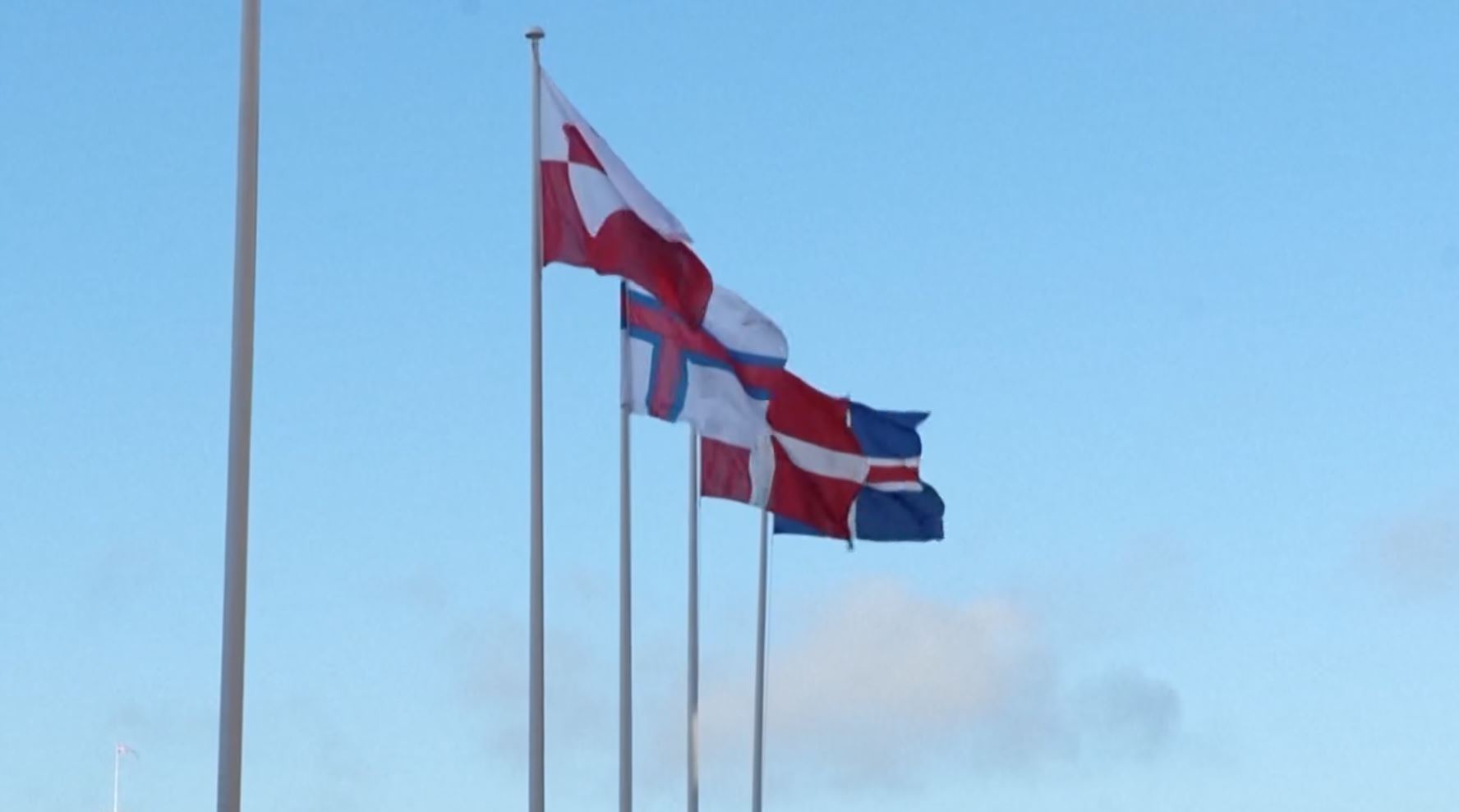
Despite the diplomatic friction, symbolic gestures are in full display. The Greenlandic flag, Erfalasorput, now flies alongside Denmark’s Dannebrog at Christiansborg Palace—a visual reminder of unity, which has been echoed in municipal buildings across Denmark. At the same time, the American delegation was treated to a traditional smørrebrød lunch hosted by Dansk Industri, signalling a desire to maintain decorum even as strategic trust begins to fray.
However, such symbolic gestures cannot obscure the deeper rifts. Prime Minister Mette Frederiksen’s scheduled address to parliamentary leaders on January 17 will be closely scrutinized to see whether Denmark plans to recalibrate its transatlantic alignment or double down on alliance management in the face of growing uncertainty.
Looking Ahead: Implications for Nordic Interests
For Nordic business and political leaders, the Greenland question is no longer an abstract debate. The island sits atop critical rare earth minerals essential for the green technology and defence industries. Its airspace and coastline are vital to NATO’s northern defence posture, and its political trajectory—whether toward greater autonomy or full independence—will dramatically alter investment climates, regulatory frameworks, and logistical supply chains across the Arctic.
Russia’s intervention, though diplomatically measured, should be seen as part of a broader strategy to exploit Western divisions. By presenting itself as a defender of international law—even as it undermines that very principle elsewhere—Moscow aims to deepen fissures within the transatlantic alliance. Meanwhile, the internal discord between the U.S. Congress and the White House risks undermining the credibility of Washington’s longstanding commitment to its allies.
Next in Our Series:
In our upcoming feature, “Greenland’s Resource Sovereignty: Who Owns the Arctic’s Future?”, we will explore the economic stakes driving these geopolitical tensions, featuring exclusive insights from Greenlandic mining regulators, EU trade officials, and Nordic clean-tech investors navigating this emerging frontier.
Stay Connected:
The Arctic is no longer a distant concern—it is a region of decisive global importance. To share your perspective, suggest expert commentary, or request a briefing on how these developments affect your sector, reach out to us at editorial@nordicbusinessjournal.com. Follow ArcticStrategy on LinkedIn for real-time analysis. — The Nordic Business Journal: Informing the North, Influencing the World.