
Russia could pose a renewed military threat to the West only a few years after the war in Ukraine ends, according to Pekka Turunen, head of military intelligence at the Finnish Defence Forces. His assessment is stark—but deliberately measured.
“At the moment, there is no acute military threat to Finland,” Turunen emphasizes. Yet the reassurance comes with a clear caveat: the current calm should not be mistaken for long-term stability.
A Strategic Pause, Not a Strategic Retreat
Turunen’s warning comes at a time when global attention is increasingly fragmented. Prolonged war fatigue over Ukraine, combined with political turbulence in the United States and renewed debate over Arctic geopolitics—including Greenland’s strategic role—has shifted focus away from Europe’s eastern flank.
According to Turunen, this environment may embolden Moscow.
“At least on a political level, it has probably had an encouraging effect on Russia,” he notes, suggesting that the Kremlin may interpret Western divisions as a window of opportunity rather than a deterrent.
For Nordic policymakers—and business leaders—this distinction is crucial. Russia’s current posture reflects constraint, not incapacity.
Reinforcement on Finland’s Border
In the introduction to Finland’s latest annual military intelligence overview, Turunen outlines a clear trajectory: once Russia is able to reduce its operational burden in Ukraine, it is likely to redirect resources westward.
“Russia is preparing to strengthen its military presence near Finland’s borders. More significant reinforcement will likely begin when the situation in Ukraine allows.”
Finland, now a full NATO member, shares a 1,340-kilometre border with Russia—the longest in the alliance. Any increase in Russian force posture here would not only be a military signal, but also a geopolitical one aimed at testing NATO’s cohesion.
Turunen estimates that while a large-scale confrontation with NATO would take two to five years to materialize after the end of the Ukraine war, smaller regional crises—particularly in Central Asia or the North Caucasus—could emerge much sooner.
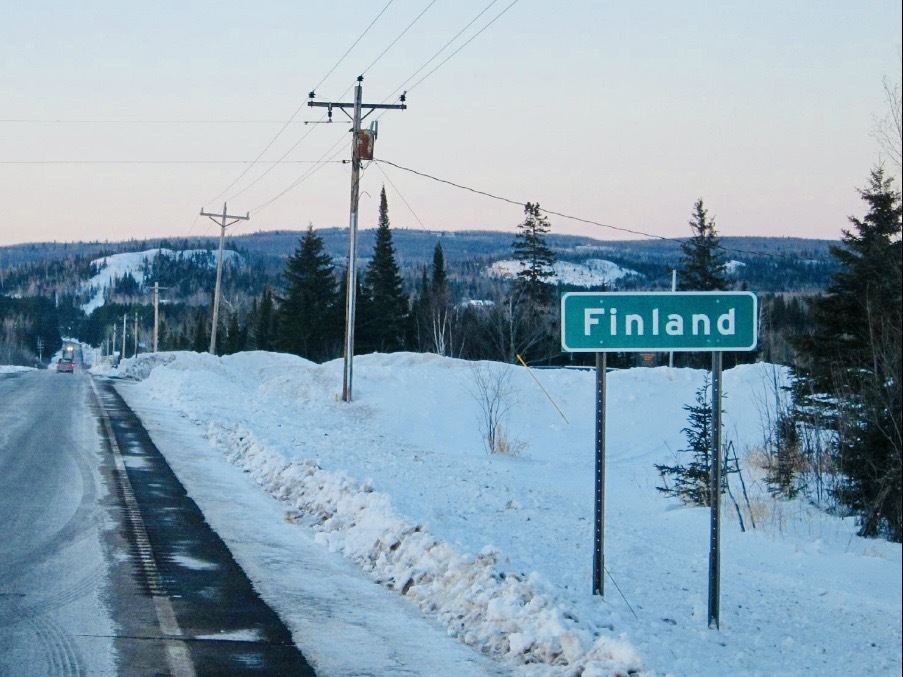
Escalation Risks in the Baltic and Arctic
The security environment around Finland has continued to deteriorate. Russian naval and air activity in the Baltic Sea has increased, while Ukraine’s long-range strikes inside Russian territory have expanded in both scale and sophistication.
This raises the risk of spillover incidents.
“The risk of aircraft or air defence systems being diverted into Finnish territory increases as the attacks continue and become more diverse,” the intelligence report warns.
Turunen has also flagged the possibility of accidental drone incursions into Finnish airspace. While no such incidents have been confirmed to date, the risk itself carries implications beyond defence.
What This Means for Nordic Business
For Nordic economies, these developments are not abstract security concerns—they are material risk factors:
- Supply chains and logistics: Heightened tension in the Baltic Sea affects shipping routes, insurance premiums, and port security.
- Energy and infrastructure: Undersea cables, pipelines, and power connections remain vulnerable to both hybrid and kinetic threats.
- Defence and technology investment: Finland, Sweden, and the Baltic states are accelerating procurement, cybersecurity spending, and dual-use innovation.
- Arctic strategy: As Arctic access and governance gain prominence, Nordic companies operating in energy, mining, and logistics face both new opportunities and heightened geopolitical exposure.
In short, Russia’s post-Ukraine posture will shape the Nordic business environment well before any formal conflict emerges.
A Nordic Imperative: Preparedness Without Panic
Turunen’s message is not alarmist. It is strategic. Finland’s approach—strengthening deterrence while maintaining societal stability—offers a model for how small, open economies can navigate great-power tension without undermining investor confidence or democratic resilience.
For businesses, the lesson is clear: geopolitical risk in Northern Europe is no longer a peripheral issue. It is a board-level consideration.
NBJ Insight | What Comes Next
Follow-up article direction:
How Nordic defence spending, NATO integration, and Arctic policy are reshaping investment flows, innovation ecosystems, and public–private partnerships across Northern Europe.
Connect with Nordic Business Journal
We invite readers, analysts, and industry leaders to share insights, data, and perspectives for upcoming coverage. Join the conversation and stay ahead of the strategic curve.
— Nordic Business Journal