
Finland’s population grew by 20,929 people in 2025, reaching 5,656,900, according to preliminary data from Statistics Finland. At first glance, the headline suggests demographic resilience. A closer look, however, reveals a country navigating a delicate balance between declining birth rates, evolving migration patterns, and long-term labour market pressures.
Migration Still Fuels Growth—But Momentum Is Slowing
Net migration remained the single decisive factor behind Finland’s population growth in 2025. Although immigration fell for the second consecutive year, it still delivered a net gain of 34,852 people, more than compensating for the persistent natural population decline.
A total of 50,060 people immigrated to Finland, down sharply from the peaks of 2023 and 2024. Emigration also eased slightly, with 15,208 people leaving the country. The result: a continued, but narrowing, demographic buffer provided by international mobility.
For business leaders and policymakers, this trend carries mixed signals. On the one hand, Finland continues to attract global talent and humanitarian migrants at a scale unmatched in most of its post-1990 history. On the other, the downward trend suggests that extraordinary migration inflows—particularly linked to geopolitical crises—are normalising.
Ukrainian nationals remained the largest immigrant group, with 8,388 arrivals, despite a notable year-on-year decline. Immigration from South Asia remained strong, led by Filipino and Sri Lankan nationals, reinforcing Finland’s growing reliance on non-European labour in healthcare, logistics, and service sectors.
Notably, 6,687 Finnish citizens returned home, while 8,870 emigrated, highlighting an ongoing challenge: retaining domestic talent in a competitive Nordic and EU labour market.
Citizenship Surge Signals Long-Term Integration
One of the most strategically significant developments of 2025 was the record number of citizenship grants. A total of 14,124 foreign nationals became Finnish citizens, the highest figure on record.
The largest groups came from Iraq, Russia, and Syria—communities that are increasingly transitioning from temporary residence to long-term settlement. For Finland’s economy, this shift matters. Citizenship correlates strongly with higher labour market participation, entrepreneurship, and regional anchoring—especially outside the Helsinki metropolitan area.
For employers, this trend points to a more stable and integrated workforce, albeit one that will require continued investment in language training, credential recognition, and regional housing capacity.
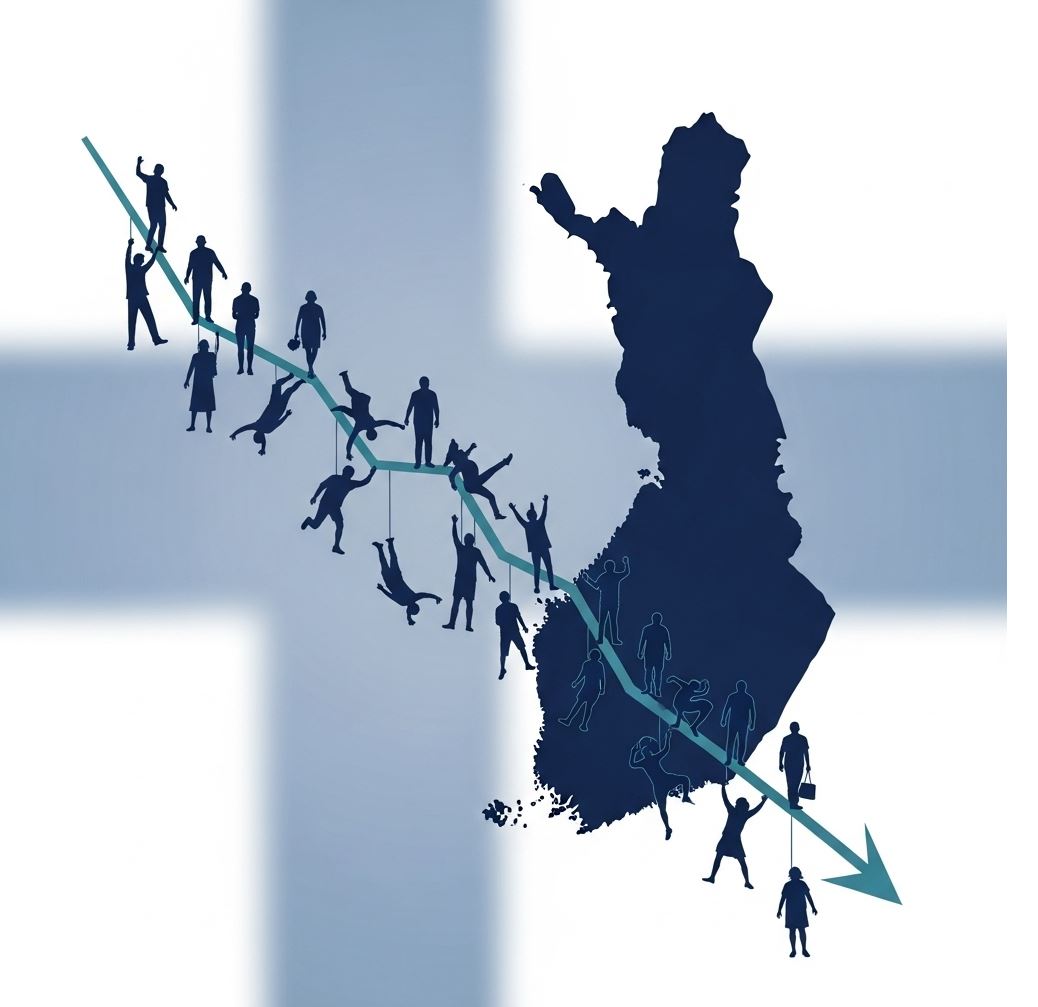
A Modest Fertility Rebound—But Structural Decline Persists
In a rare positive signal, the number of births increased for the first time since 2020, rising to 45,835. The total fertility rate climbed from 1.25 to 1.30, ending three consecutive years of decline.
While welcome, the rebound remains fragile. Finland’s fertility rate is still among the lowest in its modern statistical history and far below replacement level. Regional disparities were pronounced: fertility was highest in Ostrobothnia and lowest in eastern border regions, reinforcing existing patterns of regional demographic divergence.
For long-term economic planning, the implication is clear: migration will remain essential to sustaining Finland’s workforce and tax base well into the 2030s, regardless of short-term fluctuations in birth rates.
Ageing Accelerates as Mortality Remains Elevated
Deaths continued to outpace births significantly. 59,030 people died in 2025, marking the third highest annual death toll since World War II. Life expectancy figures suggest a stabilisation after pandemic-era volatility, but ageing remains the dominant structural force shaping Finland’s demographic outlook.
From a fiscal perspective, this reinforces pressure on healthcare systems, pension financing, and municipal budgets—particularly in regions experiencing simultaneous population loss and ageing.
Social Stability and Mobility Trends
Marriage rates rose for the second year in a row, and internal migration between municipalities declined slightly. These indicators suggest a period of relative social stabilisation, following years of pandemic-driven volatility. However, reduced internal mobility may also reflect housing affordability constraints in growth centres and limited employment opportunities elsewhere.
Looking Ahead: Early 2026 Signals
Early indicators from 2026 suggest that immigration levels are stabilising rather than rebounding, while labour shortages persist in healthcare, construction, and green transition industries. As Finland tightens certain migration rules while expanding work-based entry pathways, the effectiveness of policy calibration will be critical.
For businesses, the message is pragmatic: demographic growth alone is no longer the metric that matters. The composition, skills profile, and regional distribution of the population will increasingly define Finland’s economic competitiveness.
Nordic Business Journal — Editorial Note
Next in this series:
Our follow-up article will examine how Finland’s changing demographic structure is reshaping labour markets, wage dynamics, and regional investment opportunities—particularly in healthcare, clean energy, and advanced manufacturing.
We invite readers to connect with Nordic Business Journal, share insights from their industries, and join the conversation on how demographic realities are redefining the Nordic economic model.
Stay informed. Stay ahead.