
NATO’s Secretary General Mark Rutte has made waves again, asserting that Europe cannot defend itself without the United States. Yet, his comments have sparked debate about the evolving strategic landscape of European defence, particularly as tensions rise between NATO allies and global power structures shift. Is the transatlantic relationship as unshakable as it once seemed? Or are we witnessing the beginning of a new phase in European security?
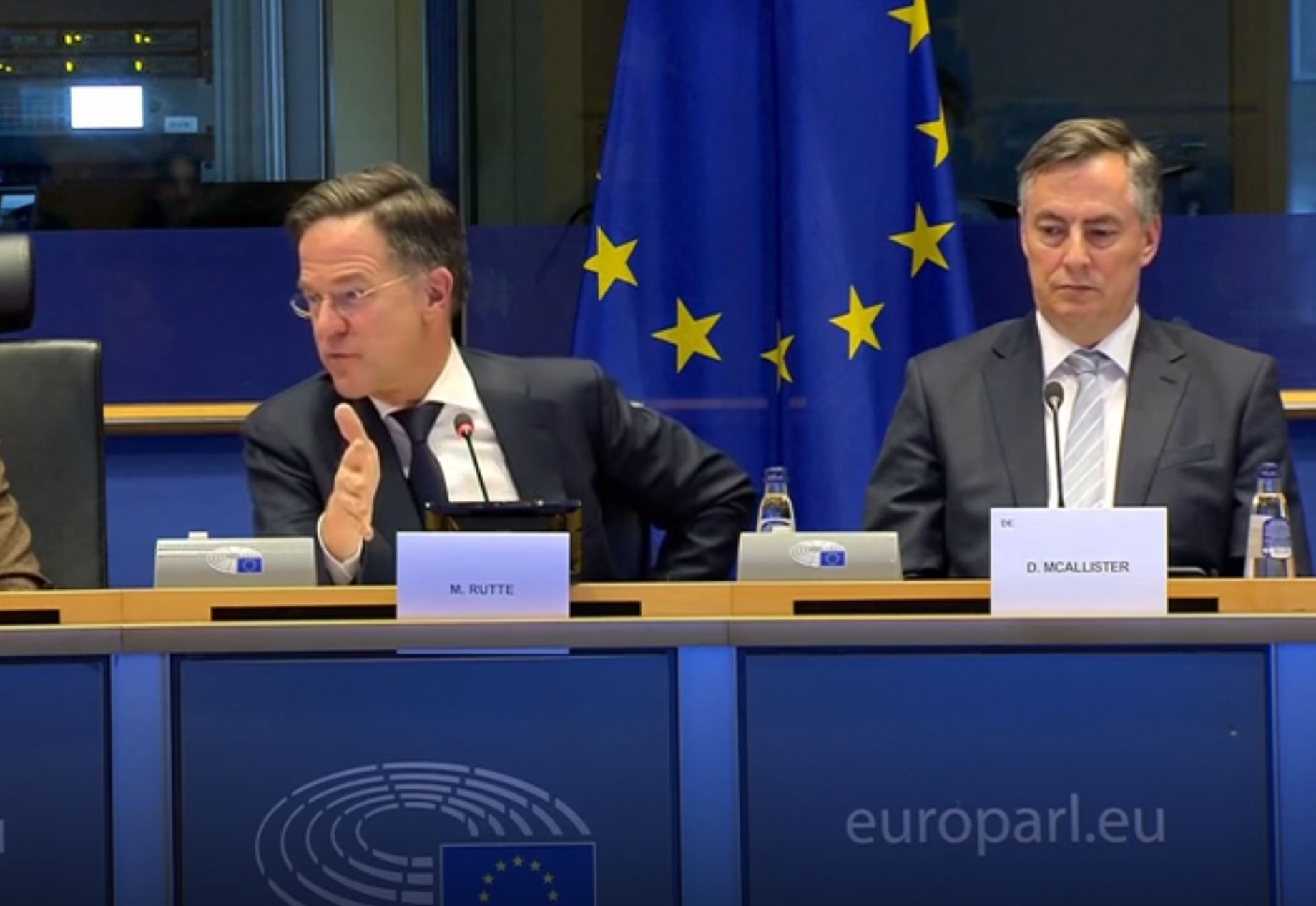
In a recent address to the European Parliament, NATO Secretary General Mark Rutte bluntly stated that Europe’s defence capabilities would be severely compromised without the United States. He emphasized that Europe’s security remains deeply intertwined with the military and strategic strength of its American ally, particularly in terms of nuclear deterrence.
“If anyone here thinks that the EU or Europe can defend itself without the United States, it’s a pipe dream,” Rutte declared. “You can’t. We can’t. We need each other.”
Rutte’s words come at a time when the transatlantic alliance appears increasingly fragile. With shifting political dynamics in both Europe and the US, and rising concerns about the future of NATO, his comments reveal a stark reality—one that many European leaders are struggling to face. But are Rutte’s assertions an accurate reflection of Europe’s security situation, or is Europe capable of a more independent defence posture than he suggests?
NATO’s Strategic Dilemma
The NATO chief’s comments highlight a central dilemma for European security: Can Europe continue to rely on the US for its defence, or is it time to explore alternative arrangements?
Several experts, including Danish military analyst Anders Puck Nielsen, argue that Rutte’s pessimistic view risks sending a dangerous signal to Russia. Nielsen warns that emphasizing Europe’s dependence on the US undermines Europe’s own deterrent posture, potentially emboldening adversaries who perceive internal divisions among NATO members.
“Rutte’s message plays into the hands of Vladimir Putin,” Nielsen said. “It suggests that Europe is weak and divided, which could encourage further aggression in Eastern Europe.”
On the other hand, some analysts—like Christine Nissen, chief analyst at Think Tank Europa—acknowledge that Rutte’s statement may have been necessary to reassure the US, particularly under the unpredictable leadership of former President Donald Trump. For NATO to remain cohesive, Nissen argues, Rutte must sometimes adopt a conciliatory stance toward the US, regardless of the political climate in Washington.
“Rutte is caught in a very tricky position,” Nissen noted. “He has to manage the demands of European leaders while also appeasing Washington. He’s playing a balancing act that few others could handle.”
A Continent on the Brink of Change
While Rutte’s remarks may resonate with those who still view the US as the ultimate guarantor of European security, the evolving geopolitical situation presents a more complex picture. In recent months, European leaders have become more vocal about the need for strategic autonomy. Finnish President Alexander Stubb, for example, strongly disagrees with Rutte’s stance, asserting that Europe, and specifically Finland, can defend itself without American intervention.
“Let’s put things in perspective,” Stubb said during a recent debate at the World Economic Forum in Davos. “Russia has made little progress in Ukraine despite NATO’s limited involvement. Europe is stronger than we think, and yes, we can defend ourselves.”
Stubb’s comments align with a broader shift in European defence thinking. With NATO expanding and Finland now a full member, the alliance’s deterrent capacity in Europe has been strengthened. Moreover, the war in Ukraine has demonstrated that European nations, even without direct US involvement, can put up significant resistance against Russian aggression. The question remains whether Europe can build on this momentum and take greater responsibility for its own defence, or if it remains locked into a dependency on the US.
Diverging Perspectives Within NATO
Rutte’s comments also reflect growing divides within NATO. While the Secretary General insists on the importance of continued American support, several European leaders are pushing for greater autonomy in military and defence matters.
French officials, in particular, have been outspoken in their disagreement with Rutte’s stance. Jean-Noël Barrot, France’s Foreign Minister, responded on social media, stating that “Europeans can and must take responsibility for their own security. Even the US agrees.”
Former French ambassador to NATO, Muriel Domenach, was equally critical, asserting that Rutte’s position “sends the wrong signal to Russia” and undermines Europe’s sovereignty. Even within the European Parliament, the conversation is shifting, with members like Nathalie Loiseau calling for a more balanced approach to NATO’s transatlantic relations.
As these discussions unfold, it is clear that Europe is at a crossroads. Should it continue to rely on the US for security, or should it seek to diversify its defence capabilities, potentially investing more heavily in nuclear and conventional forces?
The Road Ahead: Europe’s Defence Future
The central issue is not whether Europe can defend itself, but rather how it will evolve in the face of shifting global power dynamics. While Rutte’s remarks are unlikely to end the debate, they underscore the need for Europe to reassess its role within NATO and the broader international security framework.
With the rise of new global threats—such as cyber warfare, hybrid threats, and the shifting geopolitical influence of China—Europe must adapt its defence posture to maintain both its security and autonomy. This process will require strategic investments in defence infrastructure, enhanced cooperation between European nations, and a more robust dialogue with the US.
Ultimately, Europe’s defence future is likely to be shaped by a combination of military self-reliance and continued cooperation with NATO. However, as global challenges grow more complex, the question remains: Will Europe be ready to face these challenges on its own, or will it continue to rely on the US as its primary security partner?
Looking Ahead: The Next Chapter in European Defence
In our next issue, we will delve deeper into the evolving role of NATO in Europe’s defence strategy. We will explore the implications of increasing European military autonomy and the potential for new security partnerships beyond the US. Stay connected with us for in-depth analysis and expert insights into the future of European security.
Join the Conversation
We welcome your thoughts and opinions on Europe’s defence future. Connect with us via social media or email to continue the discussion, and don’t forget to stay updated for more expert analyses in the coming weeks. Insights@nordicbusinessjournal.com or our comment and debate forums below to continue the conversation.