
HELSINKI — Finland’s unemployment rate climbed to 10.7 percent in December 2025—the highest level since the global financial crisis of 2009—placing the nation at the unfortunate pinnacle of EU joblessness. Yet beneath this stark headline lies a more complex narrative: a labour market caught between structural transformation and cyclical weakness, with profound implications for Nordic business leaders navigating regional talent strategies and investment decisions.
he raw numbers tell a sobering story. Some 277,000 Finns were unemployed in December, a surge of 51,000 year-on-year. Youth unemployment proved especially acute, with 22.9 percent of 15–24-year-olds out of work—nearly one in four young people disconnected from the labour market at a critical career-launching stage. Long-term unemployment deepened its roots: 138,000 individuals had searched unsuccessfully for work for over a year, including 68,400 stranded beyond the two-year mark.
The Structural Chasm
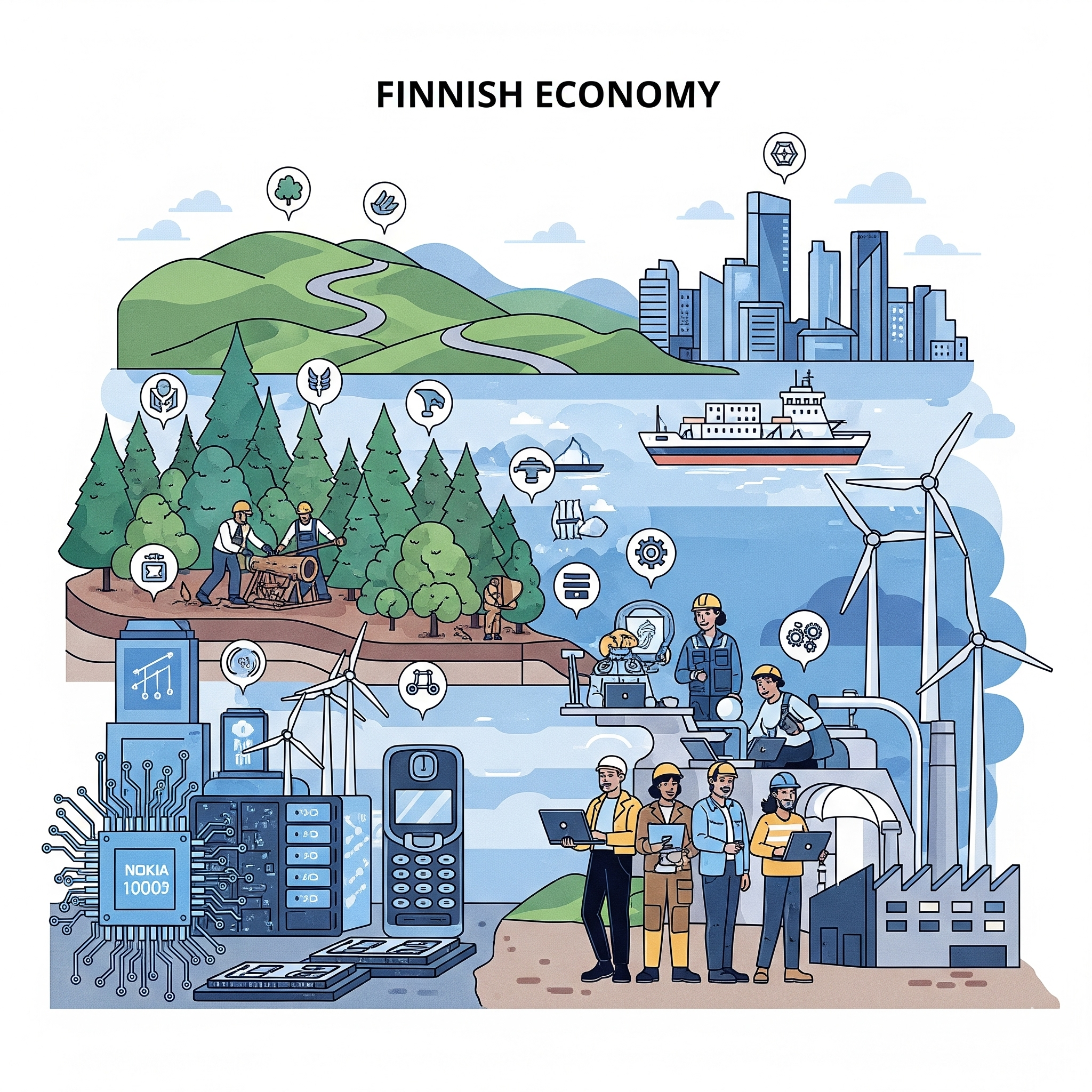
What distinguishes Finland’s current crisis from previous downturns is its structural character. Research from Finland’s EVA think tank confirms that over half of the unemployed face barriers unlikely to dissolve through mere economic growth—primarily a widening skills mismatch between available workers and employer needs. This isn’t simply a recessionary dip; it reflects deeper dislocations as traditional manufacturing contracts while digital and green economy roles remain unfilled.
The paradox? Labour force participation actually increased—33,000 fewer people sat outside the workforce compared to December 2024. This suggests discouraged workers are re-engaging, yet finding few pathways to employment. Meanwhile, Finland’s manufacturing and technology sectors have shed thousands of positions: Valmet alone initiated restructuring affecting nearly 400 white-collar roles in late 2025, emblematic of broader industrial retrenchment.
Nordic Divergence
For Nordic business readers, Finland’s trajectory stands in stark contrast to its neighbours. While Norway maintains an ultra-tight labour market with unemployment hovering near 3.5–4 percent and over 100,000 unfilled vacancies, Finland struggles with surplus labour yet persistent vacancies in specialised fields. This divergence creates both risk and opportunity: Finnish talent pools offer cost advantages for Nordic firms, yet mobility barriers and skill mismatches complicate recruitment.
Fragile Green Shoots
Amid the gloom, two modest positives emerged. Finland’s economy expanded 0.6 percent quarter-on-quarter in Q4 2025—halting its recessionary slide—while retail sales posted a 0.7 percent monthly gain in December. As Statistics Finland’s Tatu Leskinen noted, employment levels held relatively steady year-on-year despite rising unemployment, suggesting job destruction has slowed even if creation remains tepid.
Looking ahead, the Bank of Finland forecasts modest recovery: 0.8 percent GDP growth in 2026, accelerating to 1.7 percent in 2027. Yet unemployment is projected to remain elevated at 9.3 percent this year before gradually easing—a lagging indicator that will weigh on domestic consumption and social cohesion.
Policy Response: Tighter Rules, Higher Stakes
Recognising the urgency, Finland’s government implemented stricter job-seeker obligations effective 1 January 2026. Job offers from the public employment service are now binding; refusal risks benefit reductions. While intended to accelerate re-employment, critics question whether this addresses the core structural mismatch—or merely pressures workers into unsuitable roles.
Forward Look: Where Nordic Business Must Focus
Finland’s labour crisis transcends national borders. For Nordic enterprises, three strategic questions emerge:
1. Talent arbitrage: Can firms leverage Finland’s skilled-but-unemployed workforce for nearshoring or hybrid roles while addressing skill gaps through targeted upskilling?
2. Sectoral reallocation: Which emerging sectors—cleantech, health tech, circular economy—can absorb displaced manufacturing talent with moderate retraining?
3. Policy partnership: How might Nordic corporations collaborate with Finnish vocational institutions to co-design reskilling pathways aligned with regional economic needs?
Next in our Nordic Labour Series, we’ll investigate Finland’s emerging “skills passport” initiatives and cross-border talent mobility schemes within the Nordic common labour market. How can businesses actively shape—and benefit from—these transitions? Share your insights, challenges, and success stories with our editorial team at insights@nordicbusinessjournal.com. Let’s build solutions together.
— Nordic Business Journal: Connecting Insight to Action Across the Nordics