
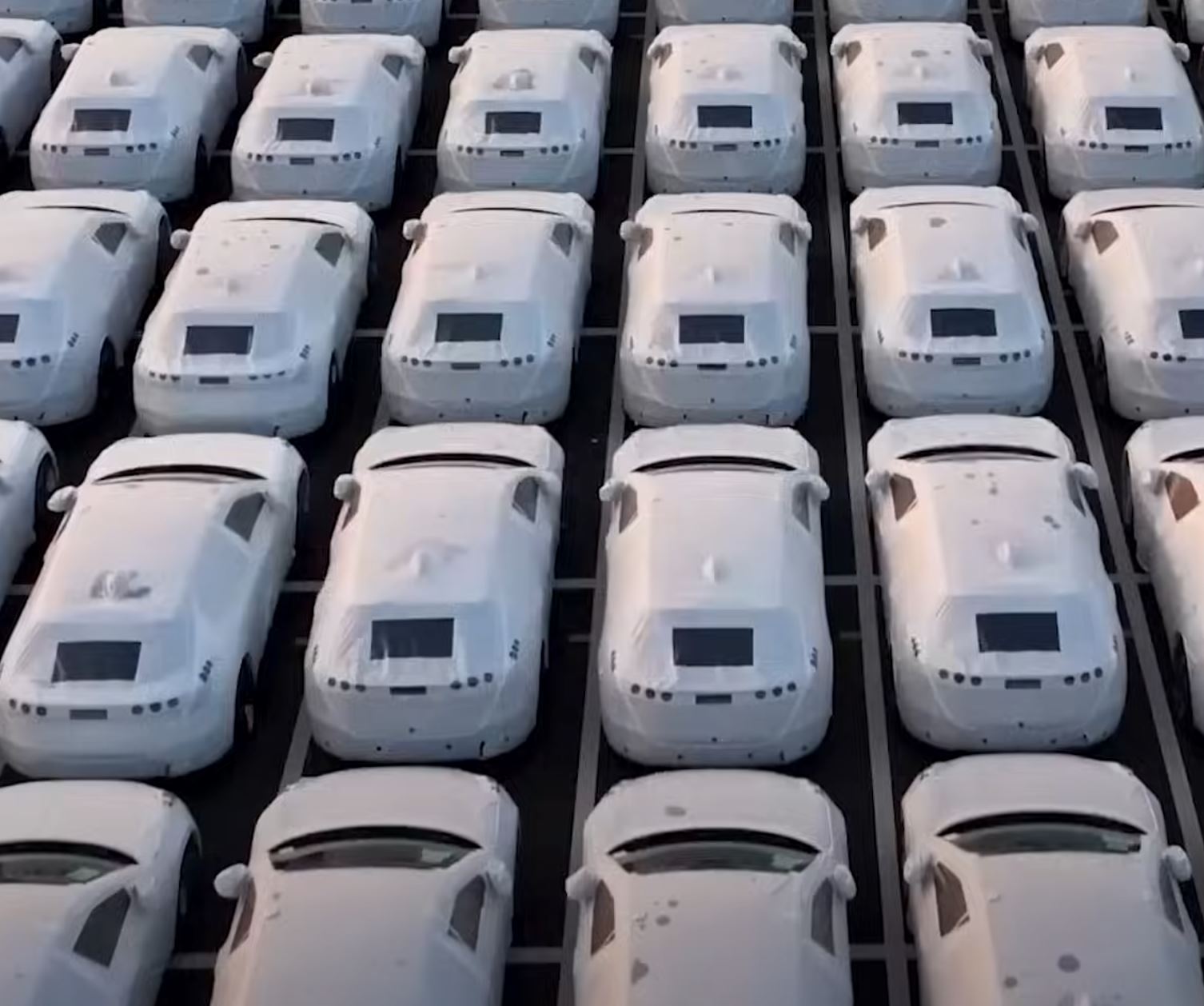
By early 2026, Chinese automotive brands have crossed a critical threshold—securing 11% of Europe’s entire passenger car market in 2025, with December figures revealing an even more striking 16% share of the electrified vehicle segment. This isn’t merely incremental growth; Chinese manufacturers nearly doubled their European sales volume year-over-year, registering 810,982 vehicles across the continent. For Nordic business leaders, this transformation demands urgent strategic recalibration—not as a distant threat, but as a present-day competitive reality reshaping our automotive landscape.
Beyond Price: The Multi-Dimensional Challenge
While Chinese brands maintain an estimated 30% price advantage over European equivalents, their success stems from a sophisticated three-pillar strategy that transcends cost competition:
1. Technology Parity (and in Some Areas, Superiority): BYD’s Blade Battery technology, NIO’s battery-swapping infrastructure, and advanced ADAS systems from XPeng have closed the perceived quality gap. Chinese manufacturers now lead in vehicle-to-grid integration and over-the-air update frequency—features increasingly valued by Nordic consumers.
2. Agile Model Portfolios: Unlike European OEMs constrained by legacy platforms, Chinese brands deploy targeted models for specific segments. MG’s ZS EV dominates compact SUV electrification in Scandinavia, while Jaecoo’s J7 targets the family crossover segment with plug-in hybrid flexibility—critical for Nordic winter range anxiety.
3. Localization Acceleration: BYD’s Hungarian manufacturing facility (operational October 2025) and planned Turkish plant (March 2026) signal a deliberate shift from import dependency to European production—circumventing tariff barriers while building supply chain resilience. The company aims to double its European sales network to 2,000 outlets by year-end 2026, creating unprecedented retail density.
The Nordic Paradox: Highest EV Adoption, Highest Vulnerability
Nordic markets present Chinese manufacturers with their most fertile European ground. Norway concluded 2025 with 96% of new registrations fully electric—the world’s highest penetration. Denmark reached 67% and Sweden 60%, with Finland at 56%. This creates a paradox: our region’s climate leadership has inadvertently created the continent’s most receptive market for Chinese EVs.
Yet Nordic consumers’ sustainability expectations introduce complexity. The EU’s forthcoming Battery Passport regulation (mandatory February 2027) will require full lifecycle carbon accounting and supply chain transparency. Chinese manufacturers face scrutiny over cobalt sourcing and manufacturing emissions—areas where Nordic brands could differentiate through verifiable green credentials and circular economy commitments.
Policy Responses: Tariffs Prove Insufficient
The EU’s October 2024 anti-subsidy tariffs (7.8%–35.3% depending on manufacturer cooperation) have demonstrably failed to stem Chinese growth. In response, Brussels issued new guidance in January 2026 exploring “minimum pricing undertakings” as an alternative mechanism—effectively setting price floors rather than applying percentage duties. This regulatory pivot acknowledges tariffs’ limitations while raising questions about WTO compliance and consumer impact.
For Nordic policymakers, the dilemma intensifies: How to protect domestic automotive employment (critical in Sweden’s Gothenburg and Denmark’s engineering clusters) without inflating EV prices and undermining climate targets? Norway’s tariff-free approach has accelerated Chinese market penetration but maintained consumer choice—a trade-off other Nordics watch closely.
Strategic Imperatives for Nordic Stakeholders
For Automotive Suppliers: Chinese OEMs’ vertical integration (battery production, semiconductor design, software stacks) threatens traditional tier-one suppliers. Nordic battery material specialists (Northvolt ecosystem) and software developers must pivot from component supply to value-added partnerships—co-developing next-generation battery chemistries or AI-driven energy management systems.
For Legacy Brands: Volvo Cars and Polestar’s majority ownership by Geely creates strategic ambiguity. While leveraging Chinese capital and technology, these “Swedish” brands face reputational risks as anti-China sentiment simmers in certain European markets. Transparency about R&D localization and manufacturing footprints becomes a competitive necessity.
For Policymakers: The Nordic Council should advocate for EU-wide standards that reward verifiable sustainability—not protectionism. Carbon-adjusted tariffs based on lifecycle emissions would advantage Nordic hydro-powered manufacturing while pressuring Chinese producers to decarbonize supply chains.
Looking Ahead: The 2026 Inflection Point
Chinese market share will likely plateau temporarily in 2026—not from competitive pressure, but from European OEMs finally launching compelling EV lineups after years of ICE-focused hesitation. However, this respite proves fleeting unless European manufacturers address structural disadvantages: energy costs 3–4× higher than China’s, slower software development cycles, and dealer networks unprepared for direct-sales models.
The true test arrives in 2027 when Battery Passport compliance separates credible sustainability claims from marketing rhetoric. Nordic brands with transparent, low-carbon supply chains could reclaim premium positioning—if they act now.
What’s Next & How to Engage
This analysis concludes our first instalment in a three-part series examining China’s automotive ascent. Our next article will investigate the Nordic battery supply chain’s vulnerability to Chinese dominance in critical minerals processing—and spotlight Scandinavian startups building circular battery ecosystems that could redefine competitive advantage.
How is your organization responding to Chinese automotive competition? Share your strategic challenges and innovations with our editorial team at insights@nordicbusinessjournal.com. Selected perspectives will feature in our upcoming executive roundtable on automotive transformation.
Subscribe to our weekly Nordic Auto Brief for real-time analysis of regulatory shifts, market share movements, and technology breakthroughs reshaping mobility across Scandinavia and the Baltics.