
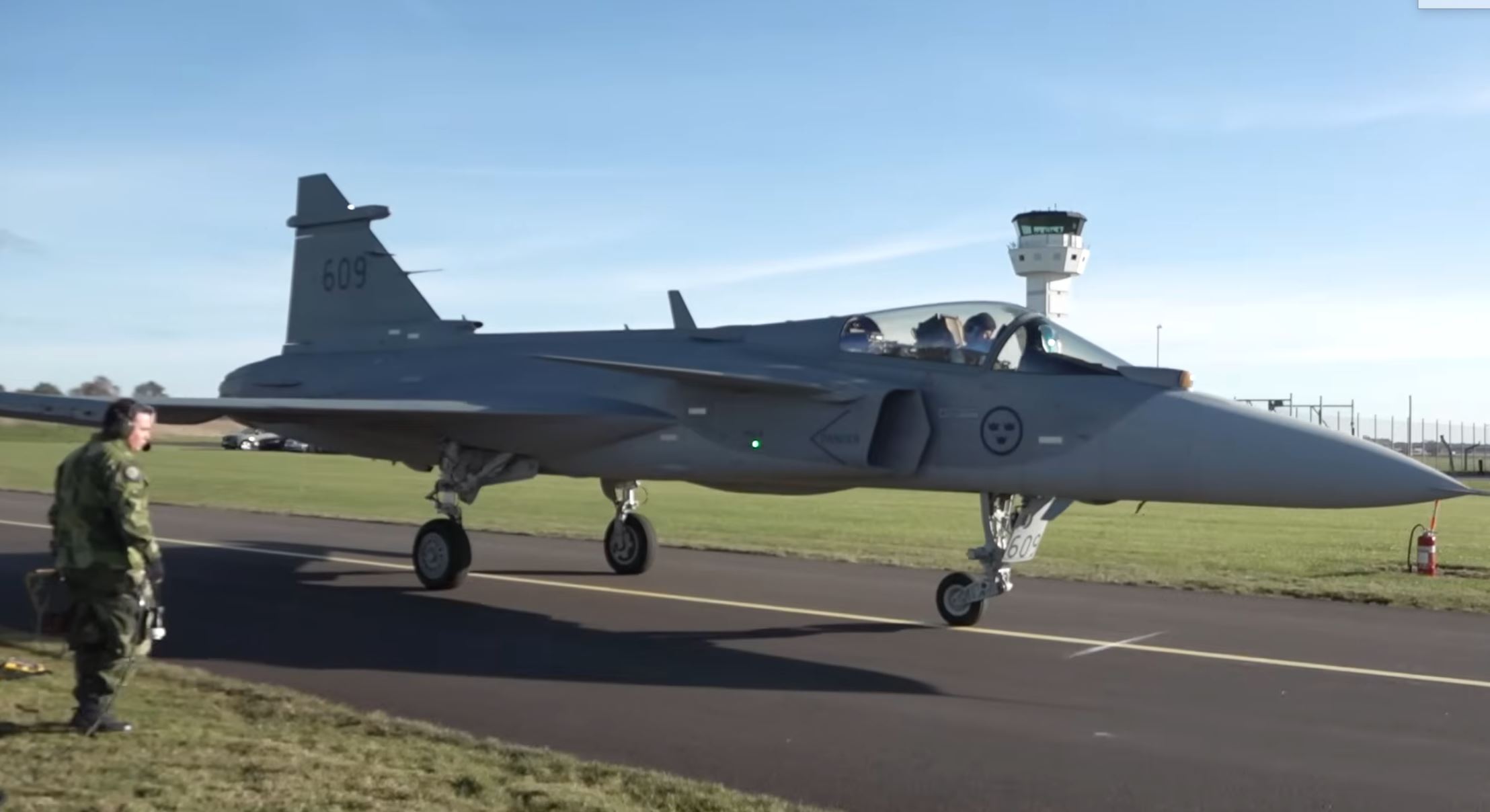
STOCKHOLM — In a historic first since joining NATO in March 2024, Sweden has deployed six Gripen E fighters to Keflavík Air Base to lead NATO’s Icelandic Air Policing mission—a deployment now formally integrated into the alliance’s newly launched Operation Arctic Sentry. Announced February 11, 2026, this multi-domain initiative represents NATO’s most significant Arctic posture enhancement since Russia’s full-scale invasion of Ukraine, with profound implications for Nordic defence industries and Arctic commercial interests.
For Nordic executives, this moment carries dual significance: it marks Sweden’s operational maturation within NATO’s command structure, while simultaneously underscoring a strategic pivot toward European self-reliance as the United States recalibrates its transatlantic commitments under the second Trump administration. Defence Minister Pål Jonson’s candid assessment—that Europe “must get used to a lower commitment to NATO from the US”—is no longer political rhetoric but operational reality. American absence from consecutive NATO defence minister meetings signals a deliberate strategic shift toward Western Hemisphere priorities, compelling Nordic nations to shoulder greater responsibility for High North security.
The Business Case Behind Arctic Sentry
This isn’t merely a military exercise—it’s a market signal. Three commercial drivers underpin NATO’s Arctic reinforcement:
1. Resource security drives defence investment. Greenland’s rare earth elements, zinc, and iron ore deposits have transformed the island from strategic periphery to economic focal point. With China accelerating Arctic container shipping (14 transits via Northern Sea Route in 2025) and Russia’s NSR traffic declining under sanctions, Western allies recognize that resource access requires credible air defence. Sweden’s Gripen deployment—while not yet tasked with Greenland patrols—positions Nordic air forces as the first line of deterrence for emerging Arctic supply chains.
2. Gripen’s NATO interoperability fuels export momentum. Saab’s 2025 order book tells the story: 17 aircraft to Colombia (€3.1 billion) and four to Thailand, with Canadian negotiations advancing for a potential North American manufacturing hub. Each successful NATO-integrated deployment—like Iceland’s current rotation—validates Gripen’s compatibility with allied systems, directly supporting Saab’s competitive positioning against F-35 alternatives in price-sensitive markets. For Nordic defence suppliers, Arctic Sentry demonstrates that regional platforms can deliver alliance-grade capability without U.S. dependency.
3. Nordic industrial cooperation gains strategic urgency. With Norway assuming NORDEFCO leadership in January 2026, opportunities for cross-border defence procurement are accelerating. Arctic Sentry’s framework explicitly incorporates existing Nordic initiatives like Denmark’s Arctic Endurance and Norway’s Cold Response exercises—creating standardized requirements that favour regional supply chains over transatlantic alternatives. Companies specializing in cold-weather logistics, Arctic communications, and sustainable aviation fuels should monitor upcoming NORDEFCO tenders closely.
Reality Check: Capabilities vs. Ambitions
Despite political fanfare, operational constraints remain. Swedish Air Force communications manager Therese Åkerstedt confirmed no current NATO orders for Greenland landings or dedicated patrols—missions are assigned at short notice within the broader Arctic Sentry framework. This reflects prudent force management rather than strategic hesitation: with only 40 Gripen E/F aircraft operational across Sweden’s entire fleet, sustainable Arctic presence requires rotational models and deeper Nordic burden-sharing.
Equally critical is correcting misperceptions in earlier reporting: Operation Arctic Sentry was developed through NATO’s military command structure—not bilateral Trump-Rutte negotiations. Mark Rutte, appointed NATO Secretary General in October 2024, oversees alliance consensus; the operation reflects collective European initiative amid U.S. strategic retrenchment, not American direction.
The Path Forward
Arctic Sentry’s true test lies not in symbolic flyovers but in whether it catalyses tangible industrial coordination. Nordic executives should watch three developments closely:
– Standardisation breakthroughs: Will Norway’s NORDEFCO leadership produce common Arctic maintenance protocols across Swedish, Finnish, and Norwegian air forces?
– Greenland infrastructure: Denmark’s January 2026 defence review may unlock investment in Thule Air Base modernization—creating opportunities for Nordic engineering firms.
– U.S. posture clarification: The Trump administration’s 2026 National Defence Strategy emphasizes Western Hemisphere focus but stops short of abandoning Arctic interests. Expect continued U.S. satellite and submarine presence even as fighter deployments diminish.
Next in our Arctic Security Series: We’ll analyse how Nordic shipyards are positioning for ice-class vessel demand as commercial Arctic transits evolve—and why declining Russian NSR traffic may accelerate European-controlled alternatives through Svalbard waters. Defence procurement officers and supply chain directors: Share your Arctic logistics challenges with our editorial team at insights@nordicbusinessjournal.com. Your operational insights will shape our next investigation.