
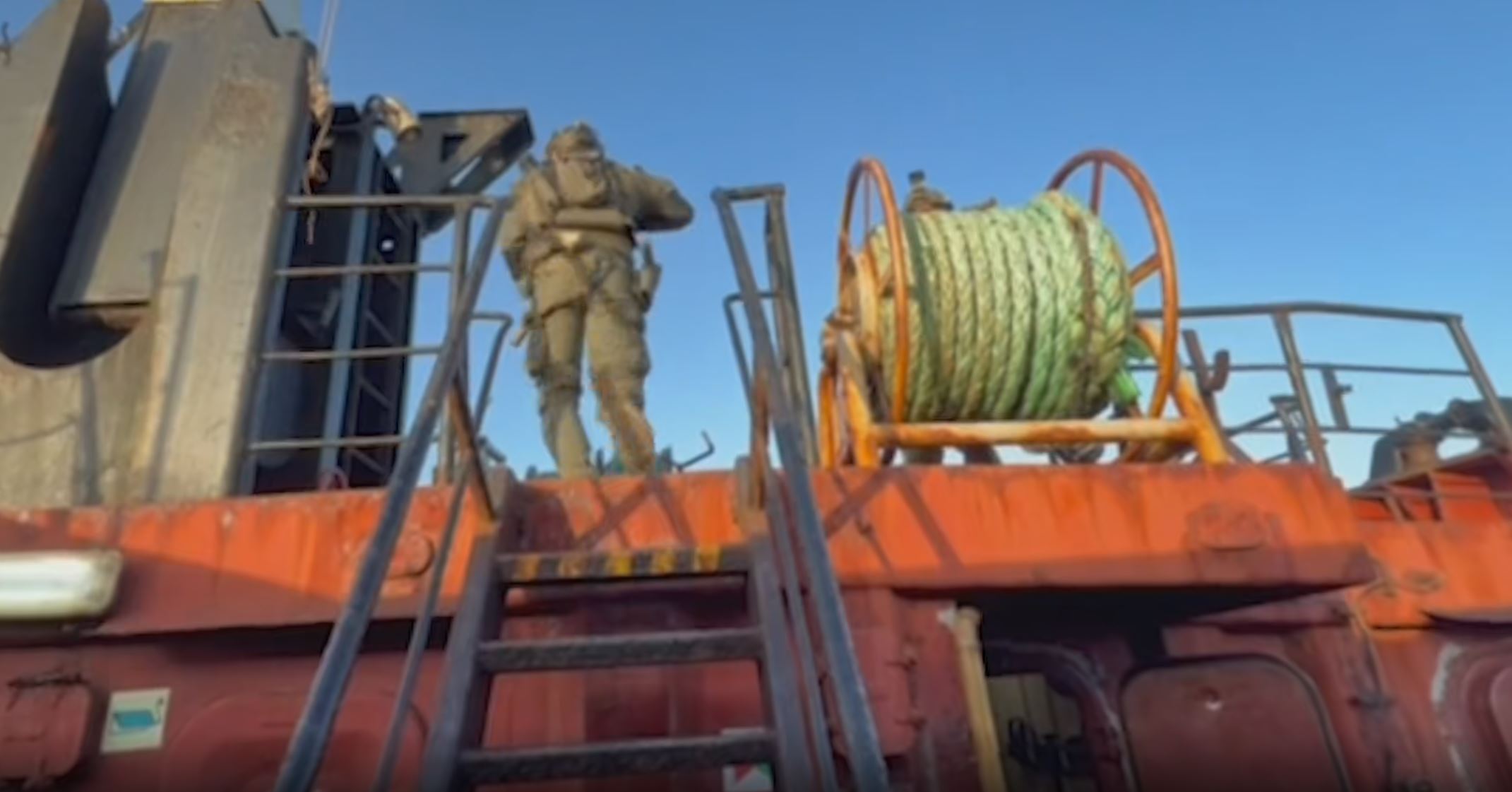
In a dramatic turn of events, Sweden has escalated its efforts to curb Russian influence in European waters, halting a tanker, Sea Owl 1, part of Russia’s so-called “shadow fleet.” This decisive action, carried out by the Swedish Coast Guard in collaboration with Swedish police, occurred off the coast of Trelleborg, near the Øresund Strait, not far from Danish waters. The ship, which measures 228 meters in length, was suspected of transporting Russian oil under a false flag—one of many vessels involved in a covert operation to circumvent international sanctions imposed on Russia.
The operation has set off ripples of concern, both in European capitals and in Moscow. The question now looms: How will Russia respond to this unprecedented action?
The Shadow Fleet: A Key Link in Putin’s War Chest
The Sea Owl 1 is not an isolated case. This particular vessel belongs to a wider network of shadow tankers, used by Russia to continue its oil exports despite sanctions that target the Russian economy, particularly the oil sector. The shadow fleet operates under the radar, often registered in countries with lax enforcement of maritime laws, allowing them to sidestep both international sanctions and restrictions on shipping in the Black Sea. This fleet serves a critical role in enabling Russia to maintain revenues from oil exports, crucial for financing its ongoing military operations in Ukraine.
Niels Fastrup, an investigative journalist with DR Nyheder who has closely tracked Russia’s maritime activities, calls the event “a rather dramatic development.” He notes that although the presence of shadow tankers in European waters has long been acknowledged, this marks a clear shift in the approach of European authorities toward confronting these vessels.
“We’ve known all along that the shadow tankers were there,” Fastrup explains. “The uncertainty, however, was always about how to act—what steps could be taken to stop them without provoking a larger confrontation.”
Now, that uncertainty appears to be diminishing. This recent seizure is the second time in just a few weeks that Sweden has intercepted a shadow tanker, following similar operations by French and Belgian authorities. The coordinated actions suggest a growing unity within the EU to tackle this issue head-on.
A United European Front: Sweden’s Stand and the EU’s Growing Resolve
Flemming Splidsboel, Senior Researcher at the Danish Institute for International Studies, refers to Sweden’s operation as “a step up in our handling of the shadow fleet.” He emphasizes that such actions are not merely about seizing individual ships—they are a deliberate message to Russia that European nations are willing to take bold, coordinated steps to enforce sanctions.
“These vessels are not just stopped; they are confiscated, and they don’t leave again,” Splidsboel explains. The legal justification often cited includes environmental concerns—such as the vessel’s age, poor maintenance, and lack of proper insurance documentation—which provide a legitimate reason for intervention under maritime law.
Importantly, this marks a notable shift in European policy. Prior to this operation, actions against shadow fleet vessels were sporadic and often limited to cases where ships were suspected of involvement in more direct threats, such as the mysterious cable cuts in the Baltic Sea. This latest wave of activity signals a tougher, more consistent approach to Russia’s maritime operations.
Will Russia Respond? Analysing Potential Retaliatory Measures
Naturally, the next question is: how will Russia react to these growing European actions? According to Splidsboel, Russia is unlikely to take this challenge lightly. The stakes for the Russian government are exceptionally high, given that the shadow fleet is a vital part of its strategy to sustain its economy amidst tightening global sanctions.
“Russia has several ways to escalate,” Splidsboel warns. “They could deploy escort vessels from St. Petersburg, sending a clear message of defiance. They might even place military personnel on board these ships to challenge the legitimacy of European intervention.”
Moreover, retaliatory actions could extend beyond the maritime domain. Russia may choose to target European vessels in international waters or deploy military assets in response, further escalating tensions in the region.
Fastrup agrees, noting that the situation is “extremely explosive,” with both economic and geopolitical consequences. “We’re entering a phase where the risks of escalation are higher, not just for the EU but for Russia as well,” he says.
Denmark and Beyond: A Regional Effort to Tackle the Shadow Fleet
While Sweden has taken the lead, the issue of the shadow fleet impacts the entire Baltic region, and Denmark, Finland, and Norway are equally involved in tracking these vessels. Denmark, for instance, has expressed its willingness to adopt similar measures to Sweden’s in confronting the shadow fleet. However, as Flemming Splidsboel points out, much remains to be done.
“I am often asked why Denmark doesn’t take a more active role,” says Splidsboel. “The truth is, there are options available to us, especially in terms of environmental regulations, just as the Swedes have done. We are ready, but we must coordinate more effectively as a region.”
The recent military posturing between Russia and NATO also adds a layer of complexity to the situation. For example, Norway recently scrambled F-35 fighter jets to escort Russian planes out of Norwegian airspace, a clear demonstration of the growing military readiness in the region. As tensions rise, the question remains whether other Nordic nations will follow Sweden’s lead in enforcing more stringent measures against the shadow fleet.
Looking Ahead: A New Chapter in European Maritime Security
This significant development in Øresund highlights a turning point in European maritime security strategy. As the EU strengthens its resolve against Russia’s efforts to bypass sanctions, the shadow fleet remains a central challenge that will require continued vigilance and cooperation among European nations.
Follow-Up: A Deeper Dive into the Geopolitical Ramifications
In the next issue of the Nordic Business Journal, we will explore the broader geopolitical implications of the EU’s escalating actions against the Russian shadow fleet. How might these interventions affect relations between Europe and Russia? What can we expect in terms of trade, security, and international law as the stakes rise? Stay tuned for an in-depth analysis of the evolving political landscape and its potential to reshape the future of European maritime policy.
Connect With Us
Have thoughts on this developing story or insights into the shadow fleet? Join the conversation by connecting with us through our social media channels or email. Together, we can navigate the complexities of this evolving geopolitical issue.