
Swedish police intercept largest hand grenade cache in national history, exposing vulnerabilities in regional supply chains and corporate risk management
Alingsås, Sweden — In a dramatic operation that underscores the deepening security crisis facing Nordic commerce, Swedish authorities have dismantled what is believed to be the largest hand grenade trafficking operation in the country’s history. The seizure, conducted by the West Police Region, marks a critical inflection point in Sweden’s struggle against organized crime networks that increasingly threaten business continuity across the region.
The operation began around midday Saturday when surveillance units-initiated tracking of a suspicious vehicle. Following several hours of careful monitoring, tactical units intercepted the car in Vårgårda, apprehending a 35-year-old suspect. Subsequent intelligence led investigators to a central Alingsås property, where a 36-year-old accomplice was arrested later that afternoon.
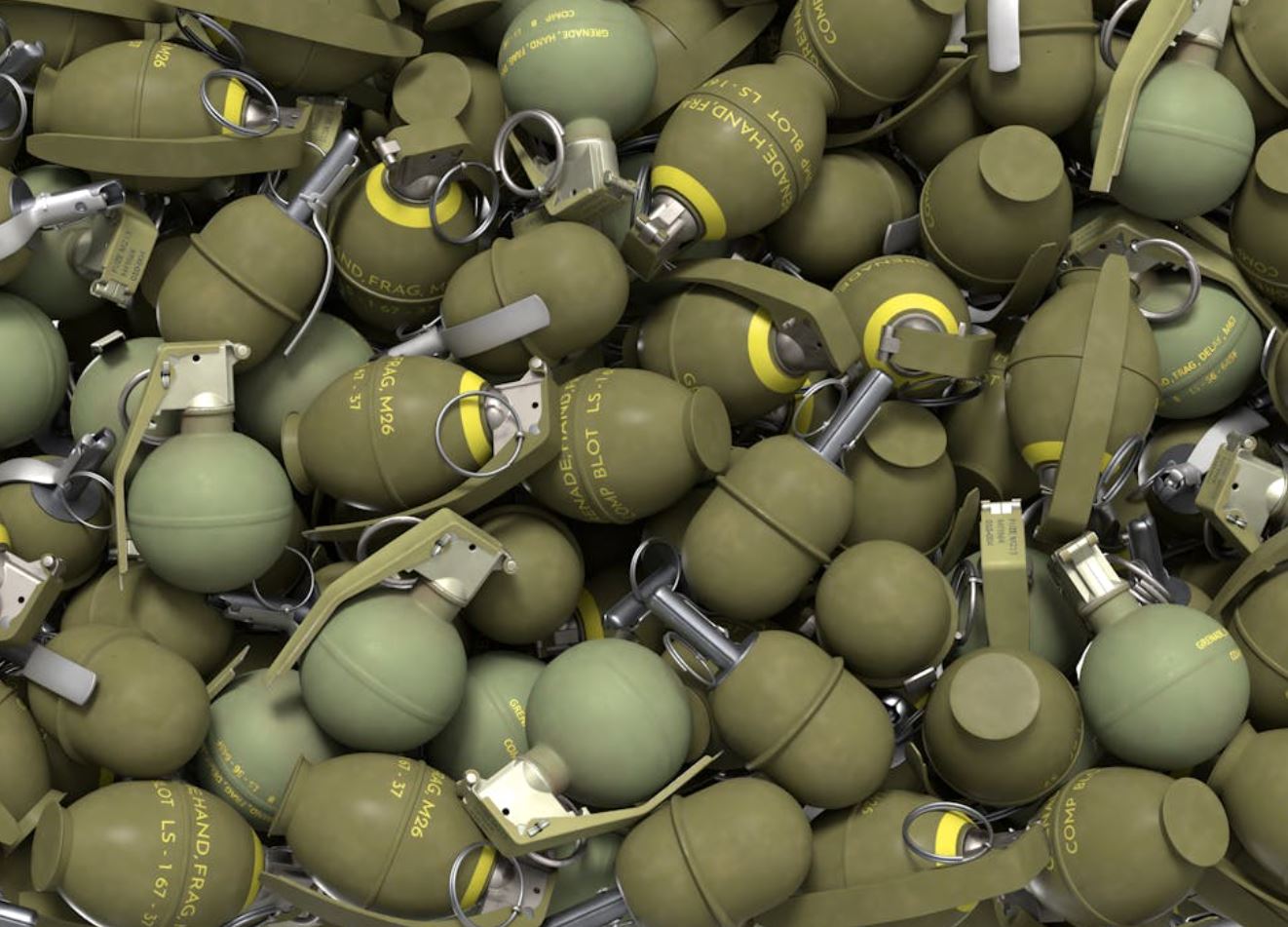
Inside the premises, investigators discovered an arsenal exceeding 50 military-grade hand grenades — a quantity that surpasses all previous seizures in Swedish law enforcement history. “We have good reason to say that this is the largest seizure of hand grenades ever made in Sweden,” confirmed Magnus Dahl, detective leader at the West Police Region. The previous record, approximately 50 devices, has now been eclipsed, though authorities are withholding the precise count for operational security reasons.
Both suspects remain in custody on probable cause suspicion of violating Sweden’s Act on Flammable and Explosive Goods — classified as particularly serious crimes. The younger detainee faces additional charges of aggravated drug offenses. Prosecutors indicate the investigation is expanding, with indications that the arrested individuals functioned as logistical operatives within a broader criminal enterprise rather than masterminds of the operation.
Strategic Analysis: The Business Implications
From Street Violence to Boardroom Risk
This seizure arrives against a backdrop of unprecedented criminal violence that has transformed Sweden from one of Europe’s safest nations to its most explosives-plagued. The Nordic region is witnessing a fundamental shift in security risk profiles that demands immediate attention from corporate leadership.
Key developments business leaders must monitor:
– Cross-border criminal spillover: Swedish criminal networks have expanded operations into neighbouring Denmark and Norway. Danish authorities documented 25 instances since April 2024 where Swedish minors were recruited as “child soldiers” for contract crimes across the Øresund Bridge. In October 2024, three Swedish nationals were arrested in Copenhagen for hand grenade attacks against the Israeli embassy — demonstrating the internationalisation of domestic criminal capabilities.
– Supply chain vulnerabilities: The Alingsås seizure reveals sophisticated logistics capabilities within criminal networks. Properties in mid-sized Swedish cities are being utilised as weapons depots, suggesting these networks have established infrastructure that parallels legitimate distribution systems. For logistics-dependent industries, this raises questions about facility security, transport route safety, and due diligence in partner selection.
– Geopolitical criminal nexus: Intelligence reports from 2024 indicate Iranian state actors are leveraging Swedish criminal gangs as proxy forces for attacks against diplomatic and commercial targets. The convergence of organized crime and state-sponsored operations creates complex threat matrices that traditional corporate security protocols may not address.
The Economic Context
Sweden’s government has formally recognised the crisis through its first National Strategy Against Organised Crime, adopted with five strategic objectives directly relevant to business operations: stopping criminal careers, reducing illegal firearms and explosives supply, dismantling criminal economies, building resilience against unlawful influence, and securing identification systems.
The strategy explicitly acknowledges that “organised crime has spread throughout Sweden for too long” and warns that “society’s resistance against organised crime must be fundamentally strengthened.” For the business community, this translates to increased regulatory scrutiny, potential security compliance requirements, and the necessity of enhanced private security investments.
Immediate risk factors for Nordic enterprises:
1. Property and infrastructure exposure: The frequency of explosions — averaging nearly one per day in early 2025 — creates tangible risks for commercial real estate, particularly in “vulnerable areas” where criminal networks operate with greater freedom.
2. Workforce security: The recruitment of minors into criminal activities, with reports of children as young as 11 being groomed for operations, indicates deep social penetration by criminal networks that affects employee safety and community stability.
3. Reputational and investment risks: Prime Minister Ulf Kristersson’s admission that the government lacks control over the “wave of violence” signals potential volatility that international investors and partners may factor into Nordic market assessments.
Intelligence Assessment: What This Seizure Reveals
The Alingsås operation provides critical insights into criminal network evolution:
Operational sophistication: The ability to accumulate and store 50+ military-grade explosives suggests established supply chains from Balkan and Eastern European sources — routes that have historically supplied Swedish gangs with Yugoslav-era surplus weaponry. The Global Organized Crime Index identifies Sweden as a “key hub for arms trafficking in Northern Europe,” with criminal groups exploiting border control weaknesses to maintain steady weapons inflows.
Network structure: Prosecutors’ assessment that the arrested suspects were “only responsible for storing and transporting” indicates a compartmentalized, cellular organizational structure typical of mature criminal enterprises. This modularity provides operational resilience but also creates multiple intervention points for law enforcement and corporate security collaboration.
Geographic expansion: Alingsås — a municipality of approximately 40,000 residents located between Gothenburg and Stockholm — represents the type of secondary city increasingly utilized by criminal networks to avoid concentrated law enforcement presence in major urban centres. This dispersion pattern requires businesses to reassess security protocols developed for metropolitan contexts.
Forward-Looking Recommendations
For Corporate Security Leaders:
– Conduct immediate reviews of facility locations against police vulnerability assessments
– Enhance supply chain due diligence, particularly for logistics partners operating in flagged regions
– Establish direct liaison channels with regional police intelligence units
– Review business continuity plans for explosive/threat scenarios
For Risk Management:
– Factor organised crime indices into Nordic investment and expansion decisions
– Monitor legislative developments regarding security zone establishment and criminal responsibility age reductions
– Assess insurance coverage adequacy for criminal violence-related business interruption
For Government Relations:
– Engage with the national strategy implementation through industry associations
– Support cross-border law enforcement coordination mechanisms
– Advocate for enhanced resources for economic crime investigation units
Editor’s Note: Follow-Up Coverage
Nordic Business Journal will continue monitoring this developing situation with particular attention to corporate security policy implications and cross-border regulatory responses. Our upcoming feature will examine how Danish and Norwegian enterprises are adapting to Swedish criminal network expansion, including exclusive analysis of the Øresund Bridge security measures and their impact on just-in-time logistics operations.
Connect with our editorial team for insights on how these security developments affect your sector. Follow our coverage at www.nordicbusinessjournal.com or reach our investigations desk at editorial@nordicbusinessjournal.com.
Subscribe to our security briefing newsletter for real-time updates on Nordic organised crime trends and business risk assessments.
This report was compiled from Swedish Police Authority statements, government strategy documents, and international security assessments. All suspects are presumed innocent until proven guilty.