
A Strategic Analysis of Rising Populism and the Fragility of Liberal Democracy
Executive Summary
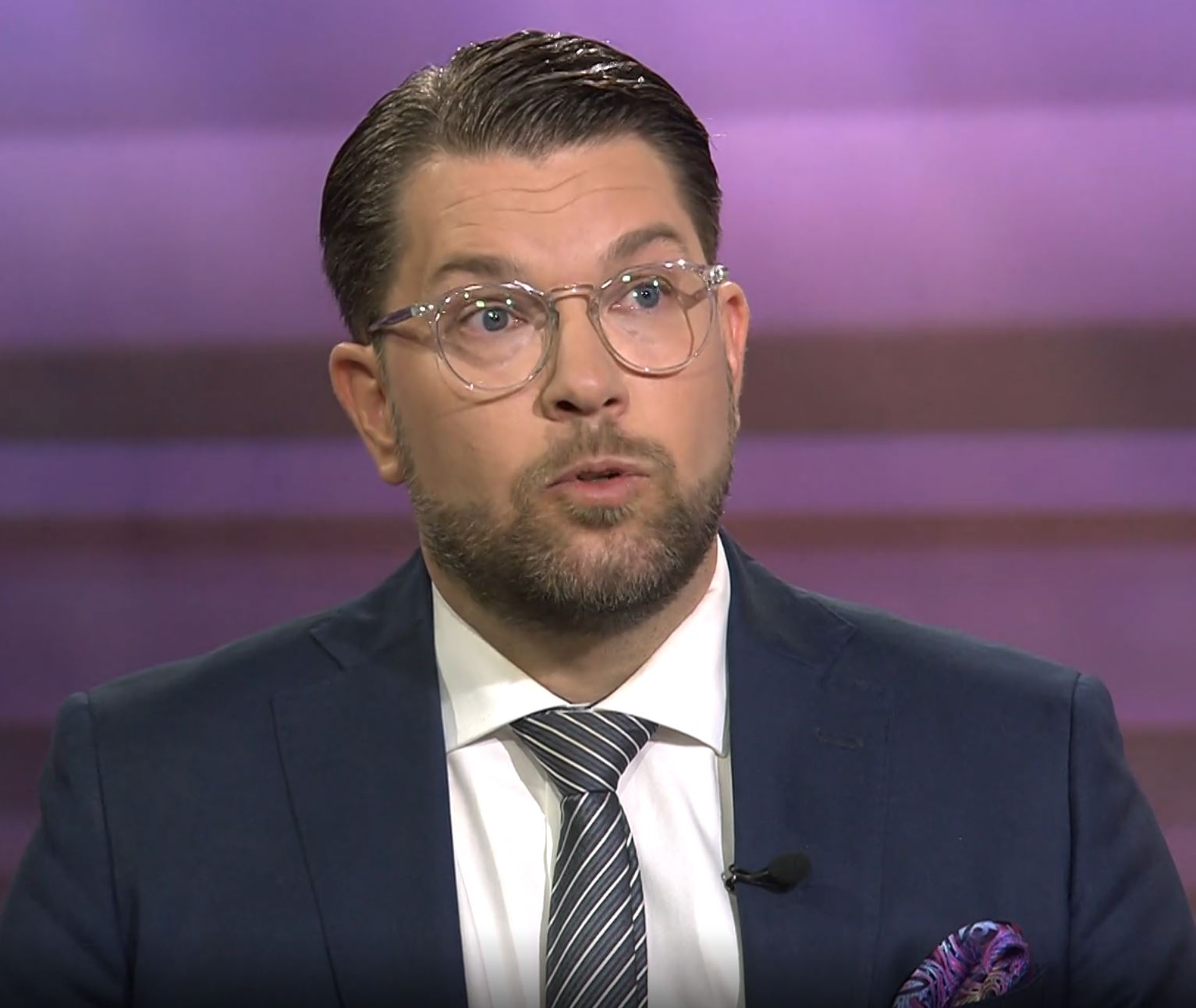
Former Liberal Party leader Birgitta Ohlsson’s dramatic defection to the Centre Party last week has ignited a critical conversation about Sweden’s political trajectory. Her warning—that Sweden Democrats leader Jimmie Åkesson could become “Sweden’s Donald Trump”—deserves serious examination by business leaders and policymakers alike. This analysis explores the validity of that claim, the structural vulnerabilities in Swedish democracy that could enable such a transformation, and what it means for Nordic business stability.
The Ohlsson Doctrine: From Party Leader to Whistleblower
Birgitta Ohlsson’s departure from the Liberals after two decades as a prominent figure is not merely a personal career move—it represents a structural fracture in Sweden’s centre-right political architecture. In her first major interview since switching to the Centre Party on TV4’s Nyhetsmorgon, Ohlsson delivered what can only be described as a political indictment of her former party’s strategic direction.
“This is a serious danger,” she stated, describing Åkesson and the Sweden Democrats as fundamentally authoritarian. Her analysis draws a direct line between European nationalist movements and the American experience: “If you follow the journey that nationalist and populist parties have made on the right wing in Europe, where they have gained more power, not least in the USA, then you have gone down that path. To believe otherwise is to be naive.
The comparison to Trump is not casual rhetoric. Ohlsson explicitly stated that Åkesson possesses “good potential to become “Sweden’s Donald Trump” given a “larger and deeper platform of power.”
The Sweden Promise: A Study in Political Fragility
Central to Ohlsson’s critique is the so-called “Sweden Promise” (Sverigevädjan)—the 2022 agreement between the Liberals and Sweden Democrats that enabled the current Tidö Agreement government. This document, intended as a stabilising framework, has instead become a symbol of political volatility:
| Claimant | Position |
| Ebba Busch (KD) | “Worthless… We do not feel bound by them in any way” |
| Jimmie Åkesson (SD) | “More of a discussion… We have not made any concessions in substance” |
| | Ulf Kristersson (M) | Not involved in original negotiations |
This three-way contradiction reveals a governing coalition built on sand. For business observers, the implications are stark: policy continuity cannot be assumed when foundational agreements are publicly dismissed by their own architects within months of signing.
Policy Drift: The Liberal Anchor Adrift
Ohlsson’s specific policy critiques illuminate the transformation of Swedish governance:
Migration & Legal Policy
– Teenage deportations: A controversial policy targeting asylum-seeking minors nearing age 18
– Whistleblower laws: Expanded surveillance mechanisms raising compliance costs for multinational corporations
– Aid reduction: Abandonment of the 1% GNI target for development assistance, damaging Sweden’s soft power in emerging markets
“It was a Liberal Party that stood up for the one percent target when it came to aid, it was a reflective party. I don’t feel that the Liberal Party is that today,” Ohlsson noted—a sentiment echoing concerns from international development banks and Nordic institutional investors.
The Trump Parallel: Structural Analysis
Is the Åkesson-Trump comparison analytically sound? Consider the structural similarities:
| Factor | Trump (USA) | Åkesson (Sweden) |
| Entry vector | Mainstream party capture | Coalition normalisation |
| Media strategy | Direct communication, bypassing traditional press | Systematic TV4/Social media presence |
| Policy radicalization | Incremental within “acceptable” bounds | Migration policy evolution 2010-2024 |
| Institutional friction | Courts, bureaucracy as “enemies” | Increasing rhetoric against “activist” agencies |
| Business alignment | Opportunistic corporate support | Growing acceptance in certain sectors |
The critical difference—and Ohlsson’s core concern—is platform depth. Trump captured a major party; Åkesson is building influence through coalition leverage while maintaining outsider positioning. The Sweden Democrats currently poll at approximately 20-22%, but in a fragmented multi-party system, this represents kingmaker status that could evolve into dominant party status.
The business risk: Swedish political stability has been a cornerstone of Nordic investment attractiveness. A Trump-style disruption—characterised by policy unpredictability, institutional attacks, and international reputational damage—would fundamentally alter the risk calculus for foreign direct investment.
Market Implications: What This Means for Nordic Business
Immediate Concerns:
– Regulatory uncertainty: The “Sweden Promise” collapse suggests major policy areas (energy, migration, EU alignment) may face abrupt reversals
– Compliance costs: Shifting legal frameworks in migration and surveillance require corporate legal adaptation
– Reputation management: International firms with Swedish operations must navigate increasingly polarised domestic discourse
Strategic Considerations:
– The Centre Party’s absorption of liberal defectors may create a new centrist bloc, but electoral arithmetic still favours SD influence
– EU policy alignment risks: Åkesson’s scepticism toward Brussels contrasts with Swedish business community’s deep EU integration
The Counter-Argument: Swedish Exceptionalism?
Critics of Ohlsson’s warning point to Sweden’s robust institutional checks—strong courts, independent media, and a political culture resistant to charismatic authoritarianism. The Sweden Democrats’ 2010-2024 evolution from pariah to coalition partner has occurred within constitutional bounds, without the street-level mobilisation that characterised Trump’s rise.
However, this analysis may underestimate institutional capture speed. Hungary’s Fidesz and Poland’s PiS demonstrated how quickly “illiberal democracy” can consolidate once power is achieved. Sweden’s administrative state is powerful, but political will can redirect it rapidly—as seen in the 2023-2024 migration policy reversals.
Conclusion: The Question Voters Must Answer
Ohlsson’s fundamental question—”Is that what the Swedish voters want?”—remains unanswered. The Sweden Democrats’ rise reflects genuine democratic demand for policy change on migration and law-and-order. Yet the packaging of these policies within an increasingly confrontational, institution-sceptical framework presents voters with a choice they may not fully comprehend: policy change versus systemic change.
For the business community, the distinction matters enormously. Policy shifts are manageable; institutional erosion is not. Nordic Business Journal will continue monitoring this trajectory as Sweden approaches its next electoral cycle.
Next In This Series
Coming April 2026: “The Corporate Dilemma: How Swedish Business Leaders Are Navigating the New Political Landscape” — An exclusive survey of C-suite executives on risk management in an era of political fragmentation.
Connect with our political affairs team:
Share your perspective on how political developments are affecting your business strategy. Email our editor at politics@nordicbusiness.com or connect with us on LinkedIn for real-time analysis.
This analysis represents the views of the author and does not necessarily reflect the position of Nordic Business Journal’s editorial board.
About Nordic Business Journal: Nordic region’s leading English-language business publication, providing strategic intelligence for decision-makers across the region since 2008.