
A comprehensive analysis of retail banking fees reveals significant disparities across traditional institutions, even as neobanks and regulatory pressures reshape the competitive landscape
STOCKHOLM – Swedish bank customers face annual costs ranging from SEK 405 to SEK 883 for basic banking services, according to the latest comparison from financial services platform Zmarta/U Score. The analysis of eight major banks exposes a SEK 478 gap between the most and least expensive providers—a disparity that takes on new significance as Sweden’s banking sector navigates rising profitability, regulatory scrutiny, and the accelerating shift toward digital-first competitors.
The Fee Landscape: Traditional Banks Maintain Premium Pricing
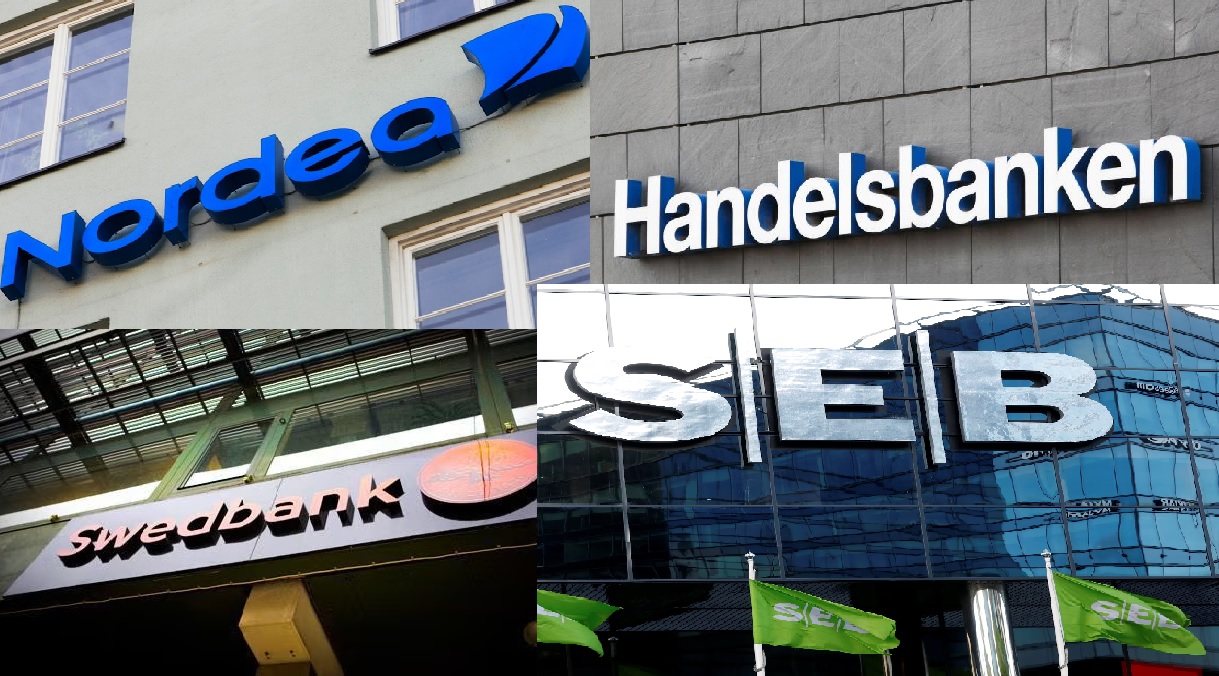
The Zmarta/U Score assessment, which examined fees for cards, accounts, and internet banking services, positions Danske Bank as the most expensive option at SEK 883 annually. Swedbank and SEB follow closely at SEK 765 each, while Nordea charges SEK 695. At the opposite end of the spectrum, Skandiabanken maintains its position as the most cost-effective choice at SEK 405 per year—less than half the cost of Danske Bank’s offering.
These figures represent more than line-item expenses; they indicate how traditional banks continue to monetize basic infrastructure even as operational costs decline industry-wide. According to Sveriges Riksbank, unit costs for card payments have fallen dramatically from SEK 2.44 in 2009 to SEK 0.83 in 2021, driven by scale effects, automation, and the transition to self-service digital channels. Yet these efficiency gains have not translated proportionally into reduced consumer fees.
“Bank customers have become more aware of comparing interest rates, but often forget to compare fees for other banking services,” notes Ola Söderlind of Zmarta/U Score. This observation highlights a persistent market asymmetry: while mortgage and savings rates receive substantial consumer attention, the cumulative impact of fixed banking fees—particularly for customers maintaining multiple accounts or requiring premium card services—often goes unexamined.
Industry Context: Record Profits and Competitive Pressure
The fee analysis arrives against a backdrop of exceptional banking profitability. Between 2019 and 2024, Swedish banks achieved an average return on equity of 12.9%—the highest among comparable European markets. This performance, driven by low impairment levels, efficient cost structures, and favourable interest rate environments, has intensified scrutiny of whether competitive pressure is effectively constraining pricing power.
A 2025 analysis from Copenhagen Economics and Finance Sweden indicates that market concentration in Sweden remains below the European average, with smaller banks collectively gaining market share since 2014. The four largest institutions—Handelsbanken, Swedbank, SEB, and Nordea—now control 63% of the credit market, down from previous years, with Swedbank experiencing the most significant decline at nearly 5 percentage points.
This dynamic suggests that while traditional banks maintain pricing power in fee structures, competitive pressure is emerging through market share redistribution rather than direct price competition on basic services.
The Digital Disruption: Neobanks Reshape Fee Expectations
The most significant evolution since the original Zmarta analysis is the maturation of digital-native competitors. Lunar, the Nordic neobank, now serves nearly one million customers across Denmark, Sweden, and Norway, with 143,000 private customers and over 25,000 business customers on paid tiers as of 2024—representing 42% growth year-over-year.
Lunar’s pricing structure fundamentally challenges traditional fee models. The bank offers a free “Light” tier with basic digital banking services, while paid subscriptions range from SEK 39/month (Standard) to SEK 169/month (Unlimited). Notably, the “Plus” tier at SEK 79/month (SEK 948 annually) includes features such as worldwide travel insurance, no foreign exchange fees, and interest-bearing accounts—positioning it competitively against traditional banks’ SEK 695–883 fee ranges while delivering substantially enhanced value.
“We’ve reduced the number of fees for private customers in Denmark to 29,” Lunar states, contrasting this with the Danish Competition and Consumer Authority’s finding that the average traditional bank maintains over 500 different fees. This transparency-focused approach appears to be gaining traction: Lunar’s net fee income grew 110% in 2024, now representing 48% of total operating income.
Similarly, Northmill Bank operates in the Swedish market with zero-fee demand deposit accounts, leveraging digital infrastructure to eliminate traditional maintenance charges. These challengers demonstrate that technology-enabled cost structures can support sustainable banking models without reliance on opaque fee architectures.
Regulatory and Technological Catalysts
The competitive environment continues to evolve through regulatory intervention and infrastructure modernization. The European Central Bank’s TARGET Instant Payment Settlement (TIPS) system onboarded Swedish krona payments in early 2024, processing SEK 464.7 billion in instant payments during the year with daily average values of SEK 1.3 billion. This infrastructure development reduces settlement costs and enables real-time transactions, potentially accelerating pressure on banks to justify fixed account fees.
Meanwhile, the Swedish Financial Supervisory Authority (Finansinspektionen) has intensified consumer protection oversight, including surveys of banks’ obligations to offer basic payment accounts and analysis of whether loyal customers face discriminatory pricing. These regulatory attentions, combined with the Payment Services Directive 2 (PSD2) framework enabling third-party payment initiation and account aggregation, are systematically reducing the information asymmetries that have historically protected incumbent pricing power.
Strategic Implications for Business Customers
For corporate clients, the fee disparity carries amplified significance. SEB’s current price list indicates business account maintenance fees of SEK 60 per account monthly (SEK 720 annually), with additional charges for file communication, international transfers, and cash management services. For SMEs managing multiple accounts or cross-border operations, annual banking costs can quickly escalate beyond consumer-level comparisons.
The emergence of “Banking-as-a-Service” (BaaS) providers, including Lunar’s Moonrise platform—which had onboarded 15 institutional customers by end-2024—suggests that embedded finance solutions may soon offer alternatives to traditional business banking relationships.
Looking Forward: The Fee Transparency Imperative
As Sweden’s banking sector progresses through 2025, several converging trends suggest that the current fee disparities may face increasing pressure:
1. Consumer Mobility: Sweden demonstrates the highest rate of financial product provider switching among comparable European markets, indicating low barriers to bank changes and increasing price sensitivity.
2. Cost Transparency: Digital banks’ simplified fee structures are establishing new consumer expectations, forcing traditional institutions to justify complex pricing architectures.
3. Technological Efficiency: With banks’ unit costs for digital payments now below SEK 1 per transaction, the economic rationale for high fixed fees weakens proportionally.
4. Regulatory Scrutiny: Ongoing oversight of consumer protection and basic banking access requirements may constrain fee escalation for essential services.
For Swedish consumers and businesses, the Zmarta analysis serves as both a snapshot of current pricing and a baseline for evaluating future value. As digital competitors mature and regulatory frameworks evolve, the SEK 478 gap between Danske Bank and Skandiabanken may narrow—or alternatively, become absorbed into more sophisticated value-based pricing models that transcend simple fee comparisons.
Editor’s Note: This analysis is based on Zmarta/U Score’s comparison of eight Swedish banks, supplemented by current market data from Sveriges Riksbank, Copenhagen Economics, and Finance Sweden. Fees reflect standard consumer packages; actual costs may vary based on service usage patterns and customer segments.
What’s Next: The Future of Nordic Banking Value
In our upcoming issue, Nordic Business Journal will explore how artificial intelligence and open banking APIs are enabling personalized financial product marketplaces that could render traditional “one-size-fits-all” banking packages obsolete. We will examine whether the Nordic region’s leadership in digitalization will translate into globally competitive banking models—or whether regulatory fragmentation will preserve the status quo.
Connect with Nordic Business Journal:
Follow our coverage of Nordic financial markets at www.nordicbusinessjournal.com and join the conversation on LinkedIn. For editorial inquiries or to suggest topics for future analysis, contact our editorial team at editorial.nordicbusinessjournal.com. Subscribe to our weekly newsletter for exclusive briefings on banking competition, fintech disruption, and regulatory developments across the Nordic region.