
Trelleborg, Sweden – The bulk carrier Caffa, detained outside Trelleborg, has drawn international attention after its Russian crew faced severe shortages of food and fresh water. A letter from Russia’s Consul General in Sweden, Denis Karmalskiy, paints a stark picture of desperation aboard the vessel and raises pressing questions about maritime enforcement, international labour law, and the economic tentacles of the Russian shadow fleet.
A Critical Situation at Sea
On March 18, 2026, Consul Karmalskiy sent an urgent letter to the Swedish Transport Agency, warning that the crew’s food and water supplies were perilously low. Marked “URGENT” in English, the letter described the situation as critical, emphasizing that Swedish authorities’ prior assurances of provisioning access were being ignored.
Despite this, basic aid was eventually provided by the Seamen’s Church in Malmö, which delivered essentials such as meat, cabbage, and potatoes. An Estonian company has since stepped in to supplement food deliveries.
The consul invoked the Maritime Labour Convention of 2006, underscoring that international law obligates states to ensure seafarers’ welfare, particularly regarding food, water, and safe working conditions.
The Shadow Fleet Dimension
The Caffa, alongside the oil tanker Sea Owl 1, is suspected of being part of the Russian shadow fleet—a covert network of vessels allegedly generating revenue that contributes indirectly to Russia’s military operations in Ukraine. These vessels often operate under flags of convenience or “false flags” to obscure ownership, circumvent sanctions, and evade international scrutiny.
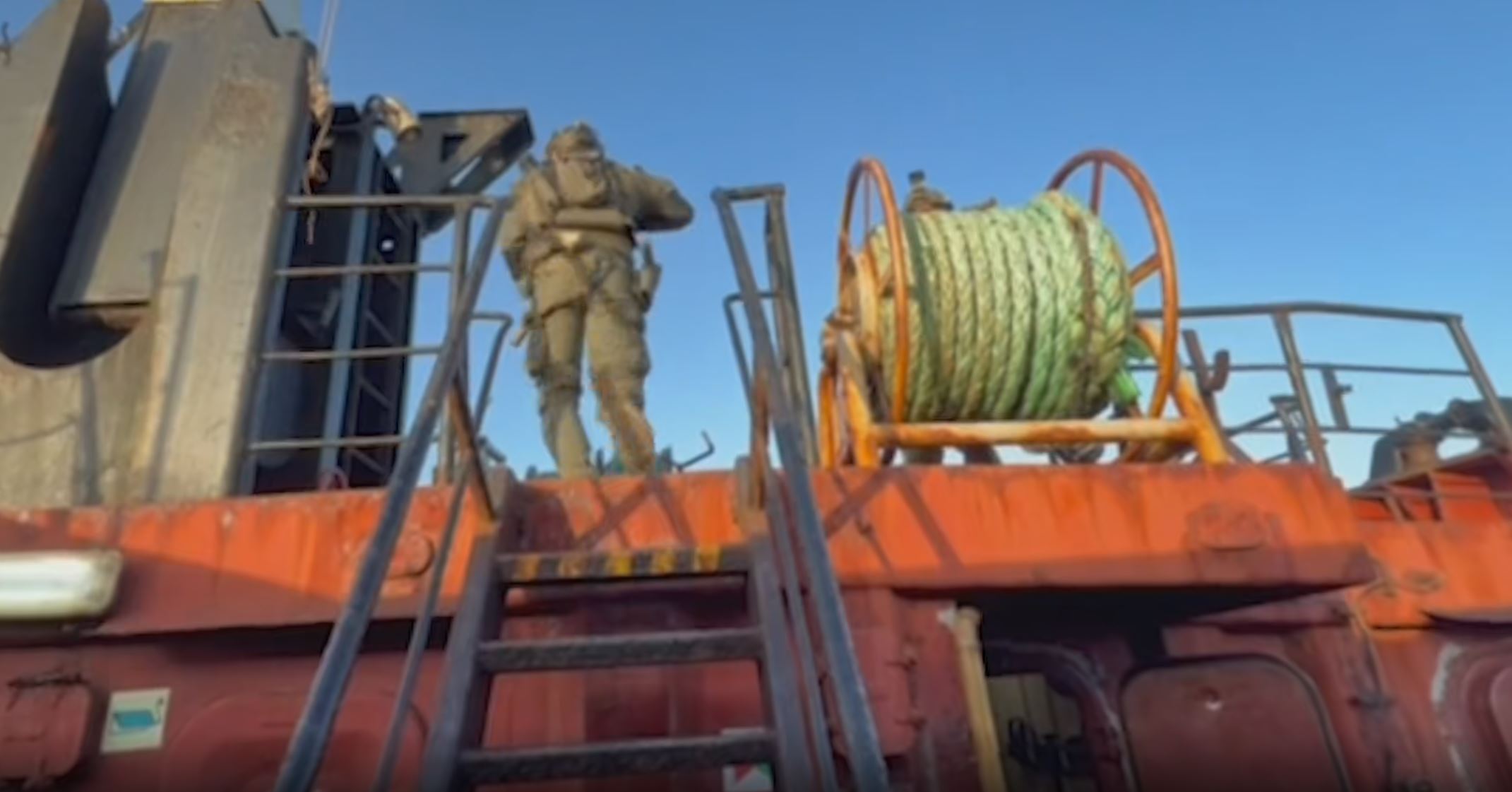
Swedish authorities’ intervention on March 6 involved a coordinated operation with the National Task Force, the Coast Guard, and a police helicopter, highlighting the security risks associated with shadow fleet operations in Northern European waters.
Inspection and Legal Proceedings
Upon boarding, authorities discovered severe regulatory violations. The Swedish Transport Agency noted 22 deficiencies, 13 of which were deemed serious enough to warrant an operational ban. The captain, 51, has been detained on suspicion of presenting false documentation and potentially operating under a false flag.
Further scrutiny revealed plans to switch the vessel’s registration from Russian to Guinean in 2025—a common tactic to maintain operational flexibility while obscuring legal accountability. The preliminary investigation has now escalated, with new criminal suspicions linked to violations of the Maritime Act, affecting both Caffa and Sea Owl 1. These cases are being transferred to Malmö District Court, which handles maritime legal matters.
Business and Strategic Implications
The Caffa incident underscores several critical trends affecting Nordic and global shipping:
- Regulatory Vigilance: Ports and authorities must remain alert to vessels with irregular documentation, false flags, and ties to sanctioned entities.
- Sanctions Evasion: Shadow fleets illustrate how global supply chains can indirectly finance geopolitical conflicts, presenting both ethical and financial risks for insurers, shipping companies, and port operators.
- Crew Welfare as Risk Management: Ensuring access to provisions and humane conditions is not only a legal obligation but a reputational imperative for maritime operators and regulators.
For Nordic businesses, this incident is a reminder that operational due diligence must extend beyond standard compliance checks to include geopolitical and maritime intelligence.
Resolution and Current Status
As of Monday afternoon, temporary relief has reached the Caffa crew, with food deliveries ensuring short-term survival. However, broader legal and operational questions regarding the vessel and its association with the shadow fleet remain unresolved.
Next Steps for Nordic Business Journal Readers:
In our upcoming coverage, we will explore the economic networks of Russia’s shadow fleet and the regulatory tools Nordic ports can deploy to mitigate risks. For maritime operators, insurers, and policymakers, this investigation will provide actionable insights into navigating the intersection of geopolitics, compliance, and operational security.
Connect with us to receive exclusive updates and expert analysis on maritime risks affecting Northern Europe and the Baltic Sea: editorNordicbusinessjournal.com