
While global attention shifts to Middle East conflicts, Northern European leaders warn that the Kremlin’s maritime warfare strategy poses an escalating threat to regional commerce and critical infrastructure
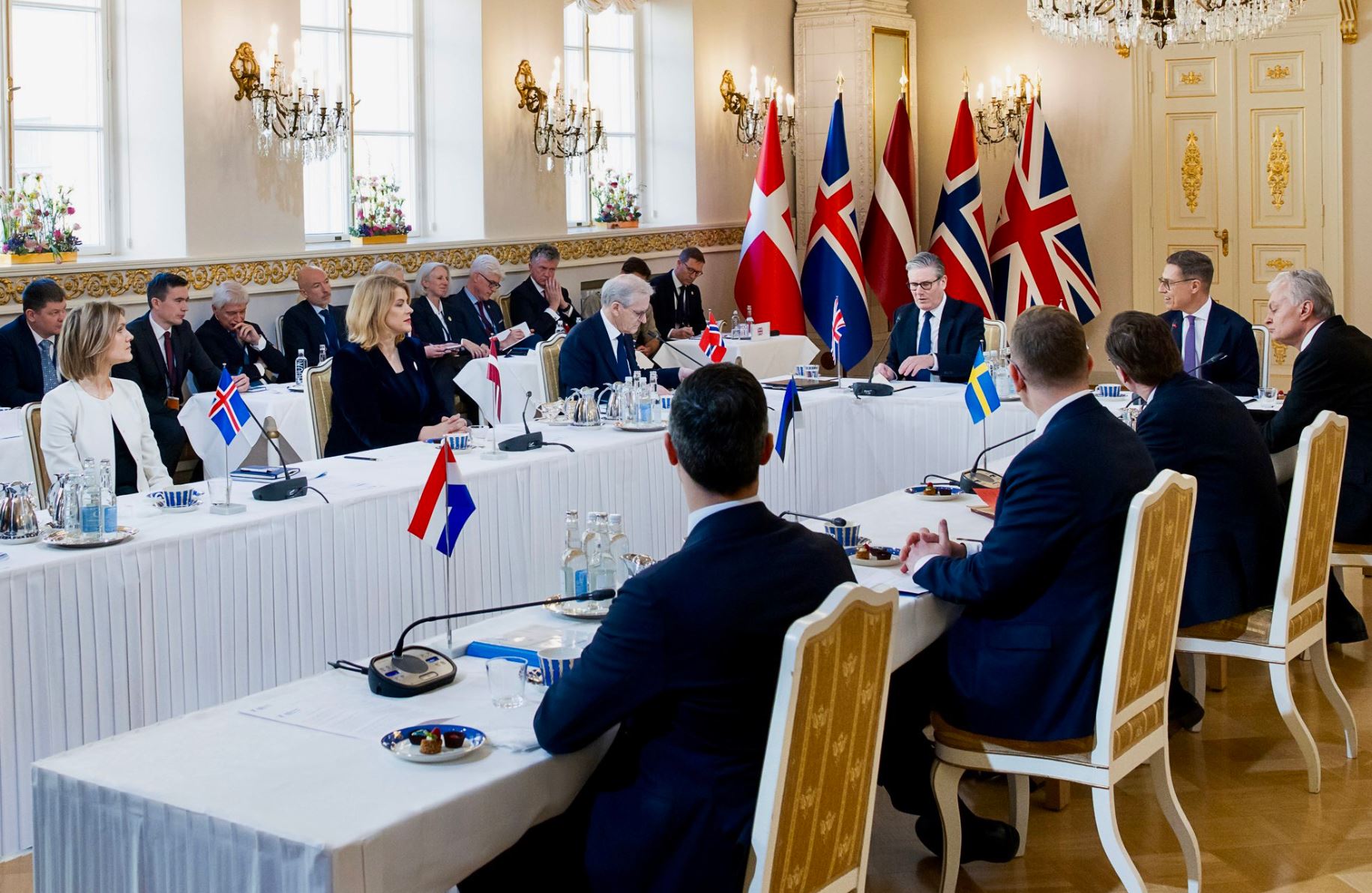
HELSINKI — As missiles fly over the Middle East and markets brace for energy volatility, Northern Europe’s security leaders gathered here this week with a sobering message: the threat from Russia has not diminished—it has evolved into a sophisticated economic warfare strategy that directly endangers Nordic commerce.
At a high-level meeting of the UK-led Joint Expeditionary Force (JEF), leaders from Denmark, Estonia, Finland, Iceland, Latvia, Lithuania, the Netherlands, Norway, and Sweden concluded that Moscow’s “shadow fleet” operations represent not merely a sanctions evasion tactic, but a calculated assault on the economic infrastructure that underpins Northern European prosperity.
“The threat from Russia in the north and east has not disappeared,” British Prime Minister Keir Starmer told assembled leaders. “In fact, it seems that the threat has only grown. And we all know very well the impact that threat has on our security, our economies and the cost of living in our countries.”
The Economic War Beneath the Waves
The JEF summit—held as NATO’s “Baltic Sentry” operation intensifies patrols following a wave of undersea cable sabotage incidents—focused on a critical business vulnerability: Russia’s aging armada of sanction-evading tankers now poses dual threats. These vessels simultaneously generate an estimated $15-20 billion annually in illicit oil revenues for the Kremlin while serving as potential instruments of infrastructure sabotage.
The numbers tell a concerning story. According to the Danish Maritime Authority, 292 shadow fleet voyages traversed Danish waters in 2024 alone. Maritime risk analytics firm Windward estimates the total shadow fleet at approximately 1,400 vessels—many operating without Western insurance, under opaque ownership structures, and with falsified registrations. The Atlantic Council has documented that 1,649 vessels have operated in this “opaque market” since January 2021, with 1,089 carrying Russian crude oil.
Yet the UK’s aggressive enforcement strategy is showing measurable results. British sanctions now target 544 shadow fleet vessels, and the pressure is working: Russia’s critical oil revenues have declined 27% compared to October 2024, reaching their lowest level since the war began.
The Infrastructure Vulnerability
For Nordic business leaders, the threat extends beyond energy markets to the literal seabed foundations of the digital economy. Since Russia’s 2022 invasion of Ukraine, the Baltic Sea has experienced approximately ten subsea cable incidents—seven occurring between November 2024 and January 2025 alone.
The pattern has become unmistakable. In December 2024, the Cook Islands-registered tanker “Eagle S”—identified as part of Russia’s shadow fleet—dragged its anchor for 62 miles, severing the Estlink 2 power cable and four telecommunications lines connecting Finland and Estonia. Finnish authorities discovered the vessel carried “specific transmitting gear, laptops with Russian and Turkish language keyboards, and sensor-type devices,” according to Lloyd’s List.
“The Baltic Sea has probably never in modern times been more challenged than it is today,” Swedish Prime Minister Ulf Kristersson observed at the Helsinki summit. “Undersea cables are being destroyed, and we often see poor seamanship.”
Analysis: The Business Cost of Maritime Insecurity
The economic implications extend far beyond repair bills. The Baltic Sea’s subsea infrastructure carries 97% of intercontinental data flows—the “aorta of the global financial system,” as one analyst described it. When the BCS East-West Interlink cable was severed in November 2024, Lithuania lost approximately 20% of its internet capacity.
For Nordic enterprises, this creates three distinct risk categories:
1. Operational Continuity: The Baltic Sea’s shallow waters (averaging 180 feet versus 4,900 feet in the Mediterranean) make sabotage technically simple—dragging an anchor suffices—while repair timelines stretch across weeks or months.
2. Insurance and Compliance Costs: As shadow fleet activity intensifies, maritime insurance premiums for Baltic operations have risen sharply. The EU’s 2025-2026 action plan for subsea cable security will likely mandate additional compliance investments.
3. Energy Market Volatility: Despite Nordic renewable energy leadership, regional gas grid interconnections remain vulnerable. Unlike Western Europe’s integrated network, Baltic energy infrastructure lacks redundancy—making targeted sabotage disproportionately impactful.
The Enforcement Challenge
The JEF leaders acknowledged a fundamental enforcement dilemma. While the UK has authorized its forces to board and detain shadow fleet vessels in British waters, legal attribution remains complex. Ships typically feature layered ownership structures—Turkish-operated, UAE-registered, Cook Islands-flagged, with crews from Georgia, Kazakhstan, and Russia—creating jurisdictional mazes.
“The shadow fleet is for them a way to circumvent sanctions,” noted Dutch Prime Minister Rob Jetten. “It is difficult to improve the legislation, but within the current legislation there is much more we can do.”
Estonian Prime Minister Kristen Michal highlighted the immediate regional concern: “The big question is whether the ships will pile up in our waters, and what we will do then.”
Strategic Response: NATO’s “Baltic Sentry” and Beyond
The international response is accelerating. NATO’s Baltic Sentry operation, launched January 14, 2025, deploys frigates, maritime patrol aircraft, and uncrewed surface vessels (USVs) for 24/7 infrastructure monitoring. The JEF has simultaneously activated an AI-assisted tracking system to monitor shadow fleet movements and predict potential threats.
Latvian Prime Minister Evika Siliņa cut to the strategic core: “The best thing we can do now is eliminate Russia’s revenue.”
The Geopolitical Business Environment
For Nordic Business Journal readers, the Helsinki summit underscores a structural shift in the regional operating environment. The Baltic Sea—once termed a “NATO lake” following Finland and Sweden’s alliance accession—now represents a contested economic zone where commercial shipping, energy infrastructure, and digital connectivity face persistent hybrid threats.
Kristersson offered a measured assessment: “The Baltic Sea has probably never been as protected as it is now. It is surrounded by NATO countries, and cooperation works in a way we have never seen before. In that way, it is safer than before. But what Russia is doing is very worrying.”
Conclusion
As Northern European leaders depart Helsinki, the message for the business community is clear: the shadow fleet economy represents a sustained challenge requiring coordinated public-private vigilance. With Russia’s oil revenues declining under sanctions pressure but infrastructure vulnerabilities multiplying, Nordic enterprises must factor maritime security into risk management frameworks previously focused on cyber and supply chain threats.
The economic warfare playing out in Baltic waters demands that business leaders understand their exposure to undersea infrastructure dependencies—and support the enforcement measures necessary to protect them.
What’s Next
In our next issue, Nordic Business Journal will examine the emerging market for maritime infrastructure security technologies, profiling Nordic companies developing subsea monitoring systems and AI-powered vessel tracking solutions. We will also analyse the EU’s forthcoming Critical Entities Resilience Directive implementation and its implications for Baltic Sea operators.
Connect with us: Share your perspectives on maritime security risks facing your organisation. Editor@NordicBusinessJournal.com | @NordicBizJournal
Note: Acting Prime Minister Mette Frederiksen (Denmark) was unable to attend the Helsinki summit due to ongoing government negotiations following Denmark’s general election. Ukrainian President Volodymyr Zelensky and Canadian Prime Minister Mark Carney participated via video link.