
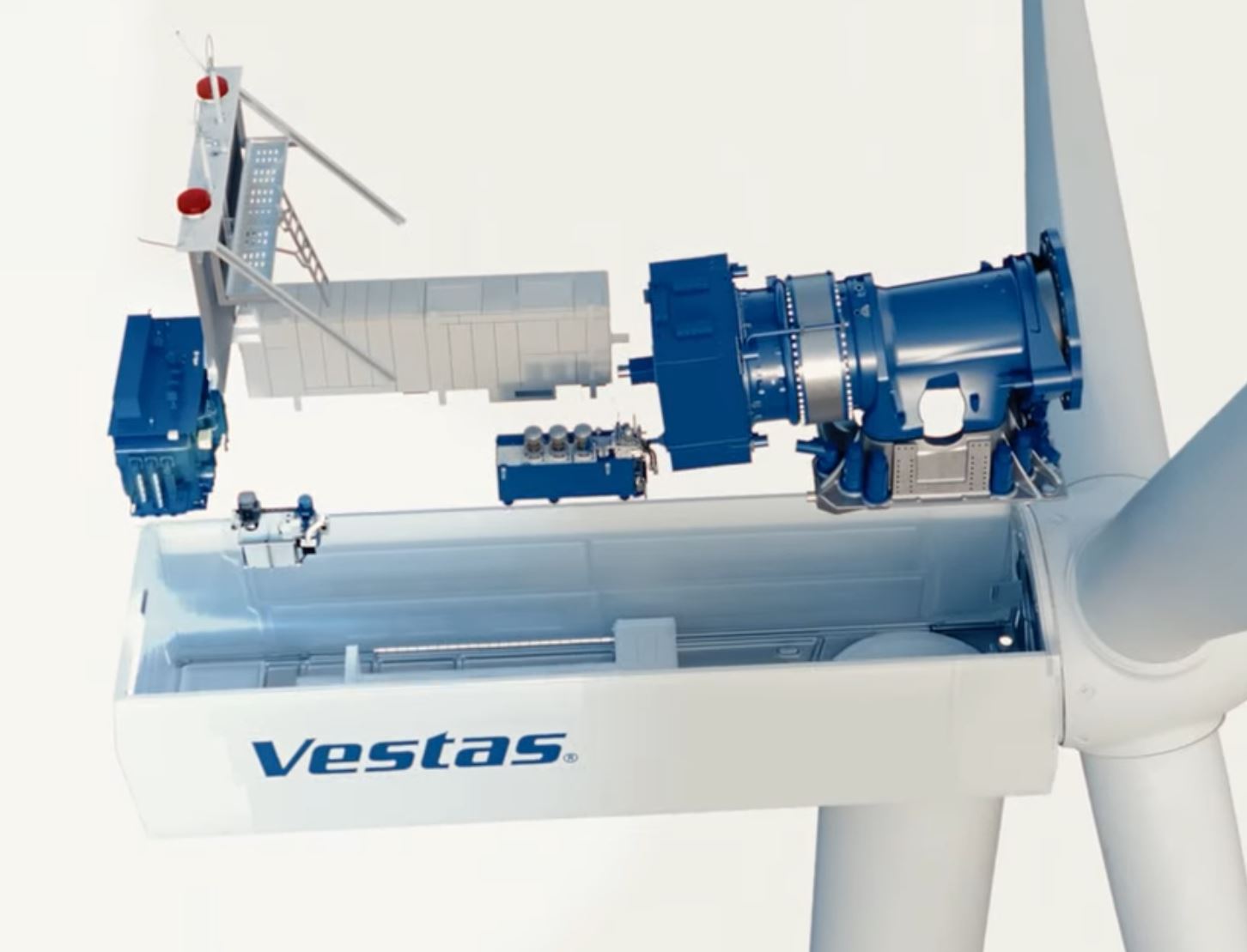
MUNKEBO, DENMARK — Vestas Wind Systems has confirmed a significant reduction in its workforce at the Port of Odense in Munkebo, announcing 440 layoffs affecting the production of nacelles for offshore wind turbines. While the immediate impact is local, the move signals a broader strategic realignment within the Nordic green tech sector as the industry grapples with inflationary pressure, supply chain bottlenecks, and shifting order books.
The announcement has sent shockwaves through the local community in northeast Funen. For employees like Benjamin and Christoffer Friis Nymann Pedersen, who work the night shift in production, the news marks an abrupt end to a period of stability.
“It has been a very turbulent night. People are shocked because they didn’t see this coming,” says Benjamin Friis Nymann Pedersen. With night and weekend shifts closing permanently, the brothers now face an uncertain negotiation process regarding redeployment. “I just hope that some opportunities open up to be reassigned.”
Beyond the Headlines: The Macro Economic Context
While the local impact is profound, business leaders and investors should view this restructuring through a wider lens. Vestas is not operating in a vacuum. The wind turbine giant, like much of the renewable energy sector, is currently navigating a “perfect storm” of economic challenges that have defined the 2023-2024 fiscal landscape.
Key Analysis for Investors and Stakeholders:
Margin Compression: Vestas, along with competitors like Siemens Gamesa, has struggled with profitability on fixed-price contracts signed during low-inflation periods. As raw material and logistics costs surged in 2023, margins evaporated, necessitating cost-cutting measures to protect the bottom line.
Supply Chain Realignment: The Munkebo cuts reflect a shift in production logistics. Vestas is increasingly optimising its manufacturing footprint to be closer to key installation markets or to consolidate nacelle assembly to fewer, higher-volume hubs to achieve economies of scale.
Order Volatility: Recent delays in offshore wind projects across Europe and the US—driven by high interest rates and utility budget constraints—have created a temporary glut in production capacity.
Anders Riis, Head of Communications at Vestas, emphasized the necessity of the decision: “We need to ensure that our organization reflects our production needs. It is always difficult to make decisions that negatively affect our talented colleagues.”
Regional Implications for Funen’s Green Hub
The layoffs pose a significant challenge for Kerteminde Municipality and the Port of Odense, which have positioned themselves as central hubs in Denmark’s green transition. Michael Nielsen (K), Mayor of Kerteminde Municipality, described the situation as a “real training day” for local authorities.
“It could potentially have major consequences for the municipality,” Nielsen stated, noting the difficulty of absorbing 440 skilled workers into the local labour market. He drew parallels to recent cutbacks at CS Wind, another major offshore supplier at the port. “We have recently seen cutbacks in other companies. It will be a huge job to get those people back to work.”
For the Nordic Business Journal reader, this highlights a critical risk factor in regional green investment strategies: dependency on single-industry clusters. While clustering creates efficiency, it also concentrates risk. Policymakers in Odense must now accelerate diversification efforts, potentially looking toward the union’s suggestion of expanding into naval shipbuilding or broader energy infrastructure to buffer against wind industry cyclicality.
Labour Market and Union Response
Dansk Metal, the leading trade union for the affected workers, expressed astonishment. Chairman Mikkel Munk Festersen noted that membership at the site had been growing prior to this announcement.
“Our people have many skills and can do many jobs, but it is a sad development,” Festersen said. He highlighted a strategic opportunity for the state: “We can only hope that some more initiatives will get underway in relation to energy infrastructure, but hopefully also some building of naval ships.”
The union’s response underscores a growing tension in the Nordic labour market: the need for reskilling agility. As the green transition accelerates, the workforce must be adaptable enough to shift between offshore wind, hydrogen production, and electrification projects without prolonged periods of unemployment.
Outlook: A Correction or a Trend?
The Port of Odense remains a critical asset in the European offshore supply chain, and communications manager Jakob Elmkær Hansen confirmed ongoing dialogue with customers to mitigate the impact. However, the Vestas announcement serves as a bellwether for the industry.
If inflation remains sticky and interest rates stay elevated, further consolidation in the wind turbine manufacturing sector is likely throughout 2024. For investors, the focus should shift from pure capacity growth to profitability and order book quality. For policymakers, the priority must be creating a stable regulatory environment that de-risks long-term infrastructure investment, ensuring that the human capital built in hubs like Munkebo is not lost to cyclical downturns.
Editor’s Note & Next Steps
Follow-Up Direction:
In our next issue, Nordic Business Journal will deep-dive into “The Profitability Paradox in Green Tech.” We will analyse how Nordic renewable companies are restructuring contracts to mitigate inflation risk and interview CFOs from the sector on maintaining margins during the energy transition. We recommend readers monitor Vestas’ upcoming quarterly earnings report for further signals on production optimisation.
Connect With Us:
Are you navigating workforce restructuring or investing in the Nordic green sector? We want to hear your perspective.
- Subscribe to our weekly briefing for real-time market analysis.
- Contact our editorial team at editors@nordicbusinessjournal.com to contribute insights or propose case studies.
- Join the conversation on LinkedIn @NordicBusinessJournal.
Stay informed. Stay ahead.