
Why the Region’s Silence at the UN Matters for Business Leaders
On March 25, 2026, the United Nations General Assembly passed a landmark resolution recognizing the transatlantic slave trade as “the gravest crime against humanity” and calling for reparatory justice. The vote—123 in favour, 3 against, and 52 abstentions—revealed a striking diplomatic fracture: while the United States, Israel, and Argentina stood alone in opposition, the entire European Union bloc, including Nordic members Denmark, Finland, and Sweden, chose abstention. Norway and Iceland followed suit.
For business leaders across the Nordic region, this diplomatic positioning is not merely historical footnote—it signals emerging risks in ESG compliance, international trade relations, and corporate reputation management that demand strategic attention.
The Vote: What Actually Happened
The resolution, spearheaded by Ghana on behalf of the 54-member African Group, went further than any previous UN statement on slavery. It explicitly recognized the “definitive break in world history, scale, duration, systemic nature, brutality and enduring consequences” of the transatlantic slave trade and called for “reparatory justice” including restitution of cultural properties.
The EU’s abstention reflected coordinated concerns about legal precedent. German officials cited “serious legal and political concerns,” including the “retroactive application of international law” conflicting with the principle of intertemporality—the doctrine that laws cannot be applied retroactively. The U.S. delegation similarly argued that slavery was not illegal under international law at the time, and therefore no legal right to reparations exists.
Yet critics note the convenient timing of these legal objections. The African Union has designated 2025-2035 as the “Decade of Reparations,” and CARICOM nations have developed concrete 10-point plans demanding formal apologies, debt cancellation, and technology transfer from former colonial powers including Denmark, Norway, and Sweden.
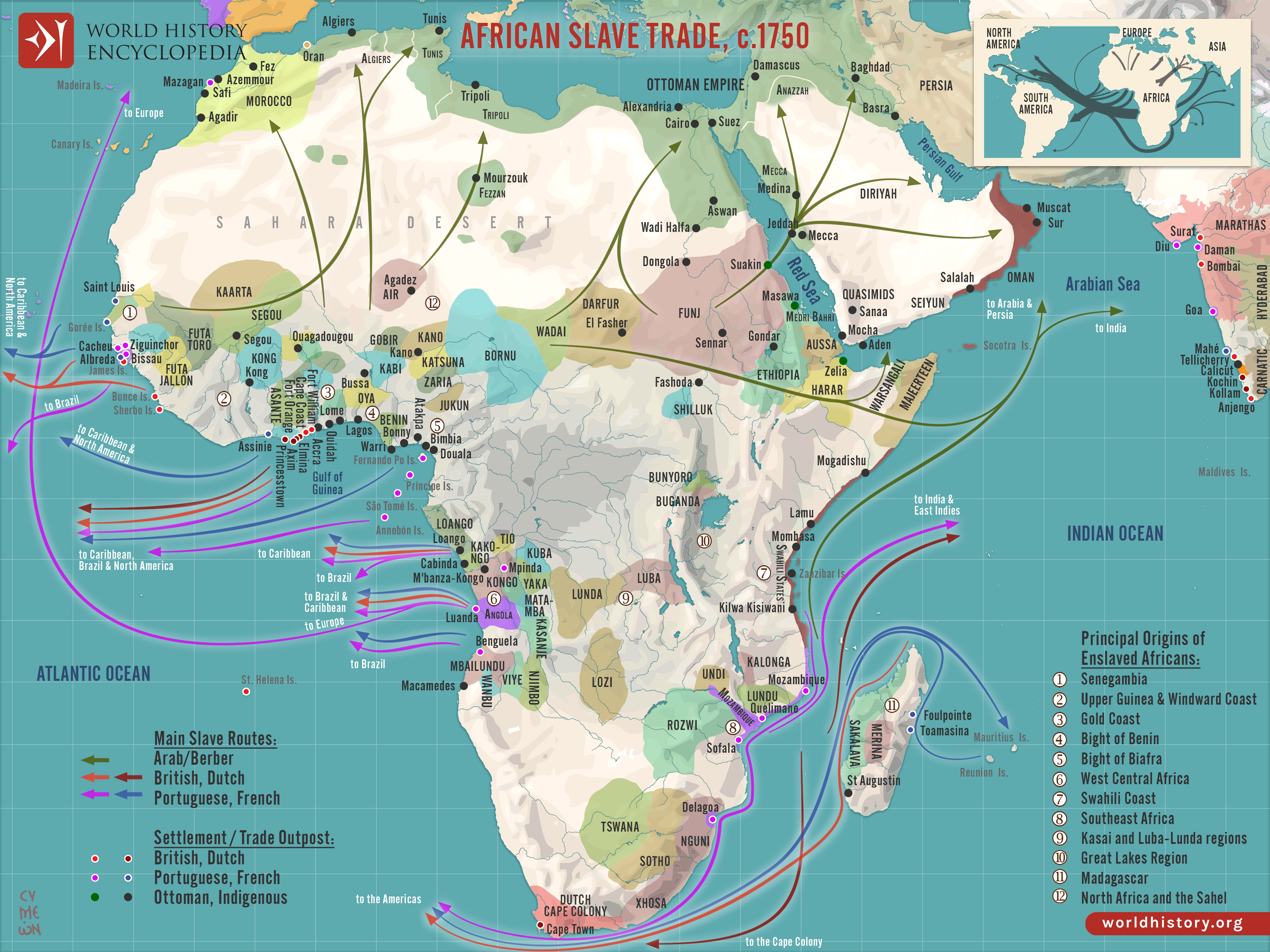
Nordic Historical Accountability: Beyond the Headlines
The Nordic abstention becomes more consequential when viewed against the region’s documented historical involvement:
| Country | Historical Scope | Modern Implications |
| Denmark | Transported 100,000–110,000 enslaved Africans; operated Danish West Indies until 1917 | 2017 state apology; ongoing CARICOM reparations discussions |
| Norway | Participated through Denmark-Norway union; Norwegian merchants and shipowners active in triangular trade | No formal slavery apology; growing domestic pressure for acknowledgment |
| Sweden | Operated Caribbean colony Saint Barthélemy (1784–1878); maintained West African trading posts | No formal slavery apology; 2024 national action plan addresses anti-Black racism |
| Finland | Under Swedish rule during relevant period; no independent slave-trading role | Emerging discussion on historical complicity through Swedish realm |
| Iceland | Viking-era slavery documented; no Atlantic slave trade participation | Minimal contemporary relevance to reparations discourse |
Denmark stands as the regional outlier in accountability. In 2017, the Danish government formally apologized for its role in the slave trade—the first Nordic state to do so. Sweden, by contrast, has focused on contemporary anti-racism frameworks, including a December 2024 national action plan targeting anti-Black racism specifically, but has stopped short of historical apology.
Business Analysis: Three Strategic Implications
1. The ESG Reporting Gap
Nordic corporations have long leveraged the region’s progressive reputation in sustainability marketing. However, the UN vote exposes a disconnect between Nordic ESG leadership and historical accountability that activist investors are beginning to scrutinise.
The EU’s Corporate Sustainability Reporting Directive (CSRD), fully implemented by 2026, requires companies to disclose “impacts on people and the environment” throughout value chains. While currently focused on contemporary operations, the trajectory is clear: France’s 2001 Taubira law already recognises slavery as a crime against humanity, and the Netherlands has established a €200 million slavery legacy fund following its 2022 apology.
Strategic takeaway: Nordic multinationals with Caribbean or West African operations—or those sourcing from these regions—should proactively assess supply chain historical due diligence before regulatory requirements formalise.
2. Trade Relationship Vulnerabilities
The African Continental Free Trade Area (AfCFTA), operational since 2021, represents a $3.4 trillion market. African Union Commission Chairperson Moussa Faki Mahamat has explicitly linked trade access to historical justice, stating that “economic partnerships must be built on corrected historical foundations.”
Ghana’s President John Dramani Mahama, architect of the UN resolution, emphasized during the General Assembly debate: “The people who were enslaved laboured on these plantations from sunrise to sunset… the conditions under which they worked were brutal”. This rhetoric translates to policy: CARICOM nations are increasingly conditioning foreign investment approvals on reparatory frameworks.
Strategic takeaway: Nordic energy, infrastructure, and consumer goods firms targeting African and Caribbean markets should anticipate “reparations clauses” in trade negotiations and develop partnership models that acknowledge historical equity.
3. Reputational Arbitrage Risks
The abstention creates asymmetric exposure. While EU-wide coordination provided political cover, individual Nordic brands lack that shield. Social media monitoring shows escalating NordicAccountability campaigns linking historical slavery to contemporary Nordic “moral superiority” branding.
Denmark’s 2017 apology provides limited insulation; Norway and Sweden face particular vulnerability given their silence. The 2020 Black Lives Matter movement demonstrated how rapidly historical reckoning can translate to consumer boycotts and divestment.
Strategic takeaway: Communications strategies should shift from defensive legalism to proactive narrative control. Early movers in historical acknowledgment—such as Danish firms supporting the 2017 apology—may capture brand loyalty in emerging markets.
The Legal vs. Moral Tension
The EU’s abstention rested on technical legal grounds: the intertemporality principle and hierarchy-of-atrocities concerns. Germany’s UN representative explicitly stated that the resolution “risks pre-empting other UN processes” and conflicts with “established international law”.
Yet this legal precision may prove strategically shortsighted. As the European Network Against Racism noted, “Legality does not equate justice. Systems of law have historically enabled and legitimized racial violence”. The UN Secretary-General António Guterres framed the issue more directly: “Now we must remove the persistent barriers that prevent so many people of African descent from exercising their rights”.
For Nordic businesses, the legal-moral tension creates compliance complexity. While governments debate international law applicability, consumer and investor sentiment increasingly treats historical accountability as a current ethical obligation.
Comparative Positioning: How Nordic Nations Stack Up
| Nation | UN Vote | Formal Apology | Reparations Fund | CARICOM Engagement |
| Netherlands | Abstained (EU) | 2022 | €200 million established | Active negotiations |
| Denmark | Abstained (EU) | 2017 | None | Under discussion |
| Germany | Abstained (EU) | Colonial genocide (Namibia, 2021) | €1.1 billion (Namibia) | Bilateral framework |
| Norway | Abstained | None | None | None |
| Sweden | Abstained (EU) | None | None | None |
| Finland | Abstained (EU) | N/A | N/A | N/A |
Denmark’s 2017 apology positioned it ahead of regional peers, but the 2026 abstention complicates that narrative. The Netherlands’ more comprehensive approach—apology plus dedicated funding—may become the baseline expectation.
Forward Outlook: Scenarios for 2026-2030
Scenario A: Regulatory Cascade (Probability: High)
The EU Anti-Racism Strategy 2026-2030, building on the 2020-2025 Action Plan, will likely incorporate historical accountability metrics. Nordic companies should expect supply chain disclosure requirements extending to colonial-era provenance within three years.
Scenario B: Bilateral Pressure (Probability: Very High)
CARICOM’s reparations commission has explicitly named Denmark, Norway, and Sweden as target nations. Anticipate formal diplomatic requests for reparatory frameworks by 2027, with trade implications for non-compliant states.
Scenario C: Investor Activism (Probability: Moderate)
Nordic sovereign wealth funds—already divested from fossil fuels on ethical grounds—may face pressure to screen for historical slavery complicity. The Swedish AP funds’ recent human rights due diligence expansions suggest this trajectory.
Conclusion
The Nordic abstention at the UN was not a neutral act—it was a calculated risk that historical legalism would outweigh moral leadership. For business strategists, the signal is clear: the window for voluntary, proactive historical accountability is closing. As reparations discourse shifts from activist demand to diplomatic expectation, Nordic firms must decide whether to align with governmental caution or anticipate market and regulatory evolution.
The region’s vaunted “Nordic model” of social responsibility now faces its most complex test: whether progressive values extend backward to historical injustice, or stop conveniently at the present tense.
Next in this series: “Reparations Economics: Modelling the Business Case for Historical Accountability” — an analysis of how Dutch and Danish firms are converting apology into competitive advantage in African markets.
Connect with our editorial team: Follow Nordic Business Journal on LinkedIn for updates on this developing story, or contact our Africa-Caribbean trade correspondent to share your organisation’s perspective on historical accountability and commercial strategy.
This analysis reflects developments through April 2026. The UN resolution referenced is A/80/L.48, “Permanent remembrance of the victims of the transatlantic slave trade and calls for reparative justice,” adopted March 25, 2026.