
As European capitals coordinate a post-conflict naval mission to secure the Strait of Hormuz—deliberately sidelining Washington—Nordic shipping, energy, and manufacturing sectors face a recalibrated risk landscape. What executives need to know.
In a move that could redefine European strategic autonomy, a coalition of European nations is finalising a naval plan to restore secure commercial shipping through the Strait of Hormuz once a Middle East peace agreement takes effect. Crucially, the operation will function outside U.S. command, and Washington has been excluded from Friday’s virtual coordination summit hosted by French President Emmanuel Macron and British Prime Minister Keir Starmer.
The initiative marks a decisive shift from the transatlantic security frameworks that have governed global maritime chokepoints for decades. U.S. President Donald Trump had repeatedly urged European allies to contribute vessels to reinforce a U.S.-led blockade of Iranian ports. European capitals declined, opting instead for a narrowly scoped, post-conflict mine-clearing and escort mission focused on guaranteeing freedom of navigation for neutral commercial traffic.
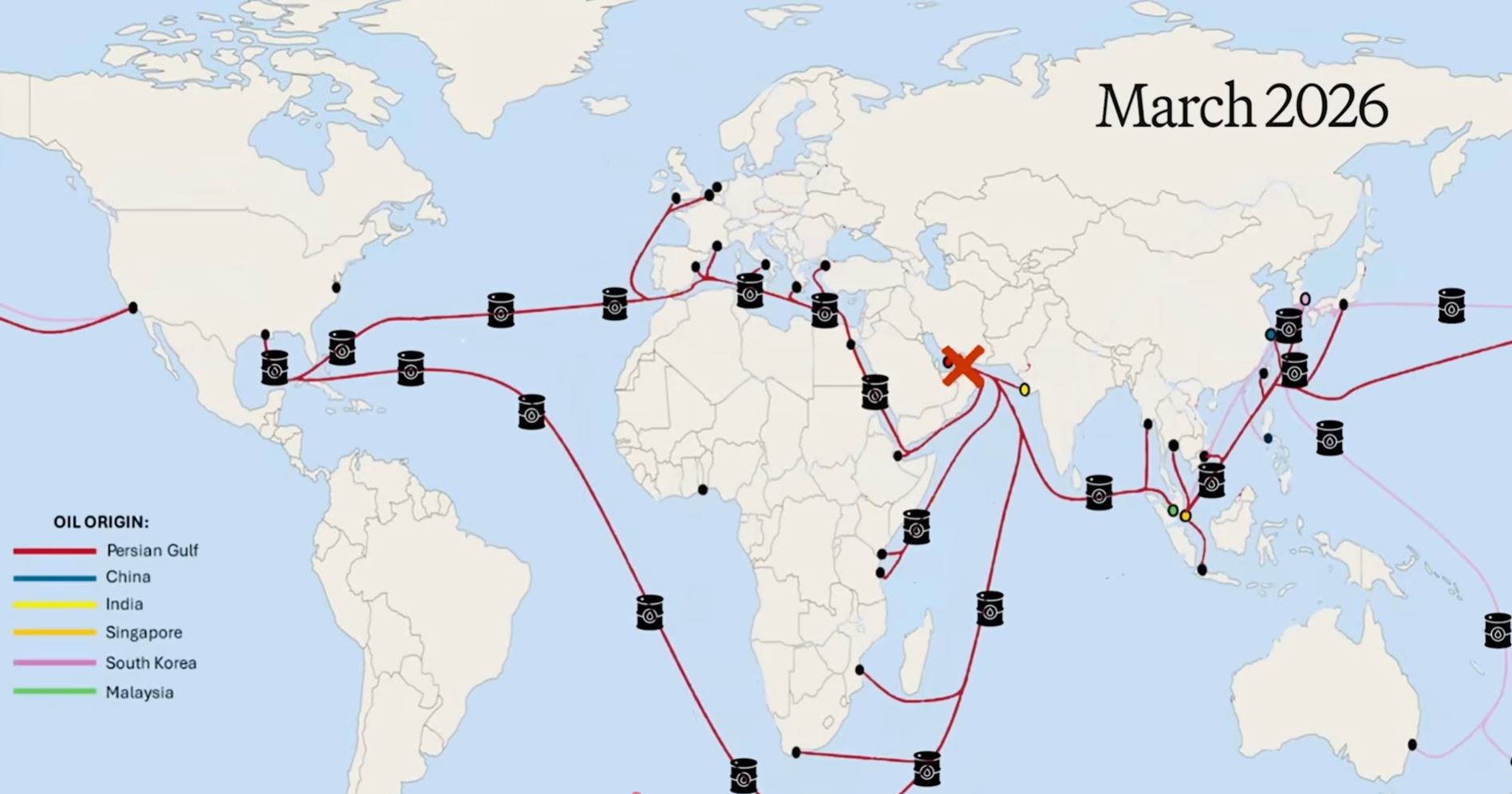
Traffic Returns, but Risk Remains Elevated
As of mid-April 2026, maritime data indicates a cautious normalisation. Over 20 merchant vessels have transited the strait in a recent 24-hour window, according to U.S. defence and shipping sources cited by the Wall Street Journal. While this represents a meaningful uptick from wartime lows, it remains a fraction of pre-conflict volumes. Notably, several vessels have opted to sail with AIS transponders disabled—a growing industry practice to mitigate targeting risks, but one that complicates port scheduling, insurance underwriting, and end-to-end supply chain visibility.
The current U.S. blockade remains tightly calibrated: Iranian-flagged and Iranian-destined vessels face restrictions, while third-party commercial traffic is permitted to pass. This nuanced approach has allowed global logistics networks to partially adapt, though at a persistent premium.
IMF Warns of Prolonged Macro Shock
At its April 2026 spring meetings in Washington, the International Monetary Fund cut its global growth forecast to 3.1 percent and upgraded inflation projections for the remainder of the year. The Fund explicitly flagged an extended Middle East conflict as a primary downside risk, noting that sustained shipping disruptions could trigger the deepest global contraction since the pandemic. Only four comparable macroeconomic shocks have occurred over the past 45 years, the 2008 financial crisis among them.
For Nordic economies—highly integrated into global trade, dependent on lean manufacturing, and sensitive to energy and freight cost volatility—the IMF’s warning carries immediate boardroom relevance.
The Nordic Lens: Strategic, Commercial, and Financial Implications
1. Shipping & Freight Markets
Nordic maritime operators—including Maersk, DFDS, Wallenius Wilhelmsen, and Höegh Autoliners—are already pricing in prolonged risk premiums. War-risk insurance surcharges, though stabilizing, remain elevated above 2024 baselines. Carriers that diversified routing via the Cape of Good Hope or invested in intermodal rail-bridge alternatives are better positioned. Firms still heavily reliant on Hormuz-Suez corridors should expect continued schedule volatility, higher working capital requirements, and pressure on just-in-time inventory models.
2. Energy & Industrial Supply Chains
While Norway’s sovereign wealth and export revenues have benefited from higher crude benchmarks, Nordic refiners, chemical producers, and heavy manufacturers face input cost uncertainty. Europe’s push for independent maritime security could accelerate regional energy procurement agreements and joint storage initiatives, potentially reshaping long-term contract structures for Nordic industrial buyers.
3. Geopolitical Alignment & Defence-Industrial Spillovers
Sweden and Finland’s NATO integration, combined with Denmark, Norway, and Iceland’s established alliance ties, places Nordic capitals at the intersection of EU strategic autonomy and U.S. security leadership. The European Hormuz initiative is likely to spur increased defence spending on naval mine countermeasures, maritime domain awareness, and dual-use port infrastructure. Nordic defence and technology firms—such as Kongsberg, Saab, and Terma—are well positioned to scale in this emerging security procurement cycle.
4. Monetary Policy & Capital Flows
Persistent inflation and growth uncertainty may keep the Riksbank, Norges Bank, and the ECB in a cautious holding pattern. Nordic fixed-income and equity markets are likely to price in a higher risk premium for trade-exposed sectors, while defensive, infrastructure-linked, and domestically oriented assets gain institutional favour.
What Nordic Executives Should Monitor
- Peace agreement timelines: The European naval mission activates only post-ceasefire. Delays in diplomacy mean prolonged routing adjustments and cost pressures.
- EU-NATO coordination frameworks: Watch for formalised burden-sharing mechanisms that could affect Nordic defence procurement, maritime security contracts, and port resilience funding.
- Freight & insurance market indicators: Lloyd’s War Risk premiums, Baltic Exchange indices, and AIS compliance trends will signal real-time supply chain stress.
- Central bank guidance: The Riksbank and Norges Bank are likely to prioritise inflation containment over growth stimulus if shipping costs remain structurally higher.
The Strait of Hormuz has long been the world’s most critical maritime chokepoint. Europe’s decision to secure it independently—while carefully navigating transatlantic sensitivities—signals a new era of regionalized security architecture. For Nordic businesses, the imperative is clear: stress-test supply chains, hedge geopolitical risk, and position for a multipolar trade environment where resilience increasingly outpaces pure efficiency.
📖 Next in This Series: In our upcoming report, we’ll analyse how Nordic ports, logistics hubs, and industrial buyers are adapting to a post-Hormuz risk paradigm, featuring exclusive data from terminal operators, freight forwarders, and central bank strategists.
🔗 Stay Connected: Have questions about how these developments impact your sector? Reach out to our editorial team at editorial@nordicbusinessjournal.com or join our monthly executive briefing series at nordicbusinessjournal.com/insights. Share your priorities—our next deep dive is shaped by your feedback.