
Executive Summary: Norway and Ukraine have formalised a landmark agreement to establish joint drone production on Norwegian soil, with a pilot line operational by early 2026. For Nordic executives, this represents more than a defence commitment—it is a strategic blueprint for resilient, dual-use industrial cooperation that blends Ukrainian battlefield innovation with Nordic manufacturing excellence, supply chain security, and export potential.
The Agreement: From Aid to Industrial Partnership
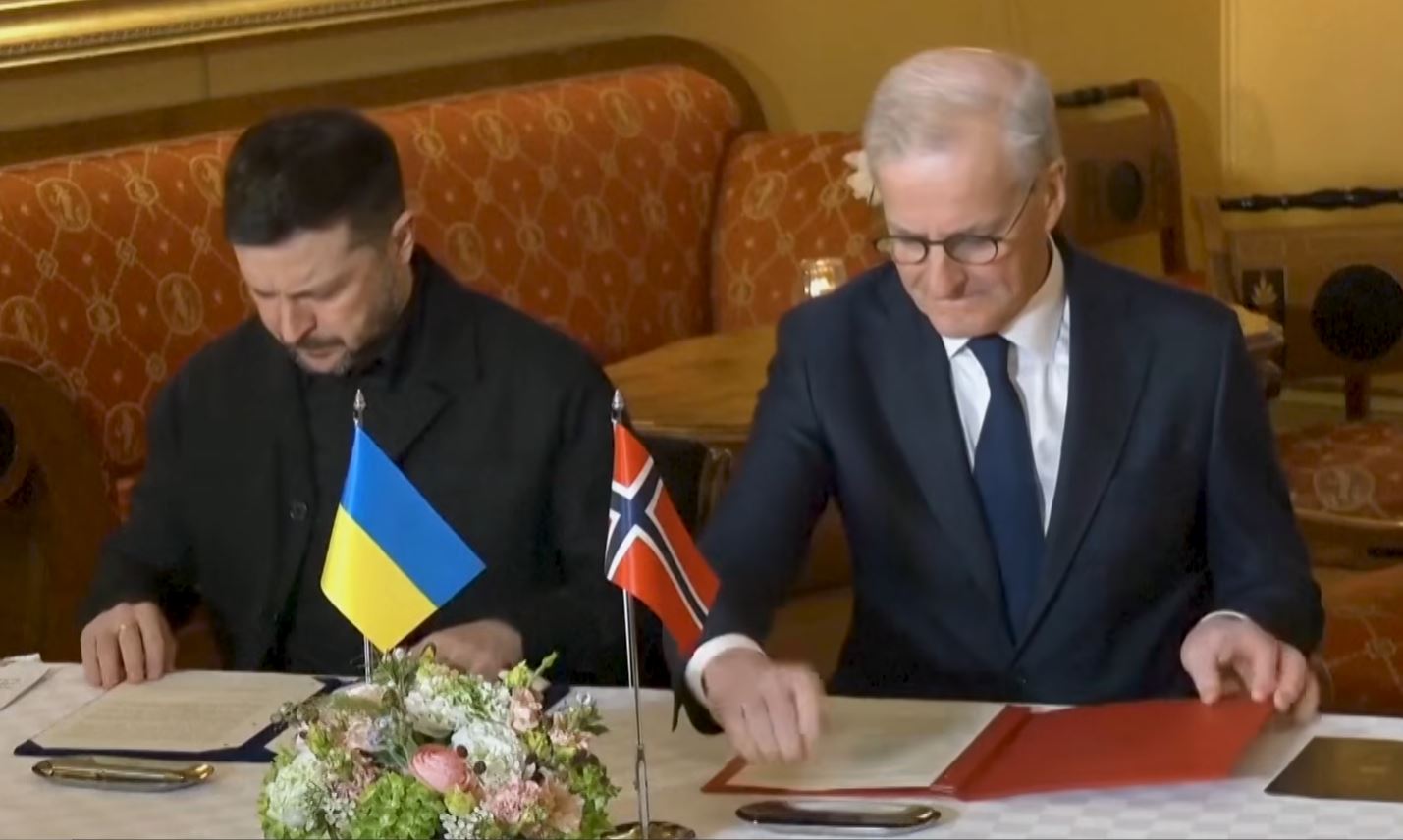
In November 2025, Norwegian Defence Minister Tore O. Sandvik and Ukrainian Defence Minister Denys Shmyhal signed a declaration of intent under the Build with Ukraine initiative, establishing Ukrainian-designed drone production in Norway. A pilot manufacturing line is scheduled to commence operations in early 2026, with capacity designed for rapid scale-up.
Critically, this is not a one-way transfer. Ukraine contributes proven combat-tested drone designs, tactical feedback loops, and rapid iteration methodologies honed under active conflict conditions. Norway provides advanced manufacturing infrastructure, R&D capacity through the Norwegian Defence Research Establishment (FFI), and access to NATO-standard quality assurance frameworks.
“This is exactly the type of cooperation we want to build – joint projects that strengthen the defence in both our countries,” stated Minister Shmyhal, underscoring the reciprocal value proposition.
The finished materiel will be donated to Ukraine in the initial phase, but the industrial architecture is deliberately designed for commercial scalability and third-market export potential post-conflict.
Business Analysis: Why Nordic Executives Should Pay Attention
1. Supply Chain Resilience as Competitive Advantage
The Nordic defence sector recorded €9.9 billion in revenue in 2025, with projections of €14–14.5 billion in 2026—a ~40% year-on-year increase. However, growth is constrained by fragmented supply chains and dependency on non-Nordic components. The Norway-Ukraine model demonstrates a pathway to regionalise critical defence manufacturing: leveraging Ukrainian design agility with Nordic precision engineering, quality control, and logistics. For subcontractors in machinery, electronics, and advanced materials, this signals sustained demand through 2030+.
2. Dual-Use Technology Spillover
Drone technologies developed for defence—autonomous navigation, counter-UAS systems, secure data links—have immediate civilian applications in maritime surveillance, infrastructure inspection, emergency response, and logistics. Kongsberg Defence & Aerospace’s parallel work on maritime drones with Ukrainian partners illustrates this convergence [[20]]. Nordic firms specialising in AI, sensor fusion, and secure communications stand to benefit from cross-pollination between defence contracts and commercial innovation pipelines.
3. Risk Mitigation Through Distributed Production
Geopolitical volatility has elevated “friend-shoring” from strategy to operational imperative. By establishing production capacity across Norway, Ukraine, and potentially other Nordic partners, companies reduce single-point failure risks. This distributed model also aligns with EU and NATO procurement preferences for resilient, multi-source supply chains—enhancing eligibility for future framework contracts.
4. Talent and Knowledge Transfer
Ukrainian engineers bring real-world combat iteration cycles that compress R&D timelines. Norwegian institutions gain access to battlefield-validated use cases. For Nordic HR and innovation leaders, this partnership creates a unique talent development corridor: upskilling local workforces in agile defence manufacturing while attracting Ukrainian technical expertise under streamlined mobility frameworks.
The Nordic Context: A Coordinated Regional Strategy
The Norway-Ukraine agreement does not exist in isolation. It complements broader Nordic defence industrial integration:
- Denmark pioneered the “Danish model,” directly funding weapon production inside Ukrainian factories and already co-manufacturing UAVs with Ukrainian partners.
- Sweden has established joint drone production agreements and collaborates with Denmark on advanced counter-drone systems tailored to Northern European operational environments.
- Finland, while focused on eastern deterrence, participates in joint Nordic procurement initiatives that standardise micro-drone systems across the region.
In October 2025, all four Nordic nations signed a joint agreement to coordinate procurement of micro and mini drone systems. The initiative aims to:
- Standardise interoperable drone technology across Northern Europe
- Aggregate demand to reduce unit costs and accelerate industrial scaling
- Facilitate joint R&D and information exchange between Nordic and Ukrainian defence sectors
This coordinated approach transforms individual national commitments into a regional industrial ecosystem—enhancing bargaining power with global suppliers and creating export-ready platforms for allied markets.
Strategic Outlook: Opportunities and Considerations
| Opportunity | Consideration |
| Export diversification: Nordic-Ukrainian drone platforms could serve NATO Eastern Flank, Baltic states, and Global South partners seeking cost-effective, battle-proven systems. | Export control complexity: Dual-use technologies require careful navigation of EU, Norwegian, and international arms trade regulations. |
| SME integration: Subcontracting opportunities for Nordic machinery, software, and materials firms within prime contractor supply chains. | Capacity constraints: Rapid scaling requires workforce development, facility investment, and supply chain onboarding—potential bottlenecks in 2026–2027. |
| Innovation acceleration: Battlefield feedback loops compress product development cycles, benefiting commercial spin-offs. | Geopolitical dependency: Long-term viability hinges on conflict resolution trajectories and sustained political commitment across election cycles. |
Conclusion: A Template for Strategic Industrial Policy
The Norway-Ukraine drone manufacturing agreement exemplifies a new paradigm in Nordic defence industrial policy: moving beyond transactional aid toward co-creation of sovereign capability. For business leaders, the implications extend beyond defence contracts. This model offers a replicable framework for building resilient, innovation-driven industrial partnerships in an era of strategic competition.
Nordic executives who engage early—with supply chain positioning, talent strategies, and dual-use innovation pipelines—will be best positioned to capture value from this structural shift in European security architecture.
🔍 Follow-Up Direction for Nordic Business Journal Readers
In our next issue, we will examine: “The Nordic Defence Supply Chain: Mapping Opportunities for SMEs in the New Security Economy.” We’ll profile subcontractors winning prime contracts, analyse financing mechanisms for defence-tech scale-ups, and interview procurement leaders on tender strategies.
📬 Connect With Us
Are you a Nordic executive, investor, or innovator in the defence, dual-use, or security technology sectors? We want to hear from you. Share insights, partnership opportunities, or story ideas with our editorial team at editorial@nordicbusinessjournal.com or connect via LinkedIn @NordicBusinessJournal. Together, we can shape the narrative on Nordic industrial leadership in an era of strategic change.
Nordic Business Journal delivers executive-level analysis on business, innovation, and strategy across Sweden, Norway, Denmark, and Finland. Subscribe for weekly insights at www.nordicbusinessjournal.com.