
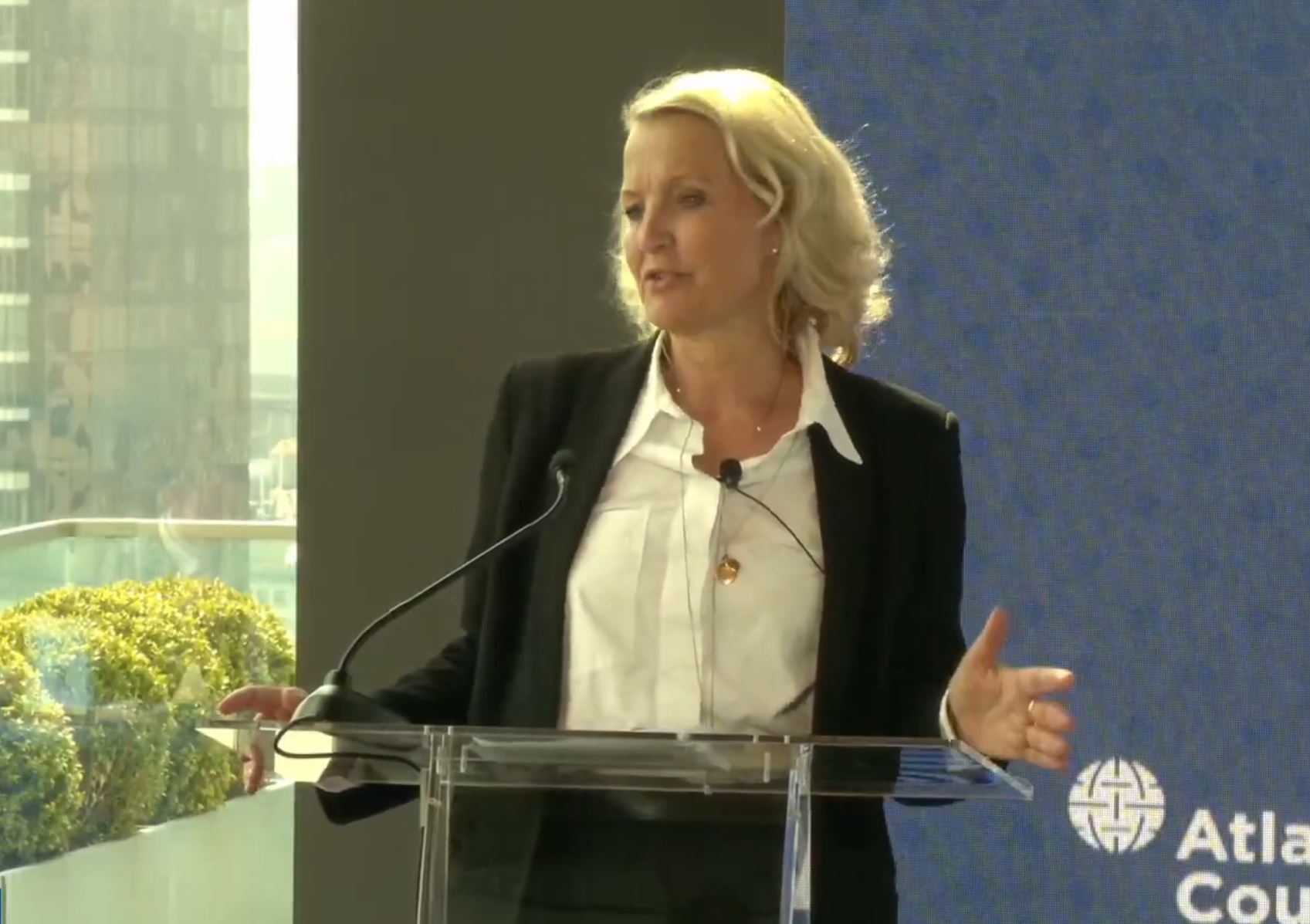
Ditte Juul Jørgensen, a distinguished Danish diplomat, has been appointed as the new Director-General for EU Trade Policy, marking a pivotal moment in European trade relations. Her new role comes at a time when trade policies have become central to both economic strategy and geopolitical manoeuvring, with escalating tensions between major global players such as the United States and China.
As the European Union’s top trade official, Jørgensen assumes one of the most influential positions within the European Commission. Having previously served as the Director-General for Energy Policy, her transition from energy to trade highlights the shift in power dynamics within the EU’s policymaking structure. Unlike energy policy, which remains largely within the domain of national governments, trade policy has been a matter entrusted to the European Commission for decades. This centralization of power ensures that the EU speaks with one voice on international trade issues, giving it considerable leverage in negotiations.
Challenges and Opportunities: Navigating Trade Conflicts
Jørgensen’s appointment comes at a critical juncture, as President Donald Trump has repeatedly used trade tariffs as a tool to pressure EU countries. Under the leadership of Jørgensen, the EU faces the ongoing challenge of defending its unified stance against external pressures. Unlike individual countries, which cannot negotiate their own trade agreements, the EU’s common trade policy enables it to take collective action against tariffs imposed by foreign powers, including the United States. This could be crucial in handling future trade disputes, as any tariff war involving one EU country directly impacts all member states.
Her extensive experience in the EU’s competition policy, including her role in enforcing major fines on American tech giants during her tenure as Margrethe Vestager’s head of cabinet, prepares her for the challenges ahead. Her willingness to stand firm against powerful economic players, such as the United States, may become an essential asset in her new role as Director-General for Trade.
Global Tensions and Strategic Trade Partnerships
The current geopolitical landscape further complicates Jørgensen’s responsibilities. On one hand, the United States continues to impose tariffs on various goods from around the world, including European products. On the other hand, China has begun using trade policy as leverage, threatening to cut off European access to crucial raw materials unless the EU softens its stance on Chinese imports.
At the same time, the EU is also facing growing concerns regarding the impact of Chinese online retailers like Temu and Shein on consumer protection and environmental standards. These emerging challenges could potentially escalate into trade conflicts, requiring Jørgensen’s diplomatic expertise to navigate these complex issues.
Despite these challenges, the EU’s trade policy holds promise. Major trade agreements are currently under negotiation with countries such as Brazil, Argentina, India, and Australia, positioning the EU as a key player in global trade. These agreements, if finalized, could provide significant economic opportunities for the EU and enhance its global standing.
A Danish Voice at the Table
As the EU’s trade policy becomes increasingly entwined with broader security concerns, Jørgensen will play a pivotal role in shaping Europe’s economic future. Her next big test will be her involvement in the negotiations following any future trade conflicts with the US. When EU Trade Commissioner Maroš Šefčovič heads to Washington for talks, Jørgensen will be standing by his side, ensuring that Denmark’s voice is heard in some of the most important trade discussions of the coming years.
Looking Ahead: The Path Forward
As Director-General for Trade, Jørgensen’s expertise will be crucial in fostering stronger international partnerships and mitigating trade disputes. With a range of agreements under negotiation, her leadership will likely help define Europe’s economic landscape for years to come.
Stay tuned for future analyses on the impact of EU trade policy and global economic developments. For more insights, connect with us and share your thoughts on what you think lies ahead for the EU’s trade strategy.