
Cho Lucas Ayaba — who calls himself the president of the self-declared state of Ambazonia — has been in custody at Ullersmo prison outside Oslo since his arrest by Norwegian police on September 24, 2024. Norwegian investigators say he directed guerrilla fighters in northwest Cameroon from Norway, using phones and messaging apps. Ayaba is charged with crimes against humanity, war crimes and terrorism-related offences; he denies being a terrorist and says his actions were legitimate self‑defence for civilians.
Prison, publications and “Oslo Gulag”
Since his arrest, Ayaba has written letters to supporters, poems, books and slam pieces. Many of his texts list the same location: “Oslo Gulag.” He is held without phone or internet access; investigators say he has had no direct contact with fighters in Cameroon for about a year and a half.
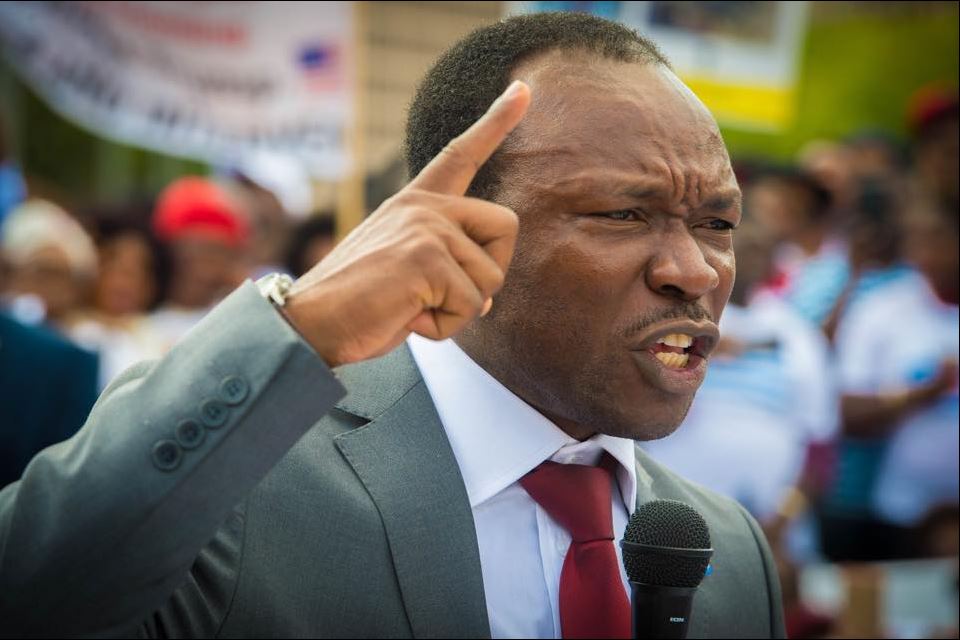
VG and the German weekly Der Spiegel met Ayaba in Ullersmo’s visiting room. He appeared in a suit and cap and wore a blue-and-white necklace with the letter A — for Ambazonia, the unrecognised state proclaimed by English-speaking separatists in Northwest Cameroon. Ayaba says the conflict is not primarily about separatism but about resisting what he calls “occupation.”
Allegations: remote command, bomb attacks and kidnappings
Norwegian and US investigators allege that Ayaba helped plan and direct violent operations from Europe. The case is notable because it raises a broader question about how modern conflicts can be run remotely: a leader living in Europe raising funds on social media, coordinating in WhatsApp groups and giving orders to fighters on another continent.
US court documents seen by VG and Der Spiegel refer to Ayaba as “Co-Conspirator 1.” Two men charged in the United States are accused of terrorist financing, conspiring to commit kidnapping and planning bomb attacks; investigators say they worked with Ayaba to finance and plan attacks in Cameroon. Chat groups with names such as “War Council Coordination” are said to have discussed strategy, weapons and targets, and to have raised money for arms via social media.
Specific incidents cited by investigators include:
– The 2022 abduction of Regina Mundi, a 79-year-old Cameroonian senator. US documents state she was seized by fighters and forced to read a demand for prisoner exchange; investigators say family members later paid a $10,000 ransom. Investigators say Ayaba told an ADF fighter that Mundi “will not be released unless I order it.” Ayaba denies ordering her abduction and calls Mundi a fundraiser for President Paul Biya’s regime.
– A WhatsApp group allegedly created by Ayaba in January 2023 called “Operation Rattlesnake,” which investigators say aimed to assassinate a governor in Bamenda using improvised explosives and booby traps. The bombs detonated but missed their intended target.
– A bomb explosion at a youth event in Nkambe the following year that wounded over a hundred civilians and killed a 15-year-old student. Investigators say explosive attacks have injured civilians; Ayaba acknowledges “tactical mistakes” in two such incidents during his leadership but contests responsibility for deliberate targeting of civilians.
Ayaba’s defence and statements
Ayaba rejects the characterisation of his movement as terrorist. He says he has called only for people to defend themselves against what he describes as a state war on the English‑speaking regions of Cameroon. He told VG and Der Spiegel that the resistance is a network of local self‑defence groups, organised “block by block, neighbourhood by neighbourhood,” and that many of the top commanders were trained by the Ambazonia Defence Forces (ADF).
He accepts political responsibility for his role and says, “I take responsibility for everything I have done,” but he does not admit criminal guilt. He told investigators and reporters that fighting was aimed at protecting civilians and that many people who cooperate with the Cameroonian government should be seen as collaborators rather than innocent civilians — though he also acknowledged that some cooperate under duress and that each case should be judged individually. Asked about possible punishment, he said he expected to be convicted and accepted a long prison term if it followed, but insisted he would not stop opposing what he sees as injustice.
Background: The Anglophone conflict in Cameroon
The roots of the conflict lie in Cameroon’s colonial history. After German colonial rule, the territory was divided between Britain and France after World War I. When Cameroon became independent in the early 1960s, the country merged a French-speaking majority with an English-speaking minority. Separatist sentiment has grown in the English-speaking regions, where activists and politicians say the central government has undermined local institutions, the legal system and schools.
Protests by teachers and lawyers in 2016–2017 escalated after a harsh government crackdown. Videos circulated of security forces using live ammunition and beatings against unarmed demonstrators. Ayaba says that on November 30, 2017, the president “declared war on us.” The conflict has since become protracted and brutal: the International Crisis Group estimates more than 6,500 killed and over half a million displaced.
From activist to accused war leader
Ayaba’s personal trajectory began in Cameroon and moved to Europe. He fled Cameroon in 1998, arrived in Germany as a stowaway, later gained German citizenship, and in 2008 moved to Norway. He completed academic work on reconciliation in Rwanda, worked menial jobs while pursuing a doctorate in international human rights, and raised a family in a village outside Oslo. Neighbours described him as a hardworking, ordinary family man.
Norwegian police and international investigators now describe a very different picture: a leader who allegedly directed and coordinated violent actions from abroad. Ayaba acknowledges influence within the separatist movement — saying most commanders “listen to me” and claiming that many fighters were deployed by the ADF — but he maintains that his aim has been liberation and civilian protection, not terrorism.
Legal process ahead
VG and Der Spiegel report they reviewed court documents and interviewed Ayaba about specific accusations; he declined to comment in detail about ongoing legal processes. The Oslo District Court is scheduled to begin the trial against Ayaba on September 15 (final indictment pending from the Attorney General). The case will test where to draw the line between political leadership in exile and criminal responsibility for violence carried out far away.
The allegations are serious, and the legal proceedings will determine whether Ayaba is criminally liable for actions investigators attribute to him. He remains in custody at Ullersmo prison, denies criminal intent, and says he will not abandon the struggle for Ambazonia despite conceding that the chance of a free Ambazonia in his lifetime is small.
NOTE: This article is based on a report by VG and has been translated and refined using AI. The Nordic Business Journal uses artificial intelligence (AI), a technology that enables computers and software to simulate aspects of human thinking and behaviour.
We use AI tools developed by various providers, which are continuously updated to help streamline our reporting and improve the quality of our articles. Read more about our use of AI here.