
Executive Summary
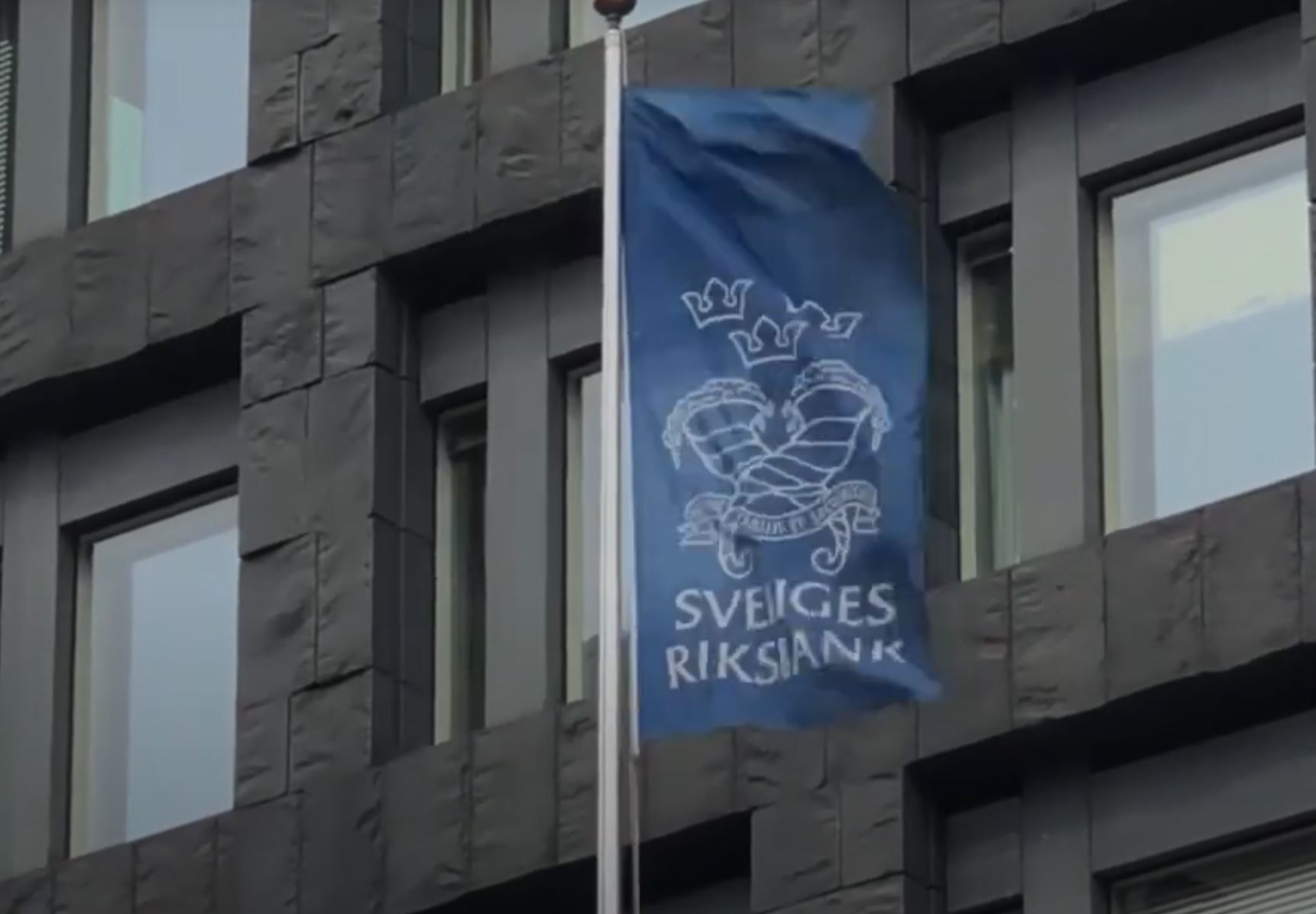
Sveriges Riksbank has once again opted for monetary stability over pre-emptive action, leaving its key policy rate unchanged at 1.75 per cent at its May 2026 meeting. Yet beneath the surface of this widely anticipated hold lies a central bank acutely aware that the global economic landscape is shifting beneath its feet. With the Middle East conflict disrupting energy flows through the Strait of Hormuz and inflationary pressures mounting across advanced economies, Governor Erik Thedéen has signalled that Sweden’s monetary calm may be approaching an inflection point. For Nordic executives, investors, and policymakers, the message is clear: prepare for a more hawkish turn should geopolitical turbulence crystallise into persistent inflation.
The Decision: Patience as Policy
In a move that aligned with unanimous market expectations, the Riksbank’s Executive Board voted on 6 May to maintain the repo rate at 1.75 per cent, a level it has held since October 2025 following three successive cuts in 2025. The decision reflects what the bank describes as a “well-balanced monetary policy” stance—one that supports Sweden’s ongoing economic recovery while keeping inflation expectations anchored near the 2 per cent target.
The immediate macroeconomic backdrop appears favourable. Underlying inflation, excluding volatile energy components, registered just 1.4 per cent in February—significantly below the Riksbank’s previous forecasts. Household consumption is rising, employment exceeded expectations in the fourth quarter of 2025, and corporate recruitment plans remain positive. In normal times, these conditions would suggest ample room for the central bank to remain on the sidelines.
But these are not normal times.
The Geopolitical Shadow: Why the Middle East Matters Now
The Riksbank’s latest Monetary Policy Report, published in March 2026, devotes unprecedented attention to a single exogenous risk: the escalating conflict in the Middle East. What began as regional tensions has metastasised into a full-scale supply shock for the global economy, with air strikes and retaliatory attacks disrupting energy production and effectively halting shipping through the Strait of Hormuz—a chokepoint through which a substantial proportion of world oil and natural gas transits.
Governor Thedéen was characteristically direct at the 7 May press conference: “What is happening now is a supply shock for the entire world economy. It affects costs and the possibilities of production”. The Riksbank’s baseline scenario assumes the disruption will be “fairly short-lived,” with energy prices moderating from current elevated levels. Yet the central bank has mapped out alternative futures that should concern any boardroom or investment committee.
In one adverse scenario, prolonged energy price elevation triggers broader and more persistent inflation, forcing the Riksbank to raise rates even as economic activity weakens—a stagflationary dilemma no policymaker welcomes. In another, demand destruction dominates, requiring rate cuts to prevent inflation from undershooting the target. The range of plausible outcomes, the bank acknowledges, is unusually wide.
The Nordic Comparative: Sweden’s Position in a Tightening Continent
Sweden’s monetary stance cannot be evaluated in isolation. Across the Nordic region, central banks are diverging in their responses to shared geopolitical pressures. Norges Bank, Norway’s central bank, raised its key policy rate to 4.25 per cent from 4 per cent in May 2026, explicitly citing the need to curb elevated inflation amid Middle East uncertainty. The European Central Bank, meanwhile, is now expected by markets to deliver one or two rate hikes this year, a dramatic reversal from pre-war expectations of continued easing.
This divergence creates strategic pressure. The ECB–Riksbank rate gap has never exceeded 50 basis points historically; if the ECB tightens aggressively while Stockholm holds, Sweden risks imported inflation through a weaker krona and capital flow distortions. The krona, which appreciated through much of 2025, has already begun weakening against the US dollar since February, with recent turmoil accelerating the depreciation. For Swedish multinationals and investors with eurozone exposure, the cross-border monetary policy differential is becoming a material risk factor.
Yet Sweden retains certain structural defences. Unlike many EU peers, the country’s direct dependence on imported oil and natural gas is relatively modest—a legacy of its diversified energy mix and industrial composition. This insulation, however, is partial. Global value chain disruptions, rising fertiliser and chemical input costs, and second-round effects on service prices can transmit inflationary pressures regardless of direct energy import exposure.
The Strategic Calculus: Vigilance Without Panic
Governor Thedéen’s rhetoric at the May press conference struck a deliberate balance between reassurance and warning. “We are in a good position with the interest rate right now,” he noted, “but we are monitoring developments closely and we will adjust monetary policy if necessary to safeguard confidence in the inflation target”.
This formulation is telling. The Riksbank is explicitly prioritising inflation credibility over short-term growth support—a hawkish bias that marks a subtle but significant shift from the accommodative posture of 2025. The bank’s statement that “the longer the conflict continues, the greater the risk that inflation will be higher and growth will be even worse” suggests a conditional tightening trigger linked to conflict duration rather than any single data point.
For corporate treasurers and CFOs, the implication is that Swedish monetary policy has become more path-dependent on geopolitical developments than at any point since the 2022 energy crisis. Hedging strategies, working capital management, and capital expenditure timelines should incorporate scenarios where borrowing costs rise sharply in late 2026 or early 2027.
Market Implications and Forward Guidance
Financial markets have absorbed the Riksbank’s messaging with characteristic efficiency. The OIS curve embeds near-zero probability of an immediate hike, but pricing for late 2026 and 2027 has shifted markedly higher since the conflict escalated. ING’s economics team now sees an “increasing probability of an insurance hike in 2026” if energy prices remain elevated, while Handelsbanken forecasts a first rate increase in the first quarter of 2027.
The yield curve flattening observed across Swedish government bonds—where short-term rates have risen faster than long-term yields—suggests market participants are pricing in both near-term tightening risk and medium-term growth concerns. This is the classic pattern of an economy approaching a potential stagflationary pivot.
For fixed-income investors, the asymmetry is notable: the Riksbank has explicitly committed to raising rates if inflation proves persistent, but has also reserved the right to cut if demand collapses. This two-way optionality increases volatility in Swedish rate markets and complicates duration positioning.
The Long View: Structural Trends and Strategic Resilience
Beyond the immediate geopolitical crisis, the Riksbank’s deliberations illuminate several structural themes relevant to Nordic business strategy.
Energy Transition and Industrial Competitiveness.
The current supply shock underscores the strategic vulnerability of fossil fuel dependence, even for economies with relatively low direct exposure. Sweden’s industrial base—heavily weighted toward manufacturing, forestry, and technology—faces input cost pressures that could accelerate the shift toward electrification and domestic renewable capacity. The Riksbank’s own analysis notes that countries with indigenous energy resources, such as Norway and the United States, are partially insulated from the growth drag affecting import-dependent economies.
Defence Spending as Fiscal Stimulus. The Riksbank identifies increased defence expenditure as a contributor to GDP growth in coming years—a reminder that geopolitical risk is simultaneously a fiscal opportunity for Nordic defence contractors and aerospace suppliers. For investors, this represents a structural demand shift with multi-year visibility.
Digital Resilience and Supply Chain Reconfiguration. The Strait of Hormuz closure has highlighted concentration risks in global logistics. Nordic enterprises with exposure to Asian manufacturing inputs should anticipate accelerated supply chain regionalisation and inventory strategy adjustments, with implications for working capital requirements and capital allocation.
The Waiting Game
The Riksbank’s May decision is best understood not as passive inaction, but as strategic patience under extreme uncertainty. By holding at 1.75 per cent, the central bank preserves optionality while signalling that its next move is more likely to be upward than downward should the Middle East conflict prolong.
For Sweden’s business community and international stakeholders, the practical imperative is contingency planning. The Riksbank has provided the roadmap: if energy price spikes translate into broad-based inflation and de-anchored expectations, monetary tightening will follow regardless of growth sacrifices. If demand destruction dominates, easing remains possible. Neither scenario rewards complacency.
In an era where geopolitical risk has become a permanent feature of the economic landscape, the Riksbank’s stance reflects a broader Nordic institutional preference for evidence-based deliberation over reactive policy. Yet as Governor Thedéen’s warnings make plain, evidence is accumulating—and the window for strategic preparation may be narrowing.
The Riksbank’s next monetary policy meeting is scheduled for 17 June 2026, with publication of the Monetary Policy Report providing a more comprehensive assessment of the war’s economic impact.