
Executive Summary
Sweden’s fuel retailers are executing sharp price reductions this week as global crude oil markets retreat from wartime peaks, offering temporary respite to households and logistics operators after months of elevated energy costs. Simultaneously, a new government-mandated VAT reduction on food—implemented on April 1—has passed through to consumers largely as intended, yet data reveals that strategic shopping across retailers yields substantially greater savings than the tax cut itself. Together, these developments illuminate the complex interplay between geopolitical risk, fiscal policy, and market competition in shaping Nordic household economics.
Fuel Markets: From Wartime Spike to Strategic Correction
The Price Reset
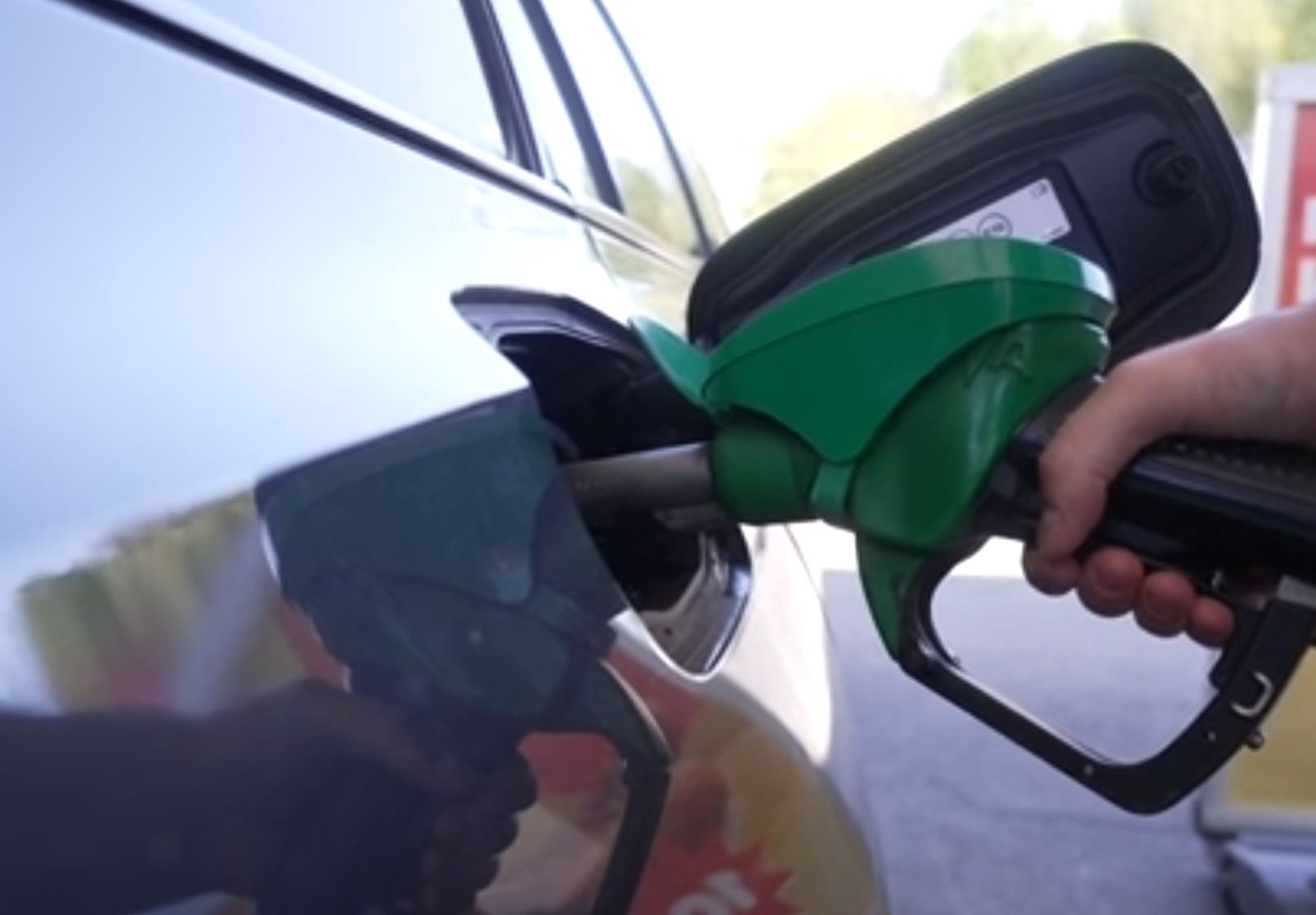
Swedish fuel chains announced significant pump-price reductions on Thursday, with diesel falling by SEK 1.05 per litre and petrol by SEK 0.50 per litre. For private motorists, this brings diesel to approximately SEK 21 per litre and petrol to just above SEK 18 per litre—still markedly elevated compared to pre-conflict levels, but moving in a favourable direction.
The immediate catalyst is a sharp retreat in global oil markets. Brent crude and West Texas Intermediate both declined following reports that the United States and Iran are nearing a framework agreement to end hostilities that began on February 28, 2026. On Wednesday, U.S. crude plunged as much as 15% to $88 per barrel before moderating, while Brent fell to $96 per barrel—though both benchmarks remain up more than 65% since the start of the year.
Context and Implications
The February conflict triggered one of the most severe fuel price shocks in recent European history. In Sweden, diesel prices surged 27.6% in March alone—among the steepest increases in the EU—while petrol rose 15%. Pre-war, diesel stood at approximately SEK 17 per litre and petrol at SEK 15 per litre. The subsequent rally pushed retail prices to painful highs, straining household budgets, logistics costs, and industrial competitiveness.
For Nordic business leaders and policymakers, the episode underscores a persistent vulnerability: Sweden’s transport-dependent economy remains exposed to geopolitical flashpoints in the Middle East, even as the country accelerates its domestic energy transition. The government’s Spring Budget 2026 responded with temporary tax relief on petrol and diesel, lowering levies to EU minimum levels and applying for permission to reduce them further—a measure costing SEK 7.7 billion in total fiscal support.
Yet the current price correction also carries strategic warnings. President Trump’s subsequent remarks that it remains “too soon” to finalise a deal, coupled with his warning that “the bombing starts” if Tehran refuses terms, remind markets that volatility is not behind us. For fleet operators, supply chain managers, and CFOs, the prudent assumption is that energy costs will remain structurally higher and more volatile than in the pre-2026 baseline.
The VAT Experiment: Compliance Achieved, Impact Debated
Policy Architecture
Parallel to the fuel market drama, Sweden’s temporary VAT reduction on food entered force on April 1, 2026, halving the rate from 12% to 6% through December 31, 2027. The measure, approved by the Riksdag on February 25, carries a projected fiscal cost of SEK 37.2 billion and represents one of the most significant consumption-tax experiments in recent Nordic policy.
The government’s rationale was clear: persistent inflation and stagnant growth had eroded household purchasing power, particularly for lower-income families. Finance Minister Elisabeth Svantesson had earlier summoned grocery executives to address pricing concerns, reflecting political anxiety about weak competition in Sweden’s concentrated supermarket sector.
What the Data Reveals
A comprehensive price survey conducted by Sveriges Television (SVT) across 36 major grocery stores—from Malmö to Kiruna—examined 59 products before and after the VAT transition. The findings are instructive for both policymakers and investors:
First, compliance has been near-universal. All surveyed stores passed through the VAT reduction with minimal deviation, a result economist Marcus Widén of SEB attributes to intense public and political scrutiny. “They had no other choice,” Widén noted, describing the precise penny-level adjustments as a form of competitive signalling: “we don’t cheat on VAT”.
Second, and more strategically significant, the absolute savings from the VAT cut are modest compared to the price dispersion between retailers. In Halmstad, a 12% price differential between two surveyed stores for an identical basket of goods roughly doubled the benefit derived from the VAT reduction. In Stockholm’s Rinkeby district, the gap between stores reached SEK 175 for comparable baskets.
The Consumer Response
This price dispersion has not gone unnoticed by Swedish households. Samira Omera, a Stockholm resident interviewed by SVT, exemplifies a growing cohort of “active consumers” who treat price optimisation as a necessity rather than a hobby: “I drive around to three or four different stores to get it cheap. We moms are good at checking out weekly promotions” [original source].
William Lindquist, analyst at the Swedish Retail Research Institute (HUI), observes that pricing strategies vary significantly across chains due to location costs, rent structures, demand profiles, and competitive positioning. His advice to consumers—”compare and shop during promotions”—carries implicit criticism of a market where transparency tools and mobility, rather than tax policy, may be the more powerful levers for cost reduction [original source].
Market Dynamics: Beyond the Headlines
Food Price Volatility
The SVT survey also captured price movements independent of the VAT change. Broccoli and other fresh produce have risen due to harvest and climate conditions, while meat prices have climbed on the back of European ground beef shortages. Conversely, coffee prices have declined following a strong Brazilian harvest—a reminder that global commodity markets, currency fluctuations, and weather patterns continually reshape Nordic consumer baskets regardless of domestic fiscal policy.
Strategic Considerations for Decision-Makers
For senior executives, investors, and policymakers monitoring these twin developments, several analytical threads deserve attention:
Energy Transition Acceleration: The fuel price shock has reinforced the commercial logic of Sweden’s fossil-fuel reduction targets. Government agencies are increasing procurement of fossil-free fuels and electric alternatives in 2026, a trend that private fleet operators would be wise to anticipate.
Retail Competition Policy: The limited impact of the VAT cut relative to inter-store price variation should inform ongoing debates about market concentration. Sweden’s grocery sector, dominated by a handful of chains, may face renewed regulatory scrutiny if consumers continue to bear the burden of insufficient price competition.
Fiscal Sustainability: With NATO defence commitments, energy transition investments, and now a SEK 37.2 billion VAT holiday, Sweden’s public finances are absorbing substantial temporary costs. The Spring Budget’s SEK 7.7 billion energy support package adds further strain. Investors in Swedish sovereign debt and Nordic corporate bonds should monitor whether these measures transition from emergency relief to permanent structural commitments.
Geopolitical Hedging: The Iran-US negotiations, however tentative, demonstrate how quickly energy markets can reprice. Nordic companies with significant transport or logistics exposure should evaluate hedging strategies and alternative routing options, particularly given the Strait of Hormuz’s centrality to global crude flows.
Sweden’s current economic moment presents a study in contrasts: relief at the pump driven by geopolitical détente, and modest household gains from a costly VAT experiment overshadowed by persistent retail price dispersion. For Nordic business leaders, the lesson is that market structure—whether in energy or groceries—often matters more than policy intervention. The fuel price correction is welcome but fragile; the VAT cut is administratively successful but economically marginal. In both cases, the deeper story is one of structural vulnerability to global shocks and the enduring importance of competitive, transparent markets in buffering those shocks. As Sweden navigates a turbulent international environment, its ability to maintain fiscal flexibility while fostering genuine price competition will be critical to both household welfare and long-term economic resilience.
This article is prepared for Nordic Business Journal. All currency conversions and market data are current as of early May 2026.