A coordinated Nordic response signals the new normal in a region where military vigilance and economic stability are increasingly intertwined
The Incident: A Friday of Heightened Vigilance
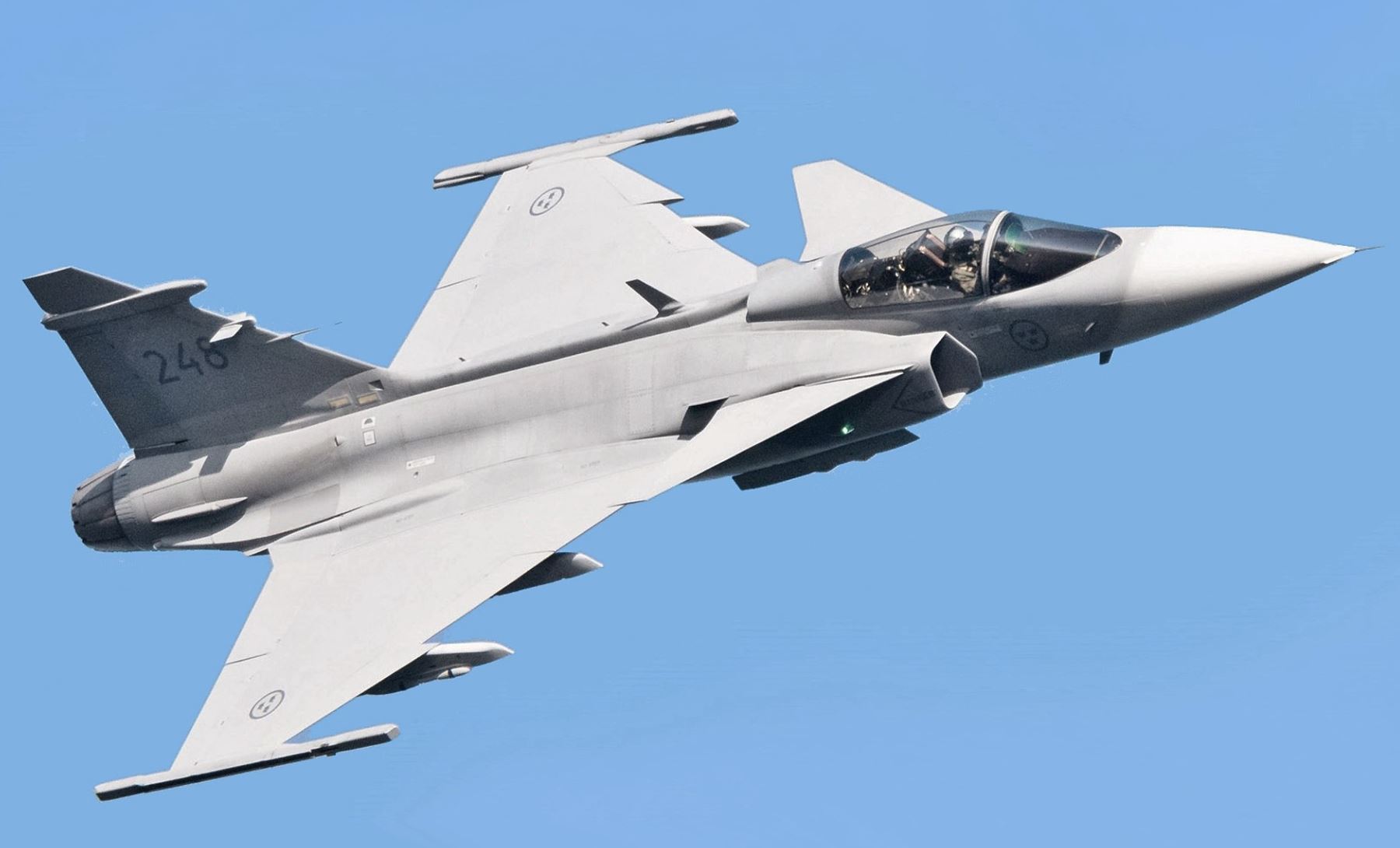
On a Friday that underscored the fragility of Baltic security, Swedish incident response teams launched two separate JAS 39 Gripen missions. The objective was clear: intercept Russian fighter jets operating near Swedish airspace in both the southern and northern Baltic Sea.
The Swedish Armed Forces confirmed that two Russian aircraft were detected. Swedish fighters were scrambled to identify the aircraft type and national affiliation. Two rotor-wing assets then tracked the jets until they were assessed to be at an acceptable distance. The Russian aircraft subsequently returned toward Kaliningrad, the Russian exclave that serves as a persistent strategic flashpoint in the region.
Hanna Heurlin, press communicator at the Swedish Armed Forces, addressed the incident with measured gravity. “We cannot speculate on why they flew there,” she stated. “But we believe it is very serious.” Her words reflect a broader Nordic posture—one that treats each provocation not as an isolated event, but as part of a sustained pattern of Russian military testing.
Swedish authorities confirmed that national airspace was never violated. Yet the operation itself carries significance beyond the technical details of the intercept.
Why Visibility Matters: The Signal in the Scramble
The Swedish response was not merely defensive. It was communicative. “We have many different routines in the air,” Heurlin explained. “And it is a signal in itself to show yourself in situations like this.”
This statement reveals a critical dimension of modern Nordic deterrence. In an era where hybrid threats blur the line between peace and conflict, visibility has become a currency of strategic messaging. The scramble was not simply about intercepting aircraft. It was about demonstrating readiness, resolve, and the seamless integration of Swedish forces into a broader allied framework.
For business leaders and investors, this operational posture matters. The Baltic Sea is one of Europe’s most economically vital maritime corridors. It carries energy infrastructure, data cables, and trade routes that underpin the Nordic and Baltic economies. Any escalation—whether in the air, at sea, or beneath the waves—carries direct implications for supply chains, insurance premiums, and investment confidence.
Allied Coordination: Denmark Joins the Response
The incident in the southern Baltic Sea was not a purely Swedish operation. Danish fighter jets also launched to defend shared airspace. This coordinated response reflects the deepening integration of Nordic and NATO defence structures since Sweden’s accession to the alliance in March 2024.
Heurlin described the operation as “coordinated and resolute.” The language is deliberate. It signals to Moscow—and to markets—that the Nordic response is unified, not fragmented. Denmark’s participation underscores a principle that has gained urgency since Russia’s full-scale invasion of Ukraine: Baltic security is indivisible.
The Danish involvement also highlights a practical reality. The Baltic Sea is narrow. Its airspace is crowded. Russian military aircraft departing from or returning to Kaliningrad must transit corridors that bring them into close proximity with NATO and partner nations. This geographic compression means that even routine Russian movements can trigger allied responses. It also means that the risk of miscalculation—an unintended collision, a navigation error, a transponder failure—remains elevated.
The Strategic Context: A Region Under Persistent Pressure
This incident did not occur in a vacuum. Russian military activity in the Baltic Sea region has intensified markedly since 2014. The annexation of Crimea marked a turning point. Since then, NATO and its partners have documented a sustained increase in provocative air and naval manoeuvres.
The pattern is well-established. Russian aircraft routinely operate without flight plans. They switch off transponders. They approach allied airspace with minimal advance warning. These tactics test response times, strain command-and-control systems, and probe for gaps in allied coordination.
For Nordic business leaders, the implications extend beyond defence policy. The Baltic Sea region has become a theatre of geopolitical competition where economic and security interests are deeply intertwined. Undersea cables, pipelines, and offshore infrastructure face heightened vulnerability. The 2022 sabotage of the Nord Stream pipelines—though its perpetrators remain disputed—demonstrated the catastrophic potential of subsea threats. More recently, NATO launched “Baltic Sentry,” an enhanced vigilance activity, following several incidents involving critical undersea infrastructure.
The message for investors is clear: resilience planning is no longer optional. Companies with exposure to Baltic trade routes, energy infrastructure, or digital connectivity must factor geopolitical risk into their operational and financial strategies.
Sweden’s NATO Integration: From Partner to Pillar
Sweden’s response to this incident carries particular weight because it reflects the country’s transformation from a non-aligned nation to a fully integrated NATO member. Since joining the alliance in March 2024, Swedish forces have participated in enhanced air policing missions, conducted joint exercises, and contributed to the collective defence posture of the Baltic region.
The JAS 39 Gripen, Sweden’s domestically developed multi-role fighter, has become a symbol of this integration. The aircraft’s deployment in NATO air policing missions—most notably from Poland’s Malbork Air Base—demonstrates that Swedish defence industry capabilities are aligned with alliance standards. For Saab, the Gripen’s manufacturer, this operational validation carries commercial significance. It reinforces the platform’s appeal to export markets seeking NATO-compatible, cost-effective fighter solutions.
Yet Sweden’s strategic value to NATO extends beyond hardware. Swedish territory—particularly the island of Gotland—commands the central Baltic Sea. Control of Gotland would, in a conflict scenario, severely constrain NATO’s ability to reinforce the Baltic states. Sweden’s accession thus closes a critical gap in the alliance’s northern flank. It transforms the Baltic Sea from a NATO lake in name to a NATO lake in operational reality.
The Danish Dimension: A Small Nation, a Large Responsibility
Denmark’s participation in this incident reflects a broader Nordic truth: small nations carry disproportionate strategic burdens. The Danish straits—the Kattegat, the Great Belt, the Øresund—constitute the maritime chokepoint through which any Russian naval vessel must pass to access the Baltic Sea from the Atlantic.
This geographic reality has shaped Danish defence policy for centuries. Today, it means that Danish air and naval forces are on the front line of any effort to monitor, deter, or—if necessary—deny Russian military access to the Baltic. Denmark’s F-35 acquisition program, though progressing slowly, is partly driven by this imperative. The fifth-generation fighter’s advanced sensor suite offers enhanced capability to detect and track Russian aircraft and maritime movements across the crowded Baltic airspace.
For Danish business, this strategic exposure creates both risk and opportunity. Defence and security sectors stand to benefit from increased investment. Maritime industries, including shipping and logistics, must navigate heightened insurance and regulatory costs. Meanwhile, Denmark’s role as a NATO hub for Baltic operations could attract allied defence spending and infrastructure investment.
The Russian Calculus: Testing, Probing, Signalling
Why does Russia persist with these incursions? The answer lies in a strategy of calibrated pressure. Moscow is not seeking open conflict with NATO. Rather, it is pursuing a campaign of persistent disruption—one that erodes allied cohesion, exhausts response capabilities, and sows uncertainty among civilian populations and business communities alike.
Any intercept costs NATO resources. Each scramble wears down airframes and consumes flight hours. Each incident generates media coverage that, however accurately reported, contributes to a narrative of regional instability. Over time, this drip-drip of provocation can degrade public confidence, strain political will, and complicate investment decisions.
The Russian aircraft involved in this incident were tracked back to Kaliningrad. The exclave, sandwiched between NATO members Lithuania and Poland, serves as a forward operating base for Russian air, naval, and missile forces. It is also the headquarters of Russia’s Baltic Fleet and hosts Iskander missile systems capable of reaching targets across Northern Europe. Kaliningrad’s militarisation makes it a permanent source of tension—and a permanent reminder that the Baltic region remains a contested space.
Economic Implications: The Business of Deterrence
For Nordic and international business leaders, these incidents are not merely defence news. They are market signals. The Baltic Sea region accounts for a significant share of European trade, energy transit, and digital infrastructure. The stability of this corridor is foundational to the economic performance of Sweden, Denmark, Finland, Estonia, Latvia, Lithuania, Poland, and Germany.
Several sectors face direct exposure:
Energy and Infrastructure: The Baltic Sea hosts critical pipelines, power cables, and offshore wind installations. The sabotage of the Nord Stream pipelines in 2022 demonstrated that subsea infrastructure is vulnerable. Since then, NATO has prioritised the protection of undersea cables and pipelines. The “Baltic Sentry” operation launched in early 2025 reflects this priority.
Shipping and Logistics: The Danish straits are among the world’s busiest maritime passages. Any disruption—whether from military activity, hybrid threats, or heightened security measures—could cascade through European supply chains. Shipping companies operating in the region must factor geopolitical risk into route planning and insurance arrangements.
Defence and Technology: Increased Nordic defence spending creates opportunities for aerospace, cybersecurity, and maritime technology firms. Sweden’s Gripen program, Finland’s F-35 acquisition, and Denmark’s military modernisation all generate demand for advanced systems and services.
Insurance and Finance: The re-evaluation of geopolitical risk is already affecting credit ratings, insurance premiums, and investment flows in the Baltic region. Institutional investors are increasingly screening for exposure to contested corridors and critical infrastructure.
The Path Forward: Resilience as Strategy
The Nordic response to this incident—coordinated, visible, and measured—offers a template for managing geopolitical risk in an era of persistent competition. It demonstrates that deterrence and economic stability are not opposing imperatives. They are complementary objectives.
For policymakers, the priority is clear: sustain investment in defence capabilities, deepen allied integration, and maintain the transparency that distinguishes NATO operations from Russian provocations. For business leaders, the imperative is equally clear: integrate geopolitical risk into strategic planning, diversify supply chains where feasible, and engage actively in public-private dialogue on resilience.
The Baltic Sea will remain a contested space for the foreseeable future. Russia’s military posture, its reliance on Kaliningrad as a forward base, and its demonstrated willingness to use force against neighbours all suggest that incidents like this Friday’s intercept will recur. The question is not whether they will happen, but how effectively the Nordic region and its allies can manage them—minimizing escalation, maintaining economic continuity, and preserving the strategic stability that underpins prosperity.
Conclusion: Vigilance as the New Normal
The scramble of Swedish and Danish jets on a Friday in the Baltic Sea was, in operational terms, routine. It was one of dozens of similar incidents that occur annually in the region. Yet routine should not be mistaken for insignificance. Each intercept is a data point in a larger pattern—a pattern that defines the security environment in which Nordic business operates.
The Swedish Armed Forces’ statement was characteristically understated. “We are constantly monitoring our airspace and surrounding area,” Heurlin said. The simplicity of the statement belies the complexity of the task. Constant monitoring requires constant investment. It requires skilled personnel, advanced technology, and seamless allied coordination. It requires a society that accepts the trade-offs between security spending and other priorities.
For the Nordic business community, this is the new normal. The Baltic Sea is not a distant theatre of conflict. It is the maritime highway on which the region’s prosperity depends. The aircraft that patrol its skies, the ships that monitor its waters, and the cables that run beneath its surface are all part of an integrated system of security and commerce. Understanding this integration—and planning for its vulnerabilities—is the strategic imperative of the decade ahead.
Editorial Outlook
Follow-Up Angle: “The Baltic Sea as Economic Battleground: How Undersea Infrastructure Became the Front Line”
A natural follow-up to this article would explore the intersection of maritime security and critical infrastructure in the Baltic Sea. With NATO’s “Baltic Sentry” operation now active, and with repeated incidents of suspected sabotage against undersea cables and pipelines, the subsea domain has emerged as a new theatre of geopolitical competition. This follow-up would examine the economic implications of subsea vulnerability for Nordic energy markets, data connectivity, and insurance sectors. It would assess the effectiveness of current protective measures, explore emerging technologies for subsea monitoring, and consider the regulatory and investment frameworks needed to secure Europe’s maritime backbone. The article would speak directly to infrastructure investors, energy executives, and policymakers grappling with the challenge of securing assets that are, by their nature, hidden and hard to defend.
This article was prepared for Nordic Business Journal. For further insights, partnerships, and discussion on Nordic security, defence economics, and regional investment strategy, readers are invited to connect with our editorial team. Nordic Business Journal welcomes contributions from senior executives, policymakers, and analysts engaged with the strategic challenges and opportunities shaping the Nordic region.
About Nordic Business Journal
Nordic Business Journal delivers analytical, globally aware coverage of the forces shaping Northern European commerce, policy, and security. Our reporting is designed for decision-makers who require depth, clarity, and strategic perspective.