
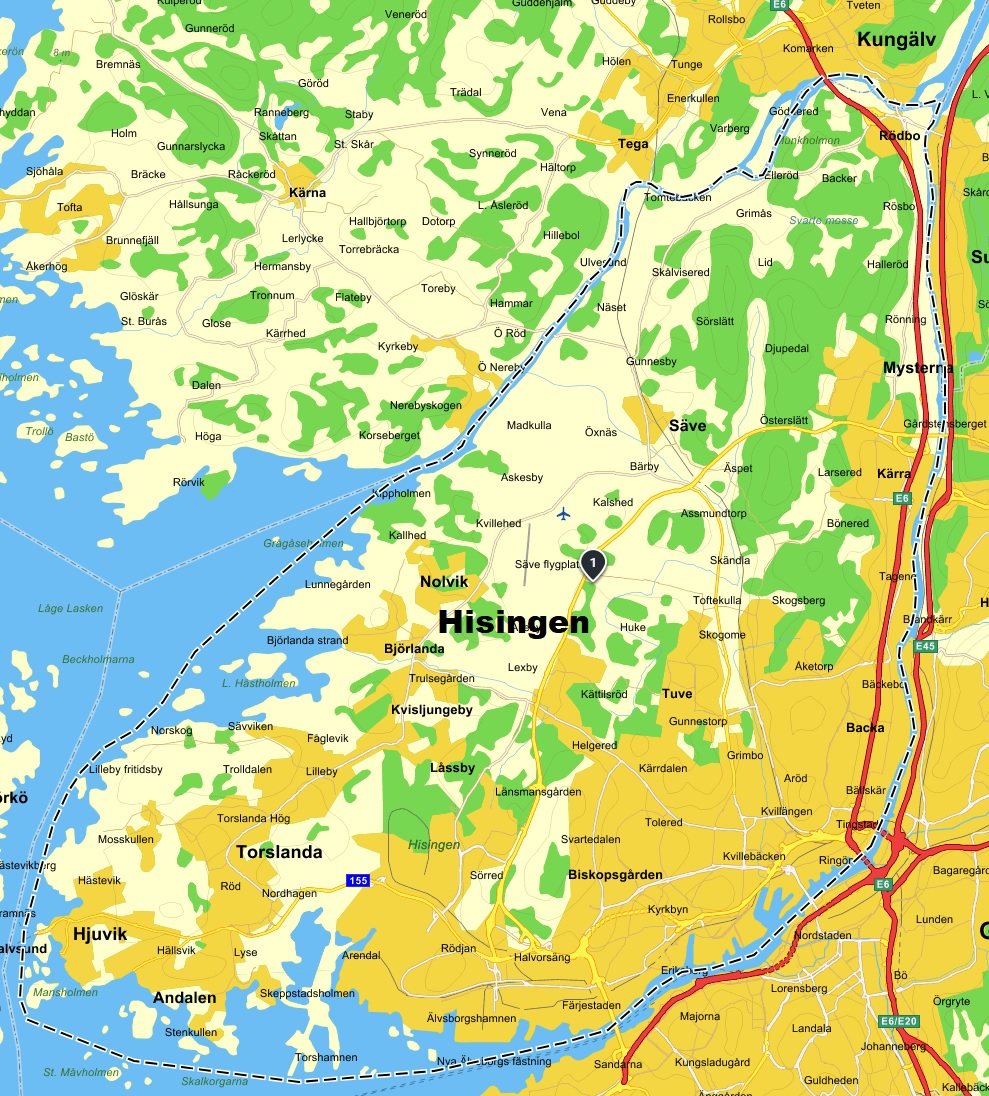
Once known primarily for its industrial history and multicultural neighbourhoods, Gothenburg’s island of Hisingen is now grappling with a more troubling reputation: as a fertile recruiting ground for Sweden’s expanding gang network. With over 1,000 suspected gang affiliates operating in the area, authorities are sounding fresh alarms—and questioning whether current policies are doing more to contain the problem or inadvertently fuel it.
A Growing Underground
According to Daniel Norlander, police area manager for Hisingen, gangs are aggressively targeting young people—some as young as 10—for recruitment. The trend follows a now-familiar trajectory: informal tasks begin innocently enough. A teenager may be asked to monitor police activity using encrypted messaging apps like Signal or Telegram. Then the requests escalate—to hiding drugs, moving weapons, even acting as lookouts during violent assaults.
The promise? Fast money, a sense of belonging, and initial “rewards” ranging from sneakers to pizza. Over time, those perks balloon into thousands of kronor—and steep consequences.
Law enforcement employs what’s known as the “cylinder model”—a framework that categorizes individuals involved in gang activity:
- A-level actors are the architects: high-level strategists rarely seen but deeply influential.
- B-level actors engage in violent crimes and impose Here’s the full, professionally edited and expanded article fit for a news magazine:
Gothenburg’s Silent Crisis: Confronting the Surge in Gang Recruitment on Hisingen
Once renowned for its industrial grit and multicultural vibrancy, the island of Hisingen in Gothenburg is now grappling with a darker legacy—becoming a breeding ground for one of Sweden’s most pressing public safety concerns: organized gang recruitment. Today, an estimated 1,000 gang-affiliated individuals operate in the area, with that number swiftly rising. At the heart of this challenge lies a stark question: Is Sweden truly confronting the roots of organized crime, or simply documenting its escalation?
Young and Targeted
For local law enforcement, the signs are chillingly clear. “We’re seeing recruitment start earlier, with more precision and intent,” says Daniel Norlander, municipal police area manager in Hisingen. “Gangs aren’t just recruiting—they’re hunting for vulnerabilities.”
These criminal networks often draw in teenagers and even pre-teens through innocuous beginnings. A young person might be asked to download an encrypted messaging app like Signal to monitor local police patrols. From there, tasks escalate quickly—delivering packages, hiding narcotics, or storing firearms.
Initial compensation can be as trivial as junk food or bus money. But the stakes rise rapidly. Within weeks, some recruits are offered thousands of kronor—money that can be lifesaving to someone out of work, disconnected from school, or exposed to domestic instability.
The Cylinder Model: Profiling Crime by Degree
To fight back, Swedish police have adopted a strategic framework called the “cylinder model”, a classification system that profiles offenders based on their level of criminal involvement:
- A-actors are masterminds—strategic leaders who often remain hidden, issuing orders through trusted intermediaries.
- B-actors enforce the rules—carrying out violent acts and penalties for disobedience within gang ranks.
- C-actors are operational—a younger demographic executing increasingly serious tasks to earn their credibility.
- D-actors are the most vulnerable—often children or adolescents coerced into criminal activity, sometimes already known to social services.
In 2023, police identified roughly 300 individuals across these categories in Hisingen. That number has risen to 450 in 2024—a clear sign that recruitment is not only active, but accelerating.
The Cost of Institutional Inflexibility
Beyond headlines and statistics lies a deeper, structural issue: the socio-economic fragility that creates fertile ground for recruitment. Employment instability, restrictive housing policies, and lagging social support systems often combine to push at-risk youth closer to gang affiliation.
Consider the case of Tena, a 20-year-old Gothenburg resident. Until late last year, Tena held a full-time position as a caregiver. But a sudden eye infection left him temporarily out of work and unable to meet job search requirements. Despite submitting detailed medical documentation, the government swiftly cut off all financial support—no unemployment benefits, no rental assistance, no healthcare subsidies. With bills piling up and no safety net in place, Tena found himself teetering on the edge of survival.
“For weeks, I couldn’t afford my medication. I skipped meals. I couldn’t even take the tram to job interviews,” he says. “People think it’s a choice, but when the system gives up on you, what options do you really have?”
Tena never joined a gang. But others in his position might make a different choice.
Sweden at a Crossroads
The prevailing narrative in Sweden’s crime prevention policy favours containment and classification—sorting offenders into boxes rather than building exits from the cycle of crime. While law enforcement remains a critical pillar in this fight, critics argue that punitive measures alone are not enough to tackle the root causes of recruitment.
“You can’t arrest your way out of a social crisis,” notes sociologist Annika Brolin, who researches urban criminology at the University of Gothenburg. “Young people need scaffolding—not just discipline. That means employment programs that work, housing support that’s accessible, mental health services that intervene early, and schools that don’t give up.”
Increasingly, former police officials and educators alike are calling for Sweden to rethink its approach—from one that isolates vulnerable youth to one that invests in them.
Toward a Preventive Strategy
Several community initiatives are beginning to experiment with precisely that. In some Gothenburg neighbourhoods, joint task forces involving police, social workers, and teachers are piloting early-intervention models. These bring at-risk youth into mentorship programs, offer subsidized job training, and build trust with local institutions before gangs step in.
The results remain early but promising. Participation rates are climbing, and dropout rates are declining. Still, many argue that without political will—and robust, flexible financing—such models will never scale to meet the urgency of the threat.
A Nation Deciding its Future
Sweden now stands at a decision point. Will it address the structural vulnerabilities that allow organized crime to flourish among the young? Or will it continue to rely on reactive policing strategies, chasing a problem that grows faster than the solutions meant to quell it?
In neighbourhoods like Hisingen, the stakes are more than academic. They are personal—and urgent. Behind each statistic is a teenager tested by hardship, a family fraying under pressure, and a society asked to choose between punishment and prevention.
If the country fails to act, it risks not only losing more youth to an unforgiving underworld but allowing segments of its future to be shaped by crime—rather than by opportunity.