
Sweden’s Housing Paradox: The Unoccupied Apartments Amidst a National Shortage
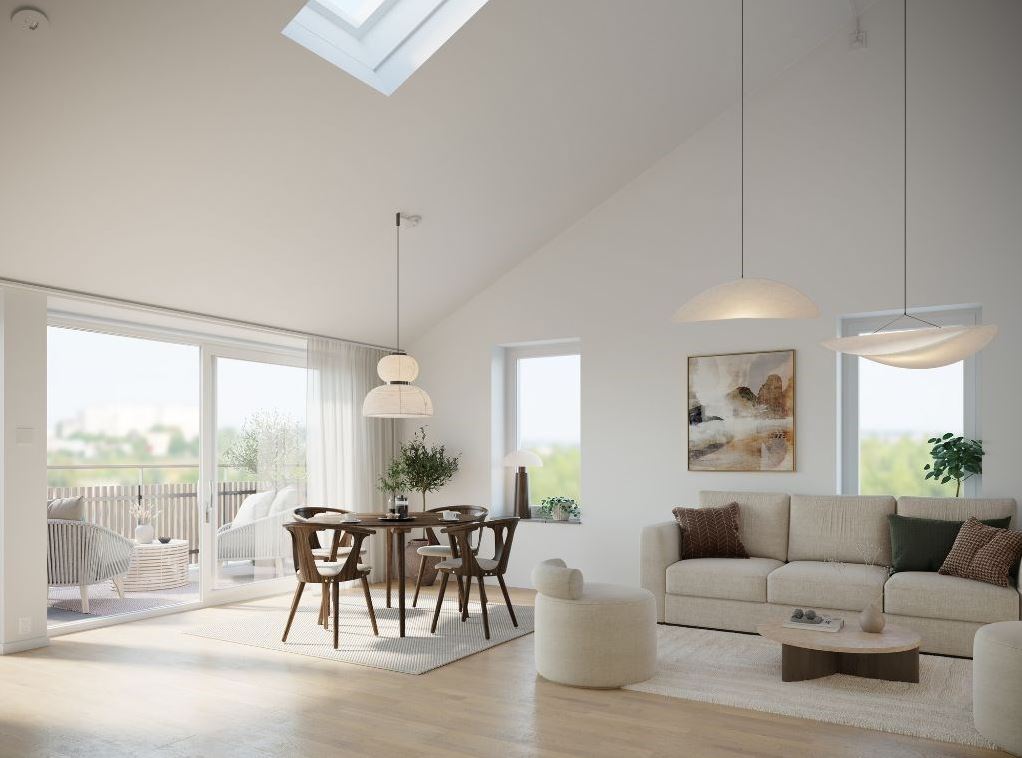
On the morning of September 1, 2024, Sweden faced a stark contradiction: 20,246 rental apartments, ready for occupancy, sat vacant across the country. This surplus stands in sharp relief against a pressing national deficit of 100,000 homes, as reported by the Swedish Union of Tenants. The situation underscores a profound irony: while thousands languish on waiting lists, brand-new residences remain unclaimed, their lights dimmed and keys unused.
Ola Palmgren, vice-chair of the Swedish Tenants’ Association, encapsulates the sentiment aptly: “An insane waste.” Young adults find themselves confined to childhood bedrooms, even as modern apartments lie empty. To unravel this paradox, we embarked on a six-week journey from Stockholm’s sleek yet half-empty “nyproduktion” towers to the serene, partially vacant courtyards of Södermanland.
The Newbuild Ghost Towns
In suburbs like Barkarbystaden, just outside Stockholm, new developments promise urban amenities in a lush environment. However, 17 percent of the rental units from last year’s phase-three construction remain unoccupied. Monthly rents here hover between 1,800 to 2,000 kronor per square meter—nearly double the rates of older public-housing blocks a few metro stops away.
Emma Holmqvist, housing researcher at Uppsala University, explains the disparity: “These rents cater to a demographic that scarcely exists beyond central Stockholm.” Sveriges Allmännytta, representing public-housing entities, corroborates this trend, noting that new constructions exhibit disproportionately high vacancy rates due to inflated development costs.
The Geography of Emptiness
The distribution of empty flats offers another layer of insight. Two-thirds of Sweden’s unoccupied rentals are located in municipalities with populations under 75,000, many of which already experience outward migration toward larger cities. Södermanland County alone counts 1,355 vacant apartments, where the average wait time for an Allmännytta flat has plummeted from 30 months a decade ago to a mere 15 months today.
Conversely, Stockholm, Gothenburg, and Malmö—cities with notorious housing queues—report only 1,205, 222, and 370 vacancies, respectively. This spatial mismatch underscores surplus where there is little demand and scarcity where it is most acute.
Is There Truly a Shortage?
Bo Söderberg, real-estate economics associate professor at KTH Royal Institute of Technology, challenges the notion of a housing shortage, positing instead a crisis of affordability. “We have sufficient square footage,” he asserts, “but lack an effective subsidy system to accommodate low-income households at market rents.” Statistics Sweden data reveal housing costs outpacing wage increases annually since 2016, with median rents in Stockholm consuming 54 percent of pre-tax incomes—well beyond the European Commission’s recommended 30 percent threshold.
The Policy Pendulum
Government responses have centered on bolstering construction. Minister for Infrastructure and Housing, Andreas Carlson, touts reforms aimed at expediting planning permits, easing building codes, and investigating price-fixing in construction materials. Despite these efforts, housing starts fell 15.9 percent year-on-year in Q1 2025, with completions plummeting by 63 percent. Escalating interest rates and material costs have rendered the ambitious goal of 50,000 new homes annually increasingly impractical.
Rent Discounts & Market Signals
In a rare shift, Swedish landlords are now lowering rents. Allmännytta’s survey reveals a marked increase—from 19 to 38 percent—of member organizations offering move-in incentives or rent reductions in 2024. From Värmland to Gävleborg, such incentives include rent-free periods, free parking, and gym memberships, marking a significant departure from previous market practices.
A Market Divided
Sweden’s housing market exhibits a clear duality. Peripheral regions and university towns see emerging surpluses amidst population stagnation and remote work trends. Contrastingly, major cities like Stockholm maintain medieval waiting times—337 months on average for a public-housing unit. The situation illustrates a painful irony: while thousands endure long waits, freshly finished apartments nearby remain unclaimed.
What Comes Next?
Without substantive rent reductions, income increases, or expanded subsidies, analysts foresee deepening contradictions in Sweden’s housing market. Construction slowdowns in high-demand areas persist, and proposed reforms fail to address affordability for the most vulnerable. Palmgren, of the Tenants’ Association, sums up the frustration: “We’re told to wait as thousands of flats echo empty. This isn’t housing policy; it’s a market failure.”
Until Sweden reconciles housing as either a commodity or a social right, the lights will continue to dim in those 20,000 unoccupied living rooms, and the queues outside Stockholm’s agencies will remain dauntingly long.